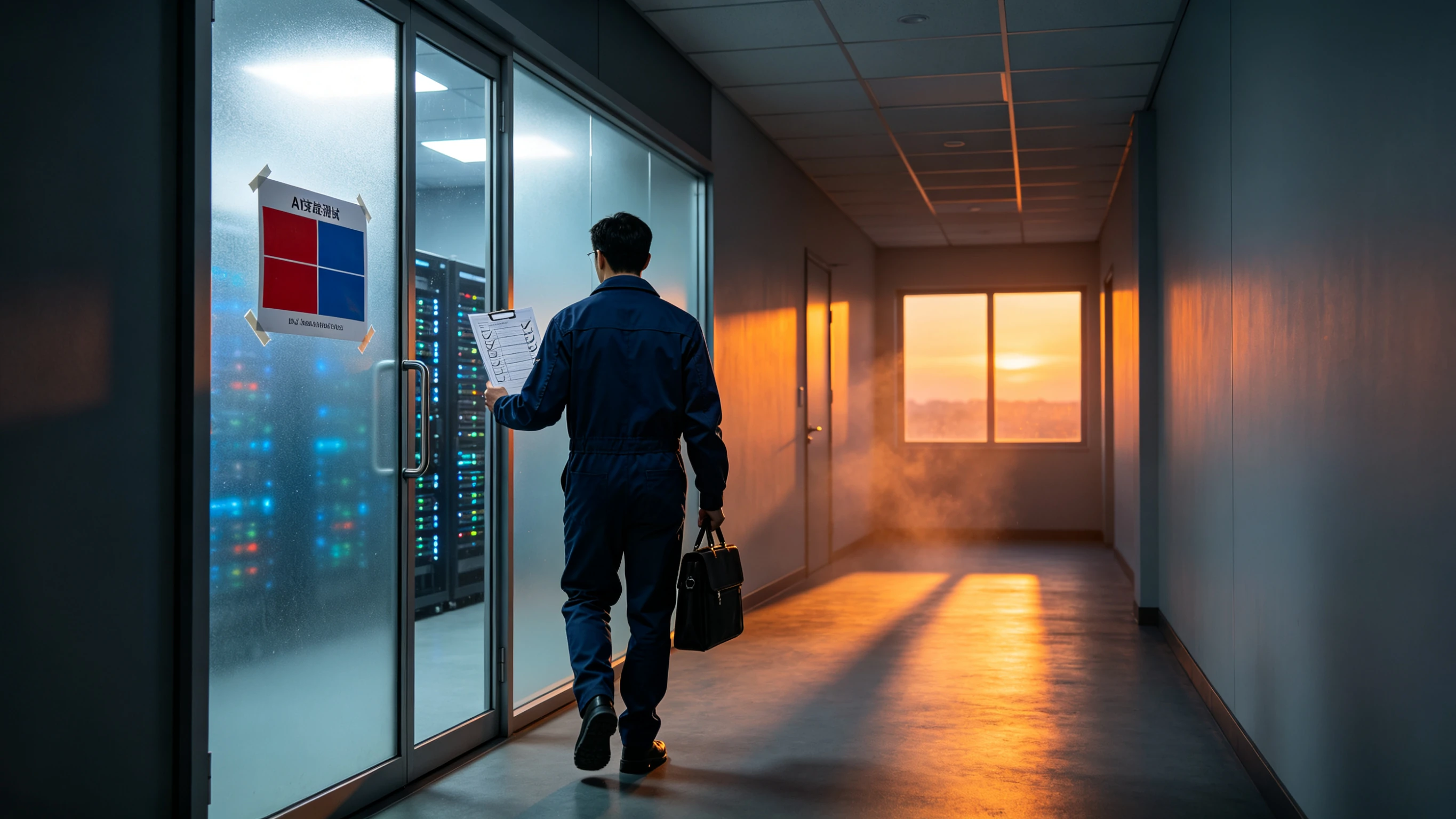
On Friday, September 19, Anthropic announced a five-year AI safety evaluation partnership with Accenture: each company commits at least $1 billion, and Accenture's AI unit Faculty will embed an independent safety evaluation team inside Anthropic's labs. After the announcement, Accenture's pre-market shares rose more than 6%.
[1][2]The nut graf: this is the first concrete step to land after Amodei's September 12 public call to slow frontier AI and tighten oversight — but it is not asking a regulator to inspect the lab. It is paying a consulting firm to move in. The core of the deal is "embedded" evaluation: the Faculty team will run red-team testing, alignment assessments, and safety-mechanism checks directly inside Anthropic, intervening throughout model development and deployment rather than auditing after the fact. The two companies expect to commit at least $2 billion combined over five years, and the partnership is non-exclusive.
The industry implication is larger than the dollar figure. Traditional third-party safety evaluation is a post-game check: after a release, an outside body runs benchmarks and issues a report. Embedded evaluation moves the referee into the training ground — assessment becomes part of the development process, not a gate before release. For Anthropic, this builds an auditable safety narrative ahead of a reported November IPO at around a $2 trillion valuation, while its CEO is publicly urging the industry to slow down. Investors and regulators are asking who pays for deceleration and how safety gets proven. A five-year, $2 billion embedded-evaluation contract at least turns "safety" from a slogan into an auditable line item.
Second, watch the stock reaction. A traditional consulting firm jumping 6% pre-market for "moving into an AI lab" says the market is starting to price evaluation capability itself — whoever can build credible third-party assessment owns the pick-and-shovel position of the next AI cycle. It tracks the regulatory environment: the EU AI Act is in full enforcement, and governments are hunting for levers to prove model safety, while evaluation is precisely the scarcest capacity in the compliance chain.
There is also a strategic reading of the timing. Anthropic has spent this month publicly arguing that the frontier is moving too fast — Amodei's slowdown call on September 12, the lawsuit four subscribers filed on September 18 alleging the labs coordinated to slow AI, and now a five-year evaluation contract with a consulting giant. In that sequence, the Accenture deal reads as the constructive half of the argument: if you are going to tell the world that safety requires a pause, you had better be able to show what safety evaluation looks like when it is actually paid for. An embedded team is a more concrete answer to "what does responsible development mean" than any open letter.
The deal does not, of course, solve everything. The embedded team is paid by the client and evaluates the client's own models; the boundary of independence rests on contract text. If red-team results are never published, the market cannot verify them independently. Whether Faculty's findings will be released in any form — redacted reports, public summaries, or nothing at all — is the detail to watch. Moving evaluation in-house is progress, but between "internal process" and "public evidence" there is a gap that still needs filling.
[1][2]