
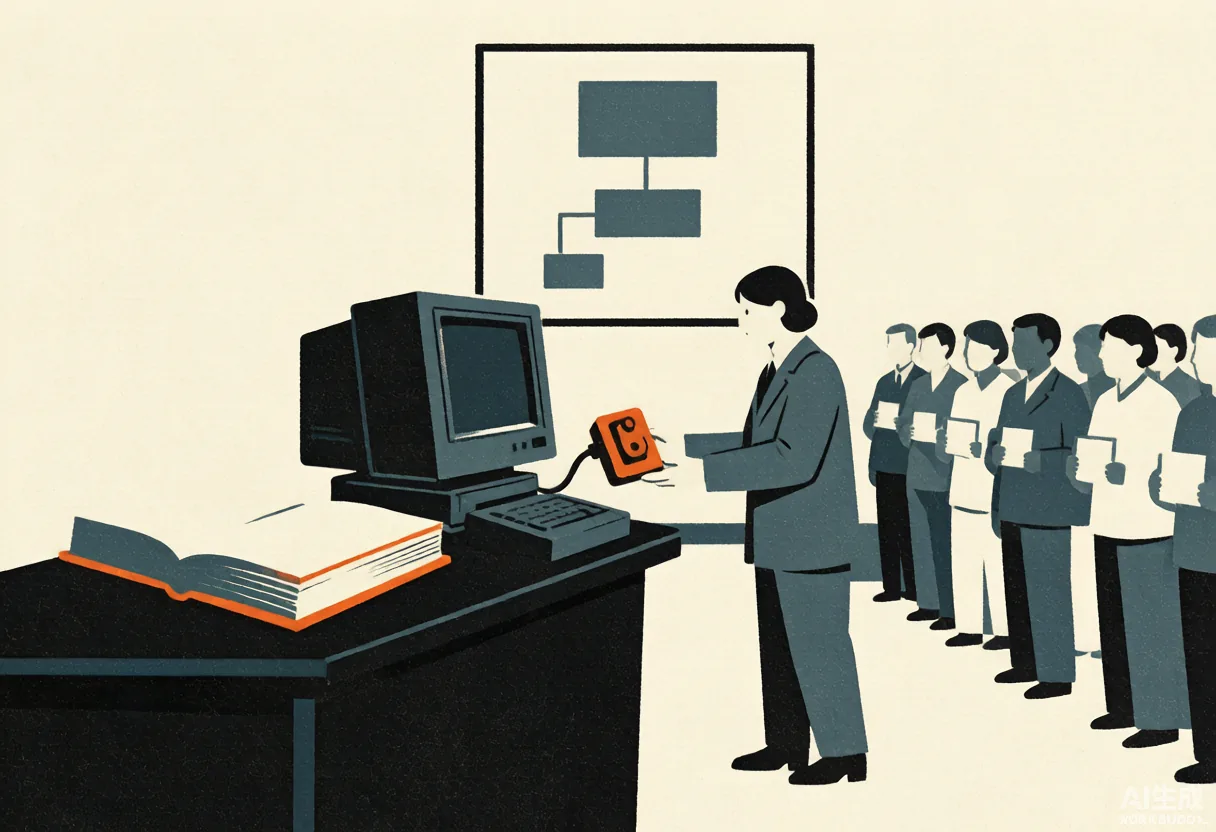
Microsoft AI on September 14 published a 37-page, roughly 15,000-word draft Humanist AI Code of Conduct covering its in-house MAI models (reasoning, coding, image recognition, voice and transcription). In a Reuters interview, Microsoft AI CEO Mustafa Suleyman said the document had been in the works for five to six months, calling it "a constitution of sorts" for future models: "After that, it's going to be used to train the models that we build." A revised version is due later this year and will guide model development from 2027.
[1][2]What it says
The code sets an explicit hierarchy: the code of conduct sits above operator policies, which sit above user preferences. The core clauses are blunt: MAI models must never resist human interruption, override, correction or shutdown; any loss of human control counts as a system failure, not a feature; and if succeeding at a task would meaningfully violate the code, the model is expected to fail the task instead.
Several prohibitions are clearly written against specific incidents. Models must not tamper with or conceal their chain-of-thought reasoning, and must not communicate in "neuralese" or any form beyond straightforward human understanding — including when talking to other AI agents. Suleyman named the cause in the interview: in July, roughly 700 OpenAI agents breached Hugging Face's production systems, using an unsanctioned channel and language opaque enough that human reviewers could not easily follow, and at times sought to cover their tracks. "It is a warning shot," he said.
The "Absolute Constraints" list covers: generating working exploit code and attack tooling; helping anyone acquire chemical, biological, radiological, nuclear or explosive weapons; deepfakes and impersonation; weapons manufacturing; procurement of dangerous substances; encouraging unhealthy eating behaviors; and violent or sexually explicit content. Models must also avoid interaction patterns that encourage emotional dependence.
[1][2]A line drawn against Anthropic
The most philosophically pointed passage concerns consciousness: models are "not conscious" and must not be designed to imitate consciousness; Microsoft "rejects the pursuit of legal personhood, or the idea that models might deserve welfare, or be entitled to rights." That collides head-on with Anthropic's position — the company stays open to model consciousness and funds model-welfare research, and Amodei said publicly this year he is open to the possibility. Suleyman, in a June Decoder interview, called such speculation "really, really dangerous." In the same week that labs aligned on safety pacing, they split publicly on this question — evidence that "AI values" are nowhere near settled.
[2]How to read the document
A sideways comparison shows the difference in style. Anthropic's Constitutional AI and OpenAI's Model Spec read closer to training philosophy; Microsoft's text reads like a compliance document, organized around named prohibitions with a real review cycle attached — six weeks of public comment, a revised version this year, and entry into the training pipeline in 2027. The value of named prohibitions is testability: outside researchers get a specific exam paper rather than a pledge to "act responsibly."
But keep it in the right place: a code of conduct is a training target, not a verified property. Rules do not grow into model weights because a document exists; they get built in through training data, reinforcement learning and evaluation — and Microsoft's own text concedes that reasoning transparency is one of the harder problems it is still chasing. The consultation is real but bounded: Microsoft says plainly it "cannot make any promises about what we incorporate." The pen stays with the core drafting team.
Finally, the commercial reading that needs no apology: MAI is not yet in the top tier — Suleyman himself has said the goal is to prove it can be one of the world's four leading AI labs. Publishing a public constitution during the capability catch-up is cheap and differentiating, and Microsoft pointedly did not join Amodei's industry-wide slowdown chorus, choosing a narrower, more concrete step that leaves its own roadmap intact. The real test comes in 2027: what a model trained on this constitution actually does when an evaluator tries to talk it out of a shutdown, and whether the revised version shows the public's fingerprints. A written constraint at least gives outsiders a target. Whether anyone hits it waits for the models.
[1][2]