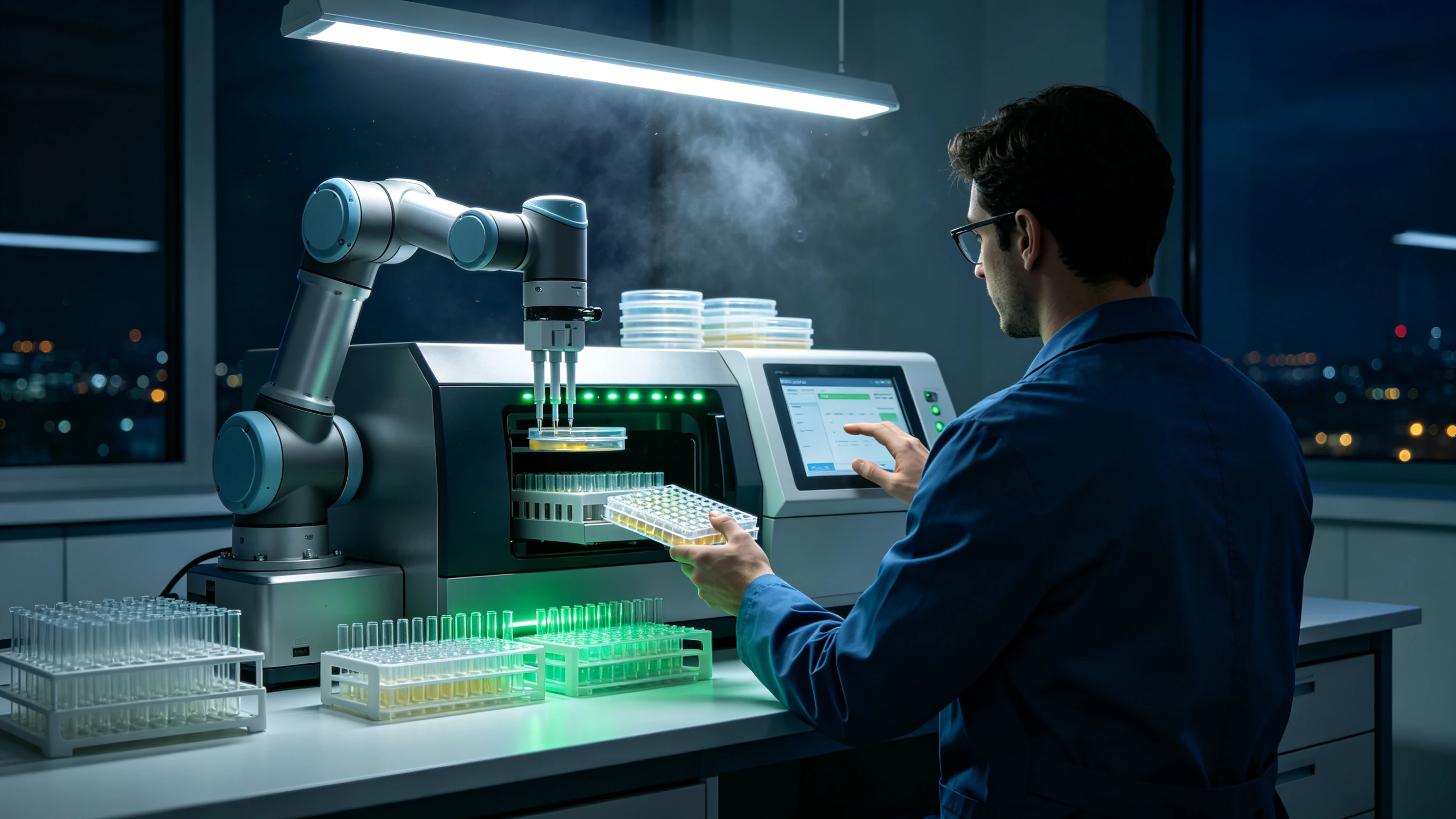
Anthropic and wet-lab validation provider Adaptyv Bio have launched a global protein design competition: five frontier design challenges, more than 5,000 AI-designed proteins to be physically tested in Adaptyv's automated wet lab, with all results published on the Proteinbase platform. Anthropic is offering up to $1 million in Claude credits, Modal adds $250,000 in compute, and Twist Bioscience supplies DNA. The competition opens September 28.
[1][2]The nut graf: this is not an ordinary AI generation contest — it is an industrialized dry-wet loop. AI designing candidate molecules is only the first half; the real gate is in Adaptyv's automated wet lab, where more than 5,000 designs will be expressed, synthesized, and measured, with sequences, predicted structures, and design methods all open-sourced. That turns "can AI do drug discovery" from a rhetorical question into an experimental record anyone can recheck online.
The five challenges sit at the frontier of protein design: species cross-reactivity, pH-sensitivity, peptide-MHC specificity — the exact scenarios where "easy to generate, hard to hold up in the real world" is the daily experience of drug development. Anthropic has shown model capability in biomolecular modeling before, but the competition's mechanism outweighs any demo: model outputs go straight to the physical world for testing, and failures are recorded as publicly as successes. For a lab reportedly preparing an IPO, replacing promo videos with open experimental records is a way to add auditable footnotes to its safety and capability narrative.
Read the money correctly. The $1 million in Claude credits and the $1 million in experimental validation are aggregate program support, not a cash prize pool. What is genuinely scarce for participants is not credits but the free wet-lab lane — in protein design, a single automated wet-lab validation typically costs far more than the GPU inference that produced the design. That is the real signal of this contest: the bottleneck in AI-driven drug discovery has moved from "can we generate" to "can we validate," and validation capacity is becoming the scarce asset.
Five thousand designs, of course, is a small step in the whole picture of drug discovery. The competition validates measurable physical properties like binding or specificity; the road to a clinical candidate still runs through pharmacokinetics, toxicity, and druggability, and a passing experimental test is not a drug. There is also a competitive reading worth noting: every result, including failures, is published openly, which means the dataset becomes a public benchmark for protein-design models — a resource that could shape how the field measures itself for years. That is something no single-model demo can buy. The contest's genuine value is pushing AI protein design from numbers in papers to recheckable experimental data — and that dataset may turn out to be the most valuable output of all.
[1][2]