On September 21, per Yunqiao Capital, Beijing-based GPGPU company Xingyun Integrated Circuit closed a new round of nearly RMB 800 million. The lead investor was CATL — through Puquan Capital, its sole industrial investment platform, plus its own funds — with Chunhua Capital and Cornerstone Ventures following. The most notable thing about the deal is not the size. It is who led it.
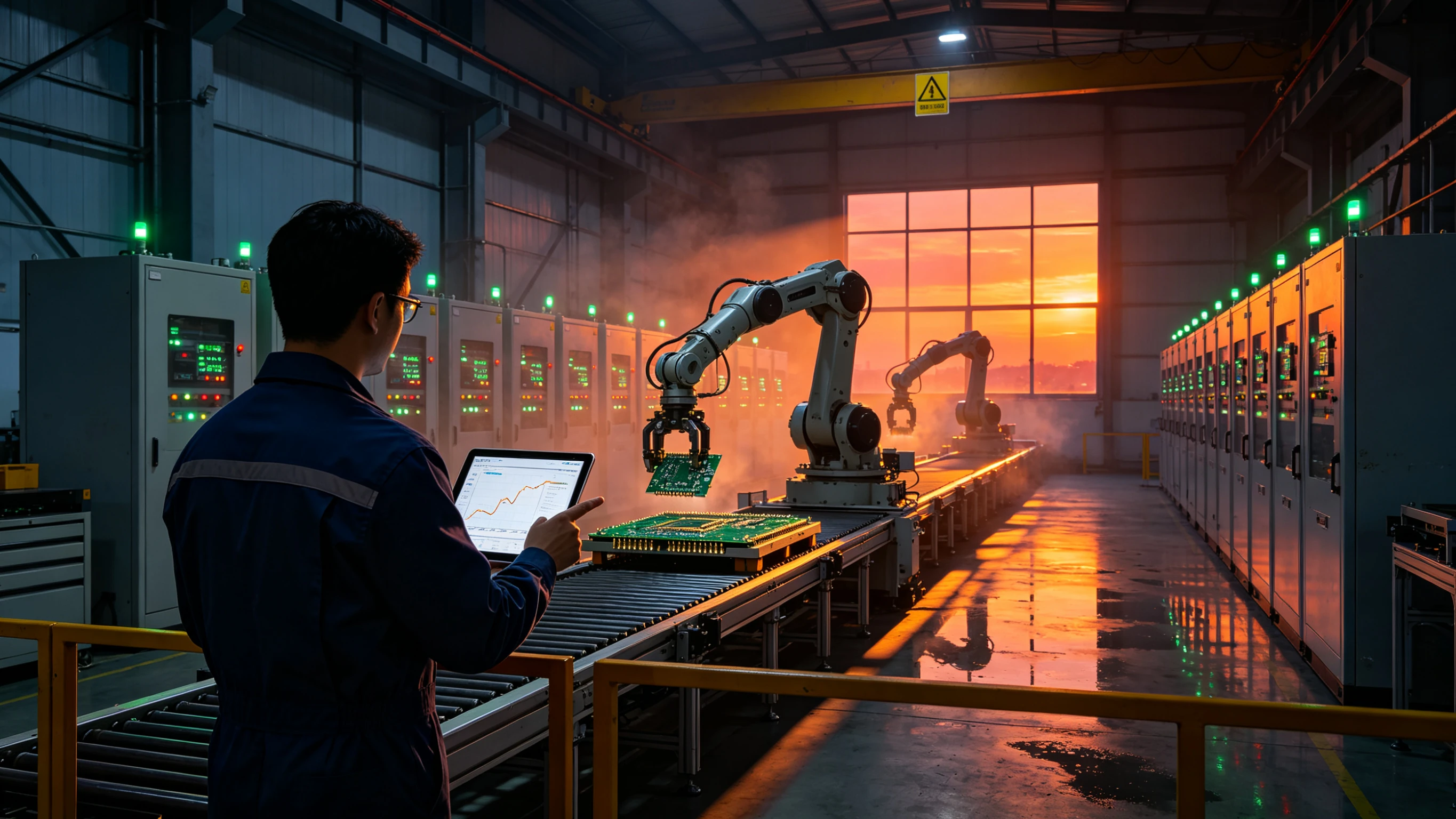
[1][2]Why is a battery company placing a heavy bet on AI inference chips? CATL's calculus can be read on three levels. Demand-side: its own factories, production-line quality inspection, and battery-design simulation are all turning into AI workloads; inference silicon is the substrate of manufacturing intelligence. Supply-side: the battery industry is shifting from a capacity race to an AI race — whoever pushes down model-deployment cost leads the next generation of factories. And platform-level: Puquan Capital, the group's only industrial investment vehicle, is not making a financial allocation; it is wiring a battery giant into the domestic compute supply chain. This follows the familiar pattern of chip firms being strategically invested by automotive OEMs — except this time the money comes from batteries.
Xingyun's technology route reads well inside that context: deep integration of GPU with very large-capacity memory, high-bandwidth interconnect, and lower cost of local AI deployment — in short, memory-compute co-design aimed at inference and edge scenarios rather than giant training silicon. That matches CATL's needs precisely: factory inference does not require a 10,000-GPU training cluster; it needs cheap, low-power, locally deployable inference units. The fit between investor and product roadmap is more worth recording than the round size.
Now the cold water. The company had gone through five earlier rounds and is still loss-making; nearly RMB 800 million is not a large number in the GPGPU arena — domestic training-chip rounds of RMB 2 or 3 billion are not rare. Note also that the company's compute-heavy roadmap (GPU fused with very large memory banks) still has to prove itself in volume production, and the supply chain readiness this round is meant to fund is exactly where Chinese chip startups most often stumble. CATL's entry reads as position-taking plus lock-in: at a price it can afford, put itself on a map that may determine manufacturing costs for a decade, before the domestic compute supply chain settles. The real signal of this deal is that industrial capital has started screening AI chip companies by scenario demand rather than valuation narrative. For domestic chip startups still in fundraising, that is at once a pickier backer and a more substantial customer. Watch the follow-through, not the announcement: whether the partnership moves beyond equity into purchase commitments — CATL's factories buying Xingyun's inference units — will tell you if this is a real supply-chain move or a hedge. That is the test the next twelve months will run.
[1][2]