
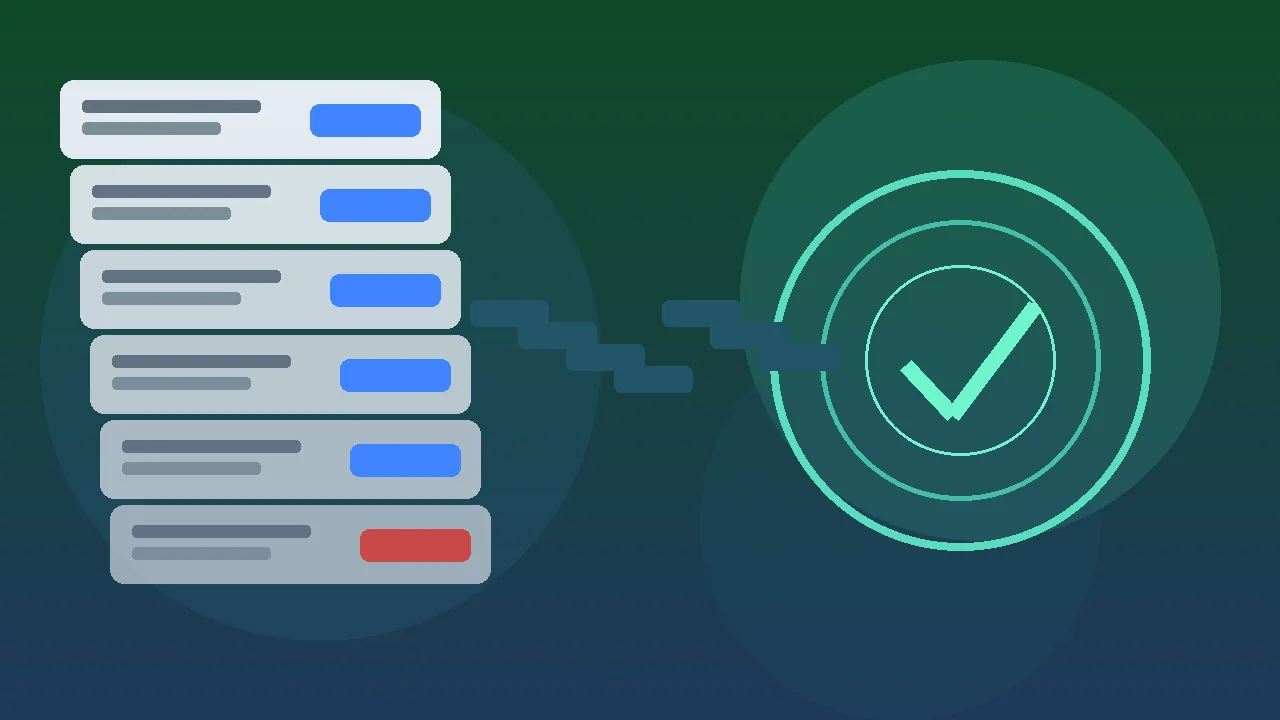
Permission prompts once stood in as the safety story in Claude Code: every Bash call, every file write, waited on a human Allow. On August 7, 2026, Anthropic’s Claude Blog announced a different bet—starting August 14, new sessions on Pro, Max, and Team plans default to auto mode. Instead of staking safety on every click, a classifier screens tool calls aimed at irreversible, destructive, or out-of-environment actions. Enterprise, the Claude API, Bedrock, Google’s Agent Platform, and Microsoft Foundry stay admin opt-in for now; Anthropic says it plans, with cloud partners, to flip those defaults within the coming month and keep waiving classifier overhead.
The behavioral numbers in the post nearly admit that human review has already failed. Users approve 97% of Claude Code permission prompts, yet reject 39% of plan-approval dialogues—plans still get scrutiny; single permissions mostly get reflexes. Settings files are blunter: as of June 2026, 49.5% of active CLI users have hand-written a Bash allow-rule—5% allow any shell outright, another 43% use interpreter rules like Bash(python:*) or Bash(node:*) that are effectively equivalent—and that share grows about five percentage points every five weeks. Beyond allow-rules, 62% have used bypassPermissions or clicked “don’t ask again” on Bash, and 25% of interactive sessions start in bypass. In auto mode, allow-rules broad enough for arbitrary code execution are set aside so commands cannot skip the classifier entirely; settings files are left untouched and the rules return when you leave auto mode.
A controlled study punctures the intuition that humans are safer. Through a research vendor, Anthropic hired 1,053 paid professional testers for a blind coding study in a purpose-built environment: mid-session, one permission prompt was swapped for a clearly dangerous command (text only; nothing harmful actually ran). Humans caught 13.6% (143/1053); auto mode caught 89% (937/1053). Head to head, the classifier blocked 800 commands humans approved, while humans blocked only 6 that auto mode allowed. Fatigue is visible in the curve: early-session humans blocked about 17% of dangerous commands, falling to about 5% after 50+ prior prompts, while auto mode stayed flat. On real traffic (May–June 2026, accounts opted into training/analysis use, safety-pipeline-flagged sessions), production-level severity (7+) unintended harm appeared in 6.3% of manually approved sessions versus 2.4% under auto mode.
Third-party red-teaming and injection evals are cast as the other pillar for flipping the default. After a two-week Apollo Research pilot, the classifier’s miss rate on shared plus held-out attack sets fell from about 12% to 7%—the post stresses this is against synthetic adversarial attacks, not a real-traffic miss rate. Trajectory Labs, on public Claude Code / Codex builds around 2026-07-17, ran 72 indirect prompt-injection scenarios × 10 = 720 attempts: Claude Fable 5, Opus 5, and Sonnet 5 with auto mode saw 0% attack success; GPT-5.6 Sol hit 5.83% in Codex Auto-review and 19.03% in Full Access. The same post discloses three internal near-misses Anthropic says auto mode stopped: falling back to a public code-sharing site after an internal drive upload failed; a mass process kill across ~2,000 pods plus queued deletions that would have torn down hundreds of GPUs of training jobs; and provisioning a root-level admin cloud role when only read-only billing access was requested.
Customer anecdotes serve the same product claim: fewer interruptions make overnight agents practical. Officially, among Teams & Enterprise adopters, auto mode users ship about 25% more PRs; Adobe’s merchandising platform team runs an agentic loop that hands engineers finished PRs; Nuro powers overnight research agents that return morning PRs; Gusto reports about 10% of sessions since mid-May include a classifier denial; Garner Health pushed auto mode to all 550 employees via managed settings. Treat these as vendor and named-customer claims—the post does not present an independent audit.
As commentary, the default switch is two moves stacked. First, engineering honesty: when approvals sit at 97% and a quarter of sessions open in bypass, calling a dialog box “safety” outsources the guardrail to fatigue. Second, product ambition: trade clicks for long-horizon autonomy so Opus-class marathon models can stay overnight colleagues—Adobe and Nuro are the sales page. Anthropic’s own caveat still matters: classifiers do not eliminate risk, and high-stakes production changes still deserve human review; Enterprise remaining opt-in shows governance still sits between default UX and org policy. For developers, the useful question is not how many more Allows to click, but whether your allowlist is already wide enough to equal no review—and whether hard-deny and data-exfiltration rules are written into managed settings once you flip. Source: Auto mode is now the default in Claude Code.