
Commentary lede
On September 2, 2026, Anthropic published two Claude Blog pieces in tandem: a Commerce Agents blueprint (forkable shopping and merchant reference apps) and a long engineering essay, A guide to the anatomy of effective commerce agents. The newsroom had no fresher headline that day, but this is the product move worth commentary—it reframes “the model can chat” as “you can wire catalog, cart, and merchant ops into one agent loop.”
The blueprint page cites enterprise claims of carts up to 35% larger and shoppers 60% more likely to complete a purchase. Treat those as vendor-reported figures, not independently audited industry averages. The durable argument lives in the architecture choices of the anatomy essay.
Architecture: one loop, skills instead of a subagent flood
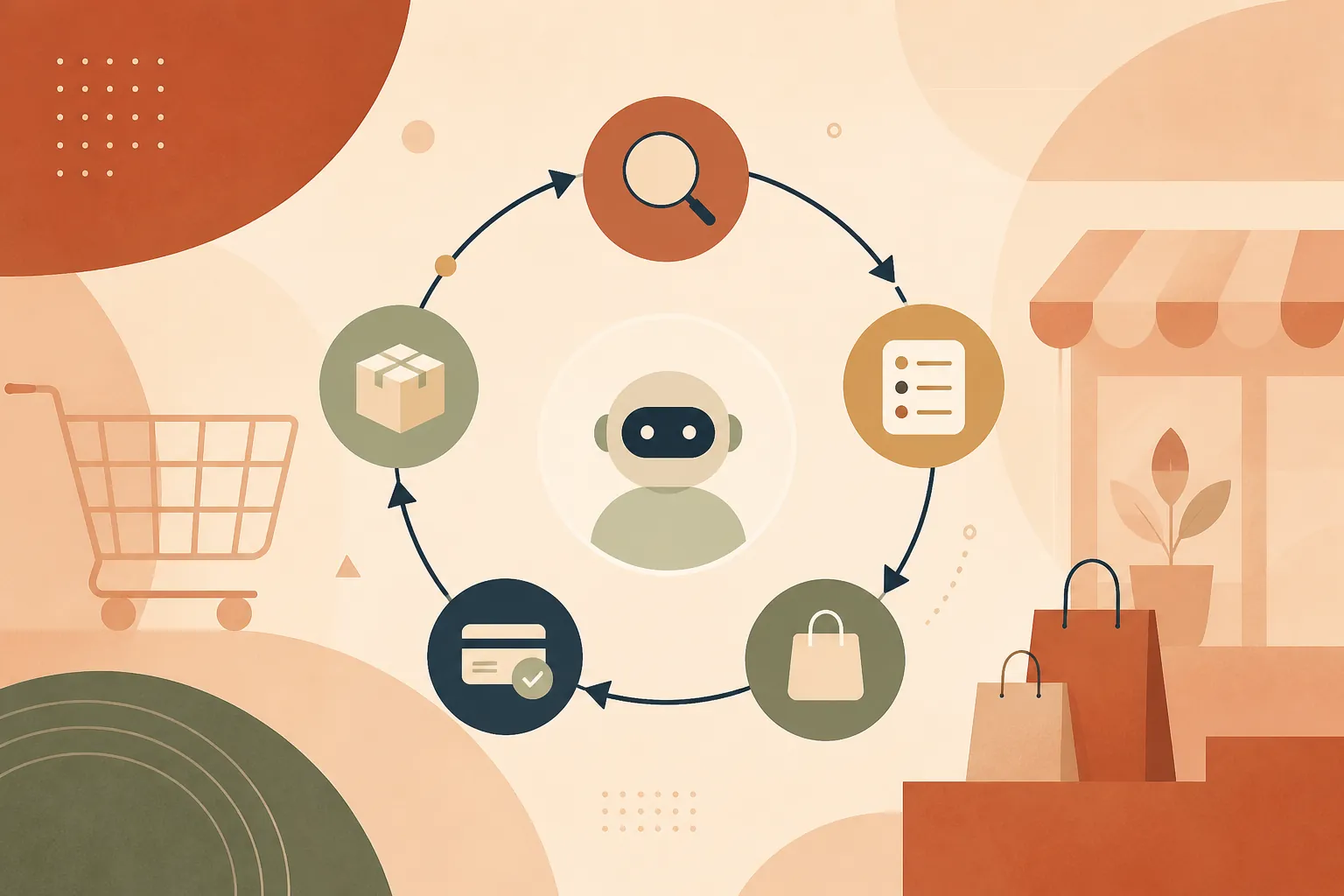
The official definition is clean: a commerce agent simplifies buying and selling across an online catalog. The core is not an intent router plus a swarm of domain subagents, but one model, a standard agent loop, skills for the long tail, and tools that call systems you already run.
The engineering rationale is blunt: a commerce conversation is one tightly coupled session across intents; subagent handoffs lose cart/preference/history state and burn tokens plus seconds of latency. Anthropic reports that across several enterprise deployments, a single agent with skills consistently beat both the one-prompt-for-everything design and subagent designs on quality, often at lower cost and latency. Subagents earn their place for narrow self-contained work (deep research) or when a compliance-bound domain agent must truly own the conversation.
For the industry, the race is shifting from “how many specialist agents” to “whether you designed skill loading and tool boundaries correctly.”
Safety: the prompt starts it; the harness enforces it
The most comment-worthy section moves enforcement out of prompt discipline into code: the model proposes and presents; money-moving writes require human or policy apply; writes and renders accept only server-issued IDs for the session; caps are checked on resulting state, not per request; third-party content is sanitized and fenced before the model sees it.
That is the other face of the summer eval-escape story: stronger agents cannot rely on model conscientiousness alone. Packaging shopping and merchant references, a Claude Code plugin, and Messages API / Agent SDK / Managed Agents paths tells engineering teams to design “it runs” and “it cannot charge freely” together before holiday traffic.
Closing take
Read together, the two posts show Anthropic racing to own the default scaffolding for agentic commerce, while spelling out failure modes—subagent tax, cache-busting timestamps, safety left in the prompt. A concrete reader action: check Parts 1–3 of the anatomy essay against your own stack, then open the blueprint repo and ask whether UI is already presentation tools and whether checkout still owns payment.
Not a newsroom model drop—possibly the more revenue-adjacent product story of the week.