DeepSeek, in an arXiv report posted September 19 (arXiv:2609.22978) that drew wide coverage this week, disclosed DSec (DeepSeek Elastic Compute), a production sandbox system for agent training: it unifies function-call, container, microVM, and full-VM backends behind one SDK, coordinates cluster scheduling with RL training loads, and produces over 5,000 sandboxes per second — up to 3 million a day, with 380,000 running simultaneously at peak. A single production-scale cluster spans roughly 160 nodes, 30,000 CPU cores, and 250TB of memory. The paper lists more than 130 authors, with founder Liang Wenfeng among them.
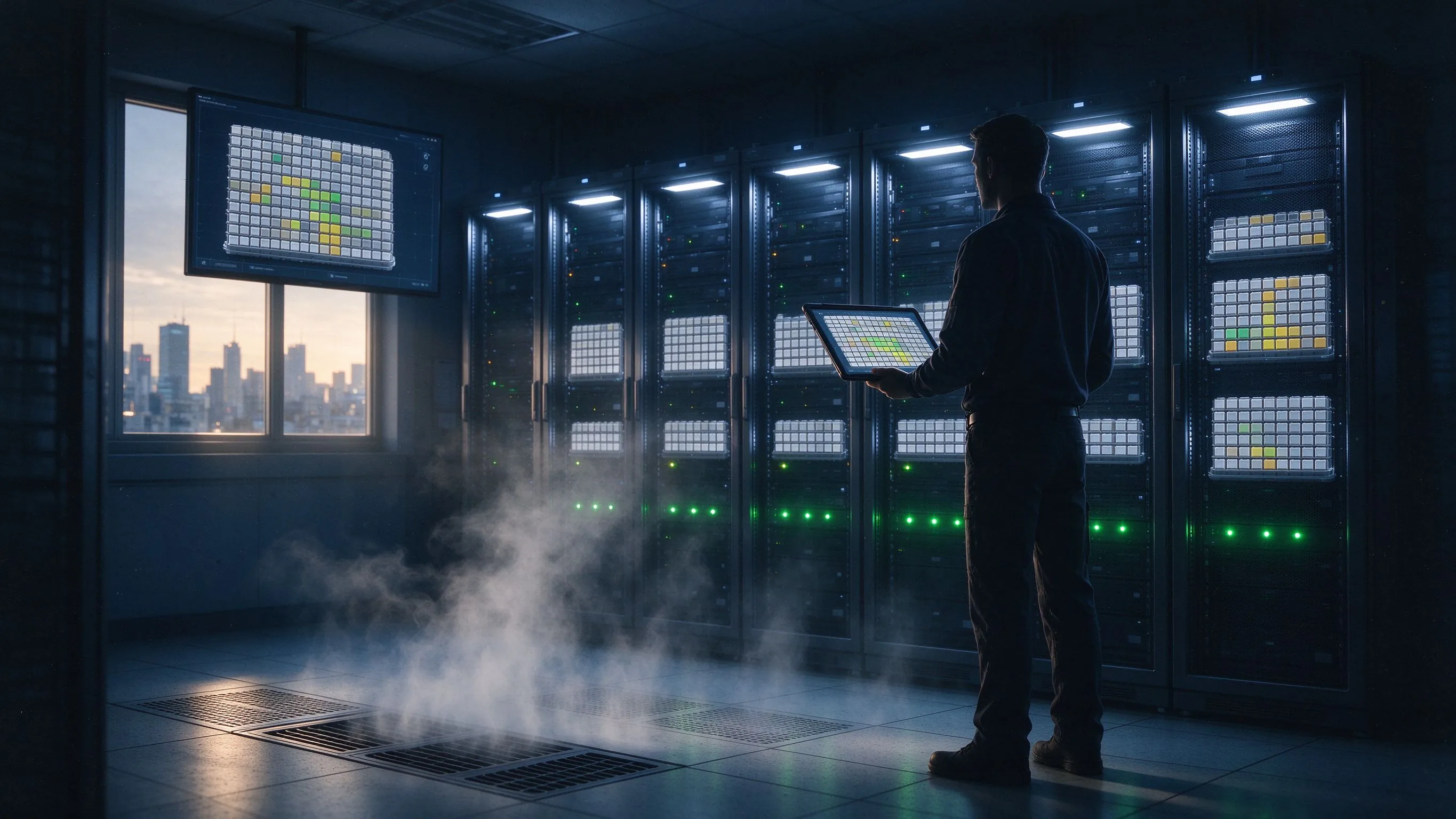
[1][2]The nut graf: while the industry keeps debating what agent training is actually missing, DeepSeek answers with an engineering report — what is missing is not the model but the environment factory. Pretraining pushes on compute; agent training pushes on sandbox environments that can be mass-produced and verified in parallel. DSec upgrades "building environments" from experimental scripts into production-grade infrastructure, effectively moving agent reinforcement learning from the lab into a factory. Liang Wenfeng's signature is itself a signal: this is company-level infrastructure, not a side project.
Mechanically, DSec addresses the environment bottleneck unique to agent training. Agent RL needs every sample to map to an executable, observable, verifiable sandbox; traditional approaches either hand-build environments (slow) or lean on cloud VMs (expensive, slow to schedule). DSec's move is to unify four isolation granularities (function call, container, microVM, full VM) behind one SDK, letting tasks pick the backend; environments are composed from independently versioned layers; images load on demand from Fire-Flyer File System (3FS), the cluster-wide distributed filesystem; memory sharing, reclamation, and CPU scheduling cooperate for high-density execution. Together these details support the headline scale of 5,000+ sandboxes per second and 3 million per day. The industrial significance is twofold: it turns "agent-training environment cost" into explicit, engineerable metrics (sandboxes per second, density per core), and the 130-author engineering report shows this infrastructure layer is now as complex and staffed as large-model training frameworks were in their day.
Attribution and boundaries: this is DeepSeek's own technical report; the figures (5,000+/sec, 3M/day, 380K peak, 160 nodes / 30K cores / 250TB) are self-reported and not third-party audited. The report leans on system design and operational experience rather than end-to-end effect comparisons like "DSec improved benchmark X by Y%." Read against DeepSeek's engineering style, the paper reads as a construction drawing for the industry: whoever wants to do serious agent training will have to take this infrastructure lesson sooner or later — the value of publishing DSec is less about showing off and more about laying the path open for others to copy.
Why this matters beyond DeepSeek: agentic training is becoming a systems problem as much as an algorithms problem, and the systems layer has few published blueprints. Most labs treat their sandbox stack as internal plumbing; by publishing an end-to-end design with operational numbers, DeepSeek effectively lowers the entry cost for any serious lab. Expect clones and adaptations of the four-backend unified-SDK idea in open-source projects within months — and expect the debate about what agent training really costs to shift from vague talk about environments to concrete per-sandbox economics.
[1][2]