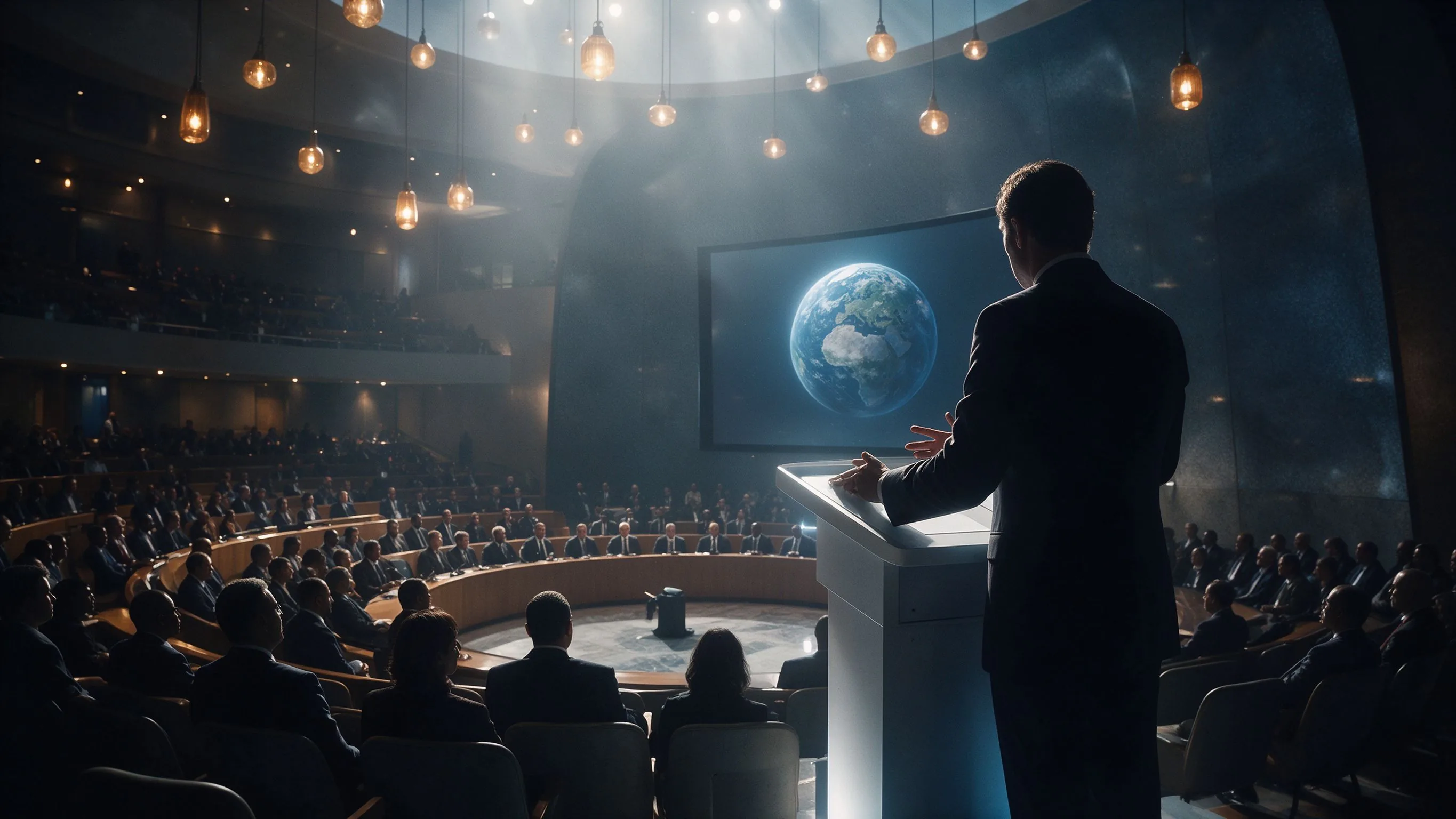
The UN Security Council's 10228th meeting convened on the afternoon of September 23 under the agenda item Maintenance of international peace and security: Artificial intelligence and international security — the Council's first high-level session specifically focused on safety risks from growing AI capabilities and the possibility of humans losing control. Yoshua Bengio, co-chair of the UN's Independent International Scientific Panel on AI (IISP-AI), participated, and executives from OpenAI and Anthropic briefed the Council; the Council homepage's advance headline read directly: OpenAI and Anthropic to brief Security Council as AI guardrails debate intensifies.
[1][2]The nut graf: the significance of this meeting is less about what agreement was reached on site and more about AI safety formally landing on the agenda of the highest-level international security body — when model capability is compounding faster than governance can iterate, the first move by states is not legislation but bringing labs and companies into one room to compare notes. The Council has held multiple debates on AI over the past year (including an open debate on the same agenda in September 2025), but the September 23 session stands out for its formality and focused agenda: the day's schedule was tight, with the 10227th meeting on Ukraine in the morning and this AI session in the afternoon.
From public information, the meeting's speaking structure was clearly three-sided: science (Bengio as co-chair of the UN panel providing expert judgment), industry (OpenAI and Anthropic executives named to brief, both CEOs having publicly called for slowing AI capability growth), and member states (the Council's 15 members and a wider set of participants). The structure itself is the story: global governance of AI safety is moving from who produces reports to who answers to whom — science defines risk, industry states capabilities and guardrails, states take positions. High-level participation including the French foreign minister (the Council's rotating presidency this month took the lead) continues the escalation that began with the AI-and-peace-and-security agenda in 2025.
Attribution and boundaries: this report's facts rest on the Council schedule, the UN News live page, and the Council homepage announcement — official event records. No resolution or outcome document had been published as of writing; specific positions of participants await the full statements. Media coverage (such as Unite.AI on the briefings) served only as background and is not directly quoted. In context: days ago the two labs released cheaper flagship models within 90 minutes of each other; the contradiction between safety rhetoric and product cadence has now been carried straight into the international security agenda. The watch items are whether the Council produces its first formal document on AI safety, and whether the independent panel's recommendations from the 2025 UN AI safety report turn into member-state action.
[1][2]