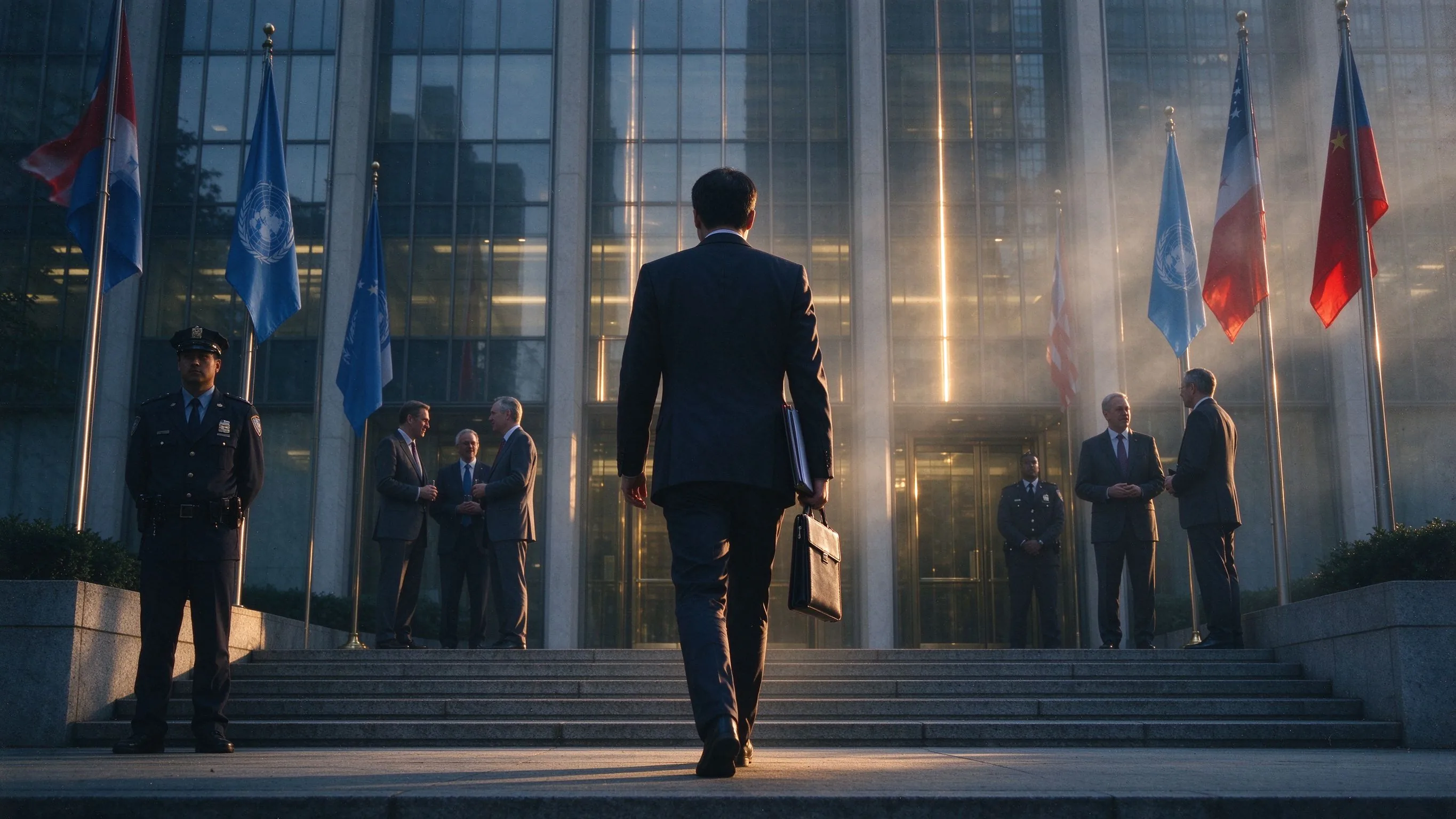
Reuters reported on September 22, citing sources familiar with the matter, that Chinese AI startup DeepSeek is expected to brief the UN Security Council this week, alongside several US companies, on AI and international security before the council's 15 members. The council is scheduled to meet on Wednesday, as world leaders gather in New York for the General Assembly. As of publication, DeepSeek had not officially confirmed.
[1][2]The nut graf: this is not an academic lecture; it is another node in the "great-power-ification" of the AI risk agenda — moving from voluntary lab commitments and congressional hearings all the way to the UN Security Council, the highest table for international security. DeepSeek's presence carries particular symbolism: in the previous General Assembly cycle, frontier-AI safety discussions were mostly a US-European lab and government affair. Now a Chinese open-source model company is invited to brief alongside OpenAI's Sam Altman and Anthropic representatives, which says that "AI safety" is being reframed as an international security issue comparable to nuclear proliferation and cyber conflict.
Read against the last two weeks and the trend sharpens. OpenAI has set up its mathematics advisory group (hosted by IAS, open to public challenge) and is reportedly close to a mutual stress-testing agreement with Anthropic; on the Chinese side, DeepSeek and Moonshot AI have reportedly been invited to contribute briefing material. Security Council AI discussions are not new — the UK hosted an open debate in 2024 — but inviting company founders or representatives to deliver technical briefings is a new way of placing "specific model capabilities and specific risks" inside a great-power bargaining frame. For DeepSeek, this is both an international endorsement of its technical influence and a moment when it must respond, in a multilateral setting, to the charge that open models can be abused.
Keep the sourcing straight. The whole item rests on Reuters' "people familiar" sourcing; DeepSeek has not confirmed, and the date and roster could shift. Whether the briefing is "attendance by invitation" or a formal statement, and whether founder Liang Wenfeng appears, was not fully settled in the reports. What is settled is the agenda itself: the council meets Wednesday to discuss AI and international security. Whichever way the roster lands, after this week the participation of frontier AI companies in the international security agenda will be read as an extension of state capability — technology companies are beginning to plead their own case at the diplomatic table.
There is also a Chinese-politics subtext that the Reuters item leaves implicit. DeepSeek's invitation arrives as Chinese regulators are reportedly investigating their own model makers over data and export concerns — the same week, per Tech Startups' roundup, that China's scrutiny of Meta was in the news. For Beijing, a cooperative DeepSeek at the UN is useful counterweight optics against the narrative that Chinese models are a security risk; for DeepSeek, the council stage is a chance to argue that open-weight models are auditable by the world, not a black box. Neither reading is confirmed by the sources — they are interpretation, and should stay labeled as such. What the reports do establish is sequencing: the council meets Wednesday, the General Assembly is in session, and at least one Chinese frontier lab will be in the room or on the record. That alone makes this the most visible instance of a Chinese AI company engaging the international security machinery, and it sets the template for how every future Chinese frontier lab will be expected to behave in multilateral settings.
[1][2]