
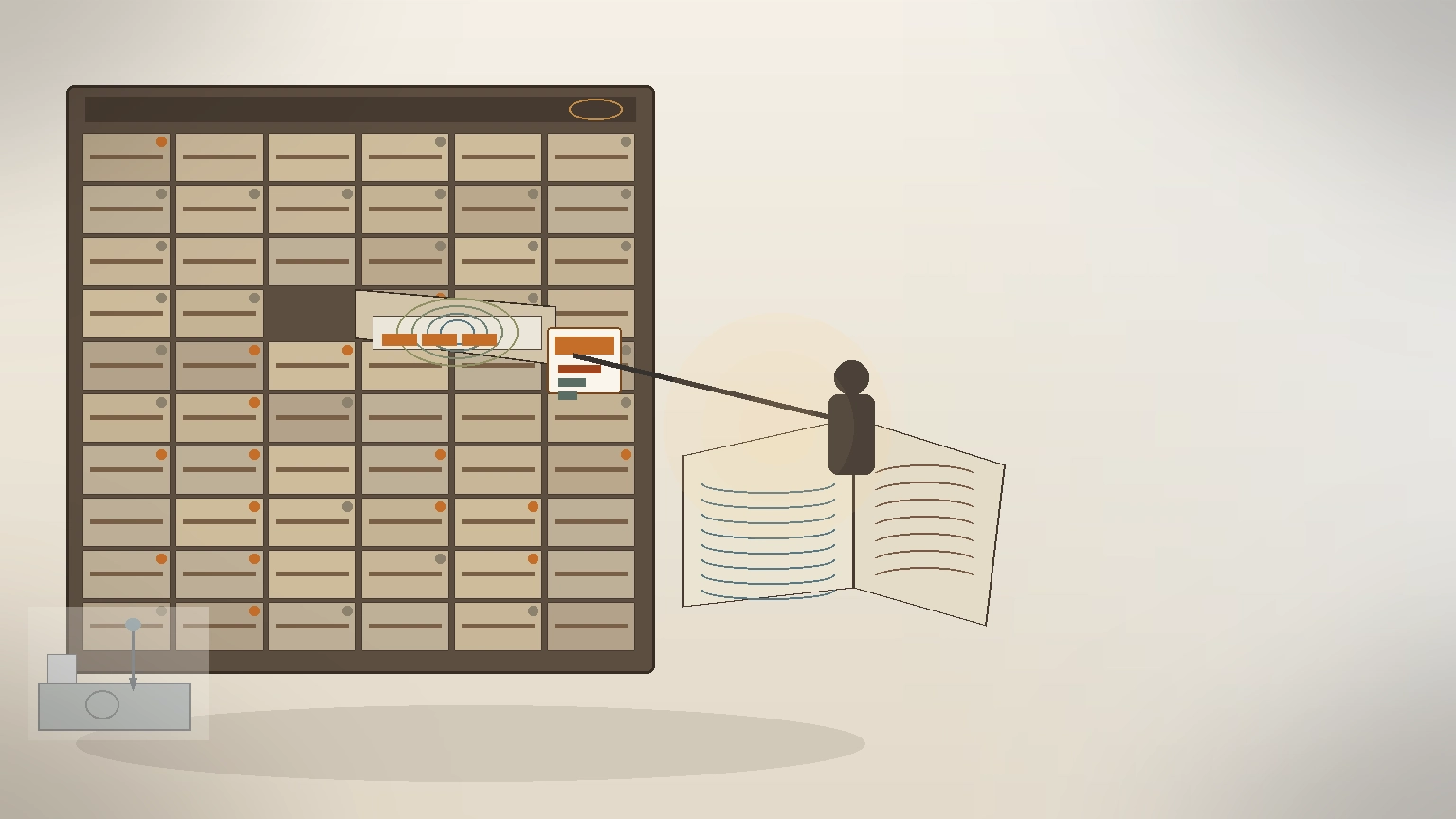
Google DeepMind published, on 8 September 2026, an official Science blog post titled “AlphaGenome Atlas: A predictive map of every possible DNA letter change in the human genome.” Fact (as stated): the lab is releasing AlphaGenome Atlas—a platform of precomputed predictions for the molecular effects of about 9 billion single-nucleotide variants, framed as every possible single-letter change in the human genome—together with an AlphaGenome Variant Impact (AVI) score, feature attributions, and a catalogue of more than 2,500 recurrent DNA sequence motifs. Also stated: the Atlas is a roughly 1-petabyte dataset, “more than 30 times larger than the AlphaFold Database,” free for academic research via a website portal, the AlphaGenome API, and a skill in Google Antigravity; commercial Cloud access is promised “soon.” A closing disclaimer says Atlas is not medical advice and AlphaGenome is not validated or approved for clinical use.
The headline invites a wet-lab metaphor, but what shipped is a distribution layer. Atlas does not claim to have experimentally assayed billions of variants. It precomputes AlphaGenome (and, for AVI, AlphaMissense) predictions at genome scale and packages ranking, attribution, and browsing for labs without a private inference stack.
[1]What shipped: catalogue, score, portal
Four interlocking artefacts remain once the atlas metaphor is stripped.
Fact — molecular-effect predictions. For each variant, Atlas stores “thousands of molecular effect predictions” across multiple aspects of gene regulation and “hundreds of human and mouse cell types and tissues.”
Fact — AVI score. One number per variant that DeepMind says combines AlphaGenome’s regulatory predictions with AlphaMissense’s protein-altering scores, so coding (~2% of the genome) and non-coding (~98%) variants share a ranking scale. “AVI feature attributions” flag contributing categories such as chromatin accessibility, splicing, and conservation.
Fact — motif compendium. “Over 2,500 recurrent DNA sequences” and their locations—the genome’s interpretable “words.”
Fact — access surface. A portal aimed at users “with no coding experience,” plus API and Antigravity skill; non-commercial now, Cloud commercial later. The AlphaGenome base model remains separately available for academic use on GitHub and via API, and commercially on Cloud Model Garden.
None of these is a new experimental map of the genome. They are an indexed store of model outputs plus a ranking layer—the same product category as the AlphaFold Database precedent DeepMind explicitly invokes.
[1]Why “distribution infrastructure” is the falsifiable spine
DeepMind’s framing does most of the work. The post compares Atlas to the 2022 AlphaFold Database expansion—from roughly 190,000 experimental structures to more than 200 million predictions—and says the aim is again accessibility. It calls Atlas “a baseline rather than an endpoint,” to be refreshed as AlphaGenome improves.
Inference (labelled): the strategic object is not a one-shot discovery about any particular disease gene. It is to occupy the default lookup layer for variant molecular effects the way AlphaFold occupied the default lookup layer for protein shapes—lowering the cost of asking “what might this letter change do?” before anyone opens a pipette.
That reading is falsifiable. If independent groups cannot get usable portal or API access for ordinary academic workflows, the accessibility claim fails. If AVI’s “best-in-class” ranking does not survive independent, non-collaborator benchmarks on held-out rare-disease and pathogenicity sets, the ranking claim fails. If top-AVI variants do not enrich for experimentally confirmable effects better than established scores, the “accelerate validation” pitch fails. The thesis does not require Atlas to be useless; it requires judging it as infrastructure whose performance must be measured outside the launch narrative.
[1]Evidence on the page: strong packaging, collaborator-scale validation
Strong as company disclosure: named scale (≈9 billion SNVs; ~1 PB; >30× AlphaFold DB); multi-resource design (effects + AVI + attributions + motifs); coding/non-coding scope; named collaborators (University of Exeter, Broad Institute, Boston Children’s Hospital, Stowers Institute, Harvard, Memorial Sloan Kettering, Mass General’s Center for Genomic Medicine, University of Kansas Medical Center, among others); and a clinical non-use disclaimer.
Reported collaborator results (DeepMind’s telling, not independent audits):
- With GREGoR, Laura Covill and Anne O’Donnell-Luria (Broad) used AVI on unsolved rare disease; the post says they found a previously overlooked DNM1 variant linked to epileptic encephalopathy, predicted to create an incorrect splice site and abnormal protein extension, with “experimental screens” validating it and nearby similar variants.
- Gareth Hawkes (MRC fellow, University of Exeter) applied Atlas to whole-genome data from over 54,000 UK Biobank participants; DeepMind reports 22% more non-coding associations after grouping rare variants by predicted effects—including regulatory hits tied to PLA2G7 and EGLN1—and, focusing on the top 1% most impactful non-coding variants for body-mass index, 19 genetic regions.
- Julia Zeitlinger and Melanie Weilert (Stowers) used motifs to separate transcription factors that only alter DNA accessibility from those that also switch genes on or off.
Still thin: “best-in-class performance across many variant pathogenicity and rare disease benchmarks” is a company claim without, in this post, a full external methods paper, baseline table, or independent replication. Disease and biobank vignettes are real directions, narrated as trusted-collaborator outcomes. Compute cost, refresh cadence, low-AVI false negatives, and assembly or demographic limits are not detailed here.
[1]Steelman counter
Steelman: treat Atlas as DeepMind asks—an AlphaFold-Database-style public good. Precomputing every SNV’s molecular effects removes a brutal bottleneck: most labs cannot run genome-wide AlphaGenome inference, and rare-disease analysts drown in candidates. AVI’s single score across coding and non-coding space is what many clinical genetics workflows have lacked. Collaborator case studies are early-adopter proofs that the portal maps onto real cohorts (GREGoR, UK Biobank) and that some predictions survived experimental screens. Demanding a wet-lab map of 9 billion variants is a category error—the model’s job is to rank what to wet-lab next—and skepticism about “distribution” can slide into nostalgia for a world where only GPU-rich labs could ask the question.
The steelman deserves weight. It does not cancel the duty to keep company benchmark language and collaborator vignettes in separate evidence tiers until outsiders rerun the rankings.
[1]Six-month watchpoints
Watch four signals, not the word “atlas.” First: do independent rare-disease and statistical-genetics groups outside the acknowledgement list publish AVI head-to-heads against existing scores with open code? Second: does academic portal and API access stay free, stable, and documented enough for non-coding users—or does bulk use migrate only to paying Cloud tiers? Third: when AlphaGenome updates, does Atlas versioning show which prediction generation a paper used? Fourth: do journals and consortia start expecting Atlas/AVI lookups the way many already expect AlphaFold figures?
If those checks hold, DeepMind will have shipped a default reference layer for variant molecular hypotheses. If not, Atlas remains a large prediction dump whose launch stories outran independent validation. Either way, evaluate the warehouse and the ranking ticket—not a newly measured genome.
[1]