
要点
- Altman, speaking Monday at a Semafor event, said he does not know enough to say whether Huang should return to Nvidia, and that the industry will be "fine" because demand and revenue are growing strongly.
- He said Nvidia is "a behemoth of a company" and that "people still trust their guarantees very much." OpenAI is a beneficiary of those guarantees.
- Nvidia's Form 10-Q for the quarter ended July 26, 2026, says that in August 2026 it entered into guarantees capped at a total of $105 billion as credit support for land, power, and shell leases covering about 4.25 gigawatts of IT load at SB Energy's PORTS campus in Pike County, Ohio, on behalf of an OpenAI affiliate. Payments are triggered by certain tenant defaults, and the guarantees cover defined portions of lease and power payments, not the full cost of the site.
- Elon Musk, Tim Sweeney, and other executives have signed a public letter urging Nvidia to reinstate Huang. Altman did not join that call in the remarks TechCrunch reported.
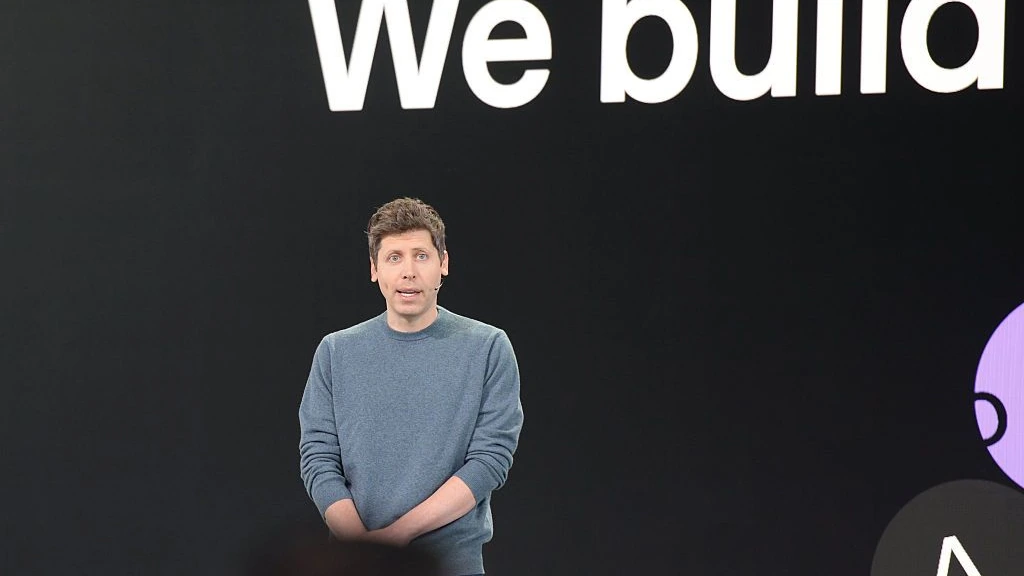
OpenAI CEO Sam Altman said on Monday that the AI industry will be "fine" without Jensen Huang running Nvidia, even as he described Huang's role in the boom as extremely special. The remarks, his first public comments on Huang's departure, came at Semafor's Silicon Valley & The World event and were reported by Rebecca Bellan in TechCrunch on November 16, 2026.
The sentence that matters is not the compliment. It is Altman's claim that Nvidia remains "a behemoth of a company" and that "people still trust their guarantees very much." OpenAI is not a bystander to those guarantees. Nvidia's Form 10-Q for the quarter ended July 26, 2026, says the company entered into guarantees in August, capped at $105 billion, to provide credit support on a land, power, and shell buildout at SB Energy's Ohio campus on behalf of an OpenAI affiliate. What can be checked in the next six months is whether that credit support still looks solid, not whether Altman has settled the argument over who should be CEO.
[1][2]What Altman actually said
TechCrunch reported that Huang resigned last week after admitting to an affair with an alleged Chinese spy. Asked whether Huang should return, Altman said: "I don't think I know enough to answer that question." That is more cautious than the public letter signed by Elon Musk, Epic Games chief executive Tim Sweeney, and other industry figures, which has urged Nvidia to reinstate him. TechCrunch also reported, citing the Financial Times, that Huang is setting up a "war room" of Silicon Valley executives to lobby for his return.
Altman expressed empathy, pointing to his own removal from OpenAI in 2023 after board members accused him of withholding information. "It's hard to imagine the AI revolution without Jensen and the company he has built," he said. He called Huang a hero, and said "heroes have flaws."
He acknowledged the "ambition" Huang brought, and said the scale of that ambition "has been quite important." He did not agree with those who fear Nvidia will now pull back from the financial risks that have helped fund the boom. "I think there's so much demand, and it's so clear that AI is real, and people want to use it, and the revenues and demand are growing so strongly that I think the industry will be fine," he said. "But again, I think Jensen has played this extremely special and valuable role as someone to really drive things forward with great ambition."
[1][2]The guarantees behind the reassurance
TechCrunch described the OpenAI-Nvidia relationship as one that has moved from a simple chip supplier-customer arrangement into a potentially circular financing structure, meaning Nvidia's money helps fund purchases of its own chips. As one example, the article said Nvidia agreed to provide a guarantee of up to $105 billion backing OpenAI's Ohio data center project.
The company's Form 10-Q is more precise, and in one respect narrower, than that shorthand. Nvidia said that in August 2026 it entered into guarantees, capped at a total of $105 billion, to provide credit support on a land, power, and shell buildout with affiliates of SB Energy Corp. on behalf of an OpenAI affiliate. The leases cover about 4.25 gigawatts of IT load, meaning computing capacity in the data halls, at SB Energy's PORTS Technology Campus in Pike County, Ohio. Each guarantee generally becomes effective when the applicable lease starts. The guaranteed amounts rise as each of nine construction phases is completed. The first phase is expected in Nvidia's fiscal year 2029, which begins in calendar 2028. Payment obligations are triggered by certain tenant defaults. The amount is expected to fall over each phase's 20-year lease term. The guarantees are limited to defined portions of lease and power payments, not the full cost of the site or all of the tenant's obligations. They end if OpenAI reaches a satisfactory credit rating, or when the relevant lease term is finished. Nvidia also holds an option, exercisable at its sole discretion, to provide additional credit support for about 3.8 more gigawatts.
In a table in the same filing, Nvidia listed $105 billion of SB Energy guarantees and $3.5 billion of other land, power, and shell guarantees for AI clouds, for a total maximum gross exposure of $108.5 billion.
TechCrunch wrote that Altman is not worried the "Bank of Nvidia" will dry up. His confidence is a statement by a customer whose Ohio leases sit behind the largest of those figures. It is not an independent audit of whether Nvidia's next leadership will keep writing similar support, or whether counterparties will still treat the outstanding guarantees as solid if the succession fight continues.
[1][2]The strongest case for Altman's view
The strongest reading of Altman's remarks does not require him to be a disinterested observer. Demand for AI computing could be large enough that chip supply and project finance find a way, even if Nvidia's appetite for this kind of credit support changes. He also refused to join the campaign to bring Huang back, which is a more careful position than a blanket endorsement. If revenues keep growing as he described, the industry's near-term constraint may be power, land, and chips, not the identity of Nvidia's chief executive.
That case can be true and still leave his guarantee comment as a statement of interest. OpenAI benefits if investors, lessors, and other counterparties continue to trust Nvidia's credit support. An industry that is "fine" in general, but in which those guarantees are tested, rewritten, or allowed to expire on tighter terms, would not be the same as the one he was describing.
[1][2]What to watch in the next six months
The first test is contractual, not rhetorical. Watch whether the Ohio leases start on the schedule implied by the 10-Q, and whether Nvidia discloses any change to the $105 billion cap, the nine-phase timetable, or the optional 3.8 gigawatts. Watch whether other credit support of this kind is renewed, widened, or quietly stopped under interim leadership. Watch whether other lab chiefs repeat Altman's confidence, or start talking about backup suppliers and alternative financing. The lobbying effort to return Huang, and any board decision that follows, will be noisy. A clearer test is whether counterparties still treat Nvidia's outstanding guarantees as reliable. If they do, Altman's "fine" will look better supported. If they do not, the compliment to Huang's ambition will matter less than the credit.
【No.2】
[1][2]