
On August 31 OpenAI said ChatGPT Ads hit about a $1 billion annualized revenue run rate in under 200 days. Ads is cast as one pillar beside subscriptions, enterprise, and usage APIs, funding an advertising-supported free tier for more than a billion weekly active users. Self-serve Ads Manager opened across India, Europe, the Middle East, and North Africa the same day; the company claims availability in 40+ countries and tens of thousands of advertisers.
Forbes framed the pace as a jab at early Google ad growth: a business that barely existed in January is already booking on a billion-dollar run-rate.
[1][2]Mechanism: ads stay out of the answer, glued to the decision
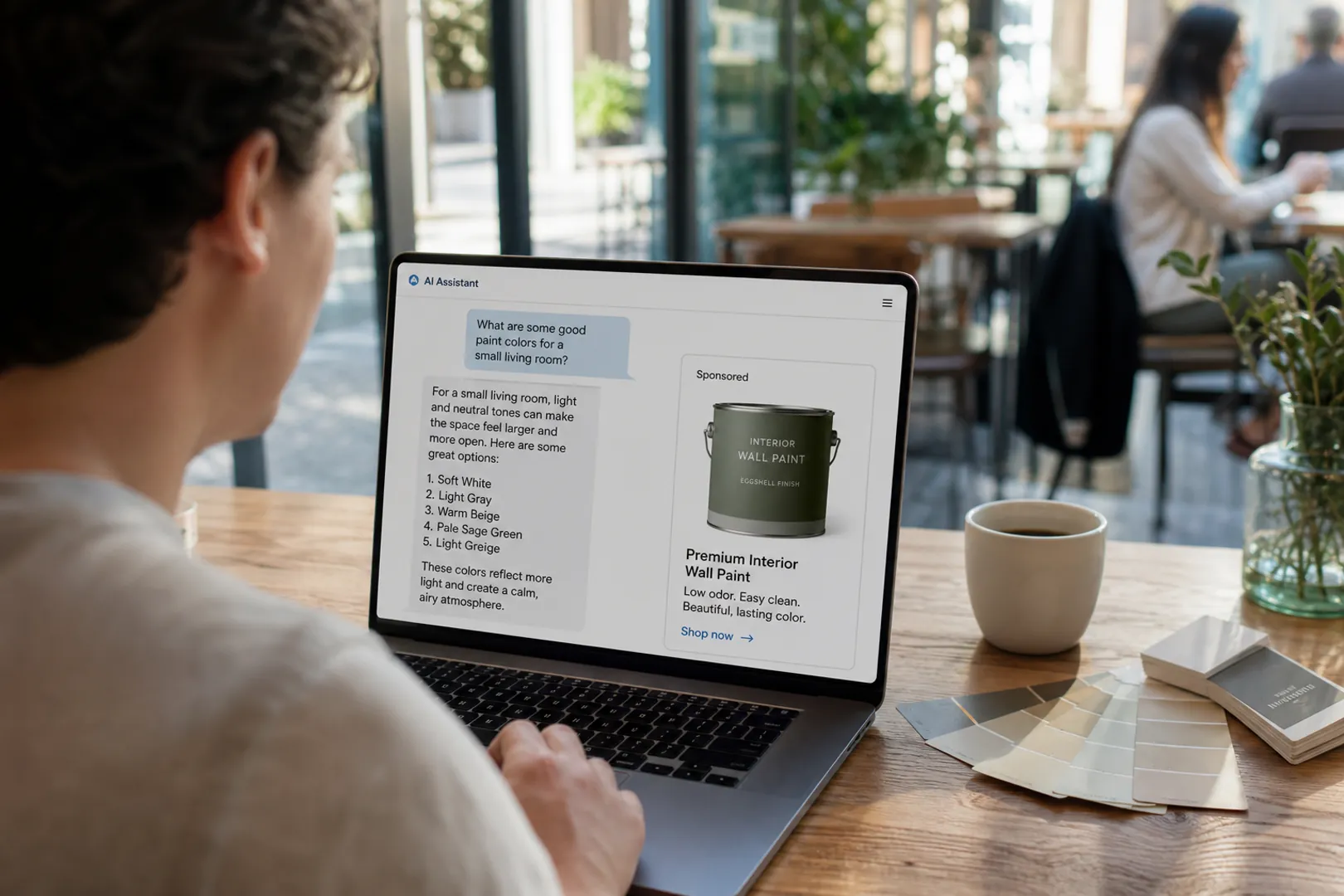
OpenAI repeats the principles: ads are labeled and separated from answers; ads do not change what ChatGPT says; advertisers do not get private chats; users control personalization. The system matches on current conversation context and, where settings allow, broader ChatGPT context. The pitch is that people arrive with goals—picking software, learning a language, renovating, job hunting—so discovery and decision share one thread, and ads are “useful, relevant information.”
[1][2]Why this is a pre-IPO balance-sheet story
A billion-WAU free tier funded only by subsidy is a cost center; one that throws off a billion-dollar ad run-rate is a story investors can underwrite. Expanding self-serve turns managed sales into a scalable funnel. Brands get high-intent conversational inventory after search; users trade free access for context-targeted cards.
The risk lives on the same page. Session-level targeting is stickier than keywords, and labels like Europe’s “very large online search engine” follow the traffic. If Sponsored cards start dragging decisions, trust metrics will crack before CTR does.
[1][2]Who moves in the near window
Global brands and agencies will rush accounts. Free-tier individuals may not see a product rewrite, only more labeled cards. Microsoft and Google ad inventories gain a new foil—recommendations inside task threads, not a generic feed. OpenAI gains a revenue curve that is not only a GPU gross-margin tale.
[1][2]Take
I read two hundred days to a billion run-rate as the free tier finally growing its own boiler. The principles read well; the stress test is self-serve at scale—hard blocks on deceptive creative and sensitive decisions (health, finance, minors), and whether ads statistically bend final choices. Fail that, and the run-rate is just trust cashed into ARR.
[1][2]