
要点
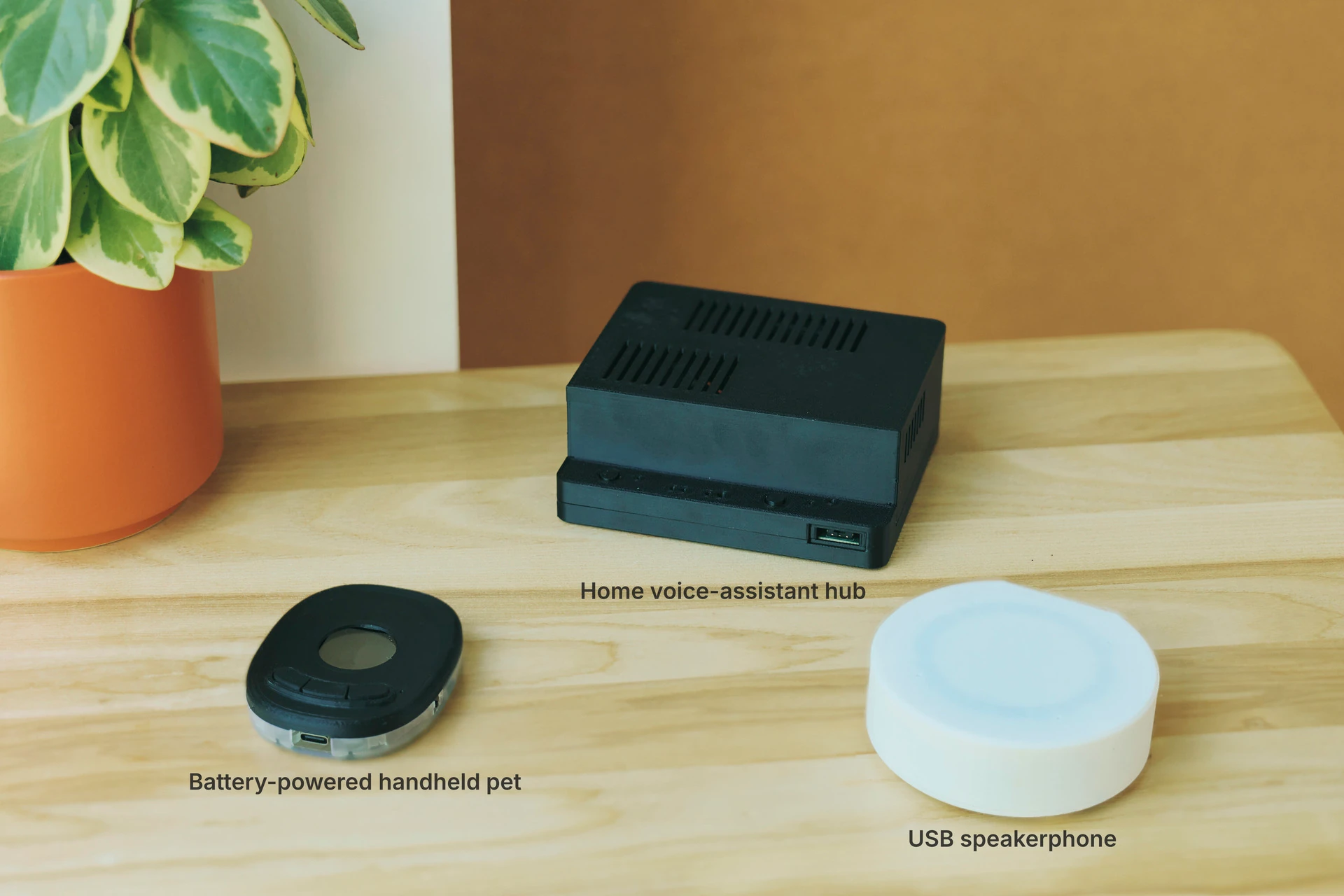
- On 9 November 2026, Anthropic described a new collaboration with Diode Computers in which Claude Fable 5.2 designed a USB speakerphone, a home voice-assistant hub, and a battery-powered handheld pet.
- Diode assembled the boards from Claude's design files and ran the firmware under Claude's direction. Anthropic says the prototypes worked without any fixes to their circuitry, and were still working after weeks of use.
- On Diode's internal PCB Gym benchmark, which scores how well a model can place parts and reroute connections on boards whose layouts have been removed, Fable 5.2 scored 69%, against 25% for Fable 5. A chart in the post also plots those scores against total API cost, and includes other models.
- On BenchCAD 2.1, a public benchmark for rebuilding 3D parts, assemblies, and circuit boards from drawings and images, Fable 5.2 scored 83.5%, nearly double Claude Fable 5.1.
- Anthropic discloses a commercial relationship with Diode. The devices remain prototypes: they have not been through electrical validation, antenna tuning, thermal testing, or certification, and were not designed for mass production.
On 9 November 2026, Anthropic published a research post about asking Claude Fable 5.2 to design three electronic devices: a speakerphone, a voice-assistant hub, and a handheld virtual pet. The work was done with Diode Computers, a company that designs and manufactures circuit boards, and with which Anthropic has a commercial relationship. Anthropic says Diode built the boards from Claude's files, ran the firmware under Claude's direction, and did not have to fix the circuitry or go back and forth over manufacturing changes. The prototypes still worked after weeks of use. That is a concrete hardware result. It is not evidence that these devices would pass commercial tests, or that a factory could make them in volume.
[1]What was built
A little over a year earlier, Anthropic and Diode had tested older Claude models on basic tasks, such as reading a chip's datasheet and working out which supporting parts a chip needs. Those models, Anthropic writes, could not reliably lay out a circuit board and struggled to design parts that fit together.
This time, each device started from a short prompt that named the product and its main hardware needs. The speakerphone prompt, for example, asked for "a puck that plugs into a computer over USB-C and includes microphones and a speaker, supporting Bluetooth with a PCB antenna." PCB here means the printed circuit board, the flat board that holds the parts and the copper tracks between them. Claude then wrote the specifications, drew schematics, placed the parts, routed the copper, designed a 3D-printable enclosure, wrote firmware, and prepared a parts list. Diode assembled the boards and ran the firmware. Anthropic says all three devices are still in good working order, and that prompting was minimal, limited to short directives such as "clean up the schematic" and "continue," with one longer exception noted below.
[1]The scores, and what improved
The post's main measured comparison is geometric. Earlier models placed supporting parts too far from the chips they served, or oriented connectors the wrong way. Fable 5.2, Anthropic says, produced more compact layouts, routed high-speed, high-current, and noise-sensitive connections first, and kept paired tracks the same length and spacing, including the USB and Ethernet pairs on the voice-assistant hub.
To put a number on the layout work, Diode ran PCB Gym, an internal benchmark that removes the layouts from board designs and scores how well a model can place components and reroute the connections. Fable 5.2 scored 69%, against 25% for Fable 5. A scatter plot in the post shows those points against total API cost in US dollars, and also plots other models, including Claude Opus 5.5, Claude Sonnet 5.5, Claude Fable 5.1, and GPT-6 Astra. Fable 5 sits near 25% and about $7,000. Fable 5.2's 69% point sits far to the left of that. The chart also marks lower-effort Fable 5.2 runs. The post does not print a table of every point on that chart. Reasoning effort is max unless marked otherwise, and the source is Diode's internal evaluation.
On BenchCAD 2.1, a public benchmark that tests whether models can rebuild 3D parts, assemblies, and circuit boards from engineering drawings and rendered images, Fable 5.2 scored 83.5%, nearly double the score of Claude Fable 5.1.
The post also describes a change in how the model revises its own work. Earlier models rarely started a layout over, even when a placement would never allow the connections to be finished. Diode, Anthropic writes, spent the past year with boards that were 95% complete and still unusable. Fable 5.2 reassigned signals on the speakerphone so that tracks under the touch controls could stay on one layer, then ripped up and rerouted a crowded corner rather than patching it with extra jumps between layers. On the hub, after the tracks became "too tangled to trace visually," it deleted and rerouted connections many times. It also wrote its own router when KiCad's built-in tool, which draws one track at a time between two points the model chooses, looked too slow for a 100-pin connector. Anthropic says that within about half an hour the new router could lay each long track in roughly a second.
Claude ran design-for-manufacturing and sourcing checks itself. On the hub, it widened six slivers of solder mask, the protective coating on a board, that the checks had flagged as too thin, and it correctly ignored a ground-to-ground connection that the automated checker had marked as an error. Diode manufactured all three boards directly from Claude's files, without a round of manufacturing changes. The Diode team, Anthropic says, was surprised by that.
[1]The fair case, and what is missing
The fair reading is that a year of work with a hardware partner has moved Claude from unreliable board layout to prototypes that could be assembled and powered on without fixing the circuits. The PCB Gym and BenchCAD numbers, and the manufacturing story, are specific enough to argue with.
The limits are also stated in the post, and they matter. These are early prototypes. They have not been through electrical validation, antenna tuning, thermal testing, or certification, and they were not designed for mass production. Claude was not connected to test equipment or to the machines that make and assemble boards, so Diode engineers still had to build and test the devices in the physical world. Anthropic has a commercial relationship with Diode, so the evaluation is not an independent lab result. One of the few cases where Diode prompted Claude at more length was a question about whether the handheld pet would work without a battery. Claude read the charger's datasheet and said it would run on USB power, but predicted that the charging light would flicker.
Anthropic notes that other laboratories are working in the same area, and points to a recent OpenAI post about using models to design a handheld device. The next research step it names is denser, faster, and more complex boards, checked in simulation, and improved with measurements taken on finished devices.
[1]Who should care, and what to watch
Hardware engineers deciding whether a model can draft a first board, and product teams that have been treating electronics design as out of reach for general models, should care. So should anyone reading a headline that Claude can now design electronics from start to finish. The start-to-finish path here still has a factory partner in the loop, and it stops at a working prototype.
In the next six months, the checks are straightforward. Do later boards get denser and still come back without layout revisions? Do electrical, antenna, and thermal tests appear, or does the public record stay at "it powered on"? And do scores on a public benchmark such as BenchCAD, or on a published PCB layout suite, get corroborated outside this partnership?
[1]Close
The useful fact in Anthropic's post is that three boards designed by Fable 5.2 were assembled as drawn and ran without circuit fixes. The 69% and 83.5% scores give that story a scale, and the commercial relationship with Diode gives it a caveat. The unfinished work is the ordinary kind in electronics: measurement, certification, and a design that a factory can repeat.
[1]