
At 20:14:44 UTC on 25 October 2026, the Kimi.ai account posted that the K3.1 Pro subscription plan had rate limits and unnecessary quota consumption. The note calls both of those the company's own problems and says they should have been handled sooner. That stamp is 04:14 on 26 October in Beijing, and it is still the afternoon of 25 October in the Pacific time zones. The compensation figure comes only from this post, not from a separate bill. The English post says every subscriber on every plan gets one usage reset that restores 25 percent of the monthly quota, and that usage already below 25 percent returns to zero. The same sentence equates that 25 percent with one week of usage. The week is the company's own conversion. The post does not attach a usage record.
[1][2]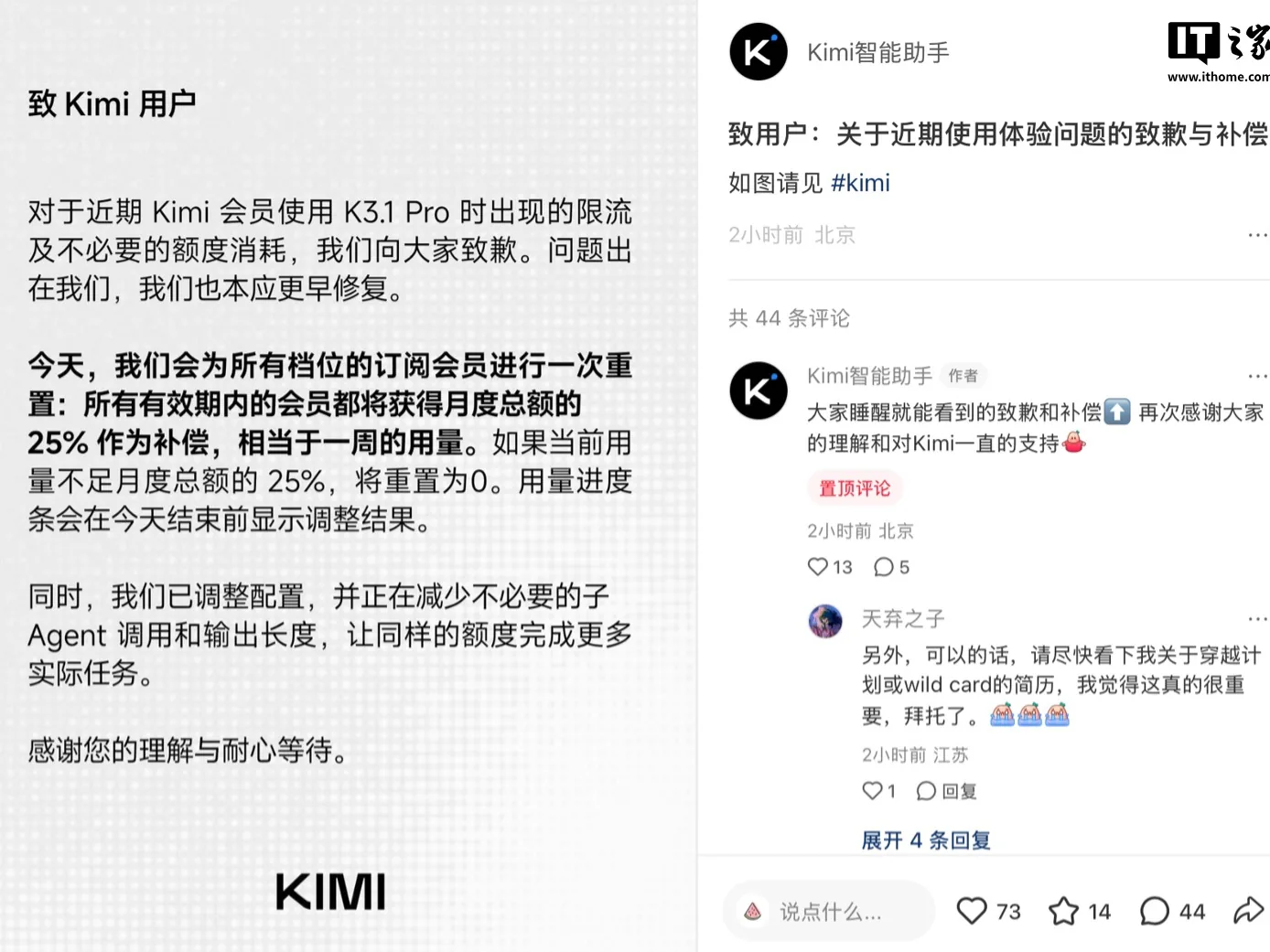
The Chinese note does not use the same deadline. The IT Home page is stamped 2026/10/26 7:10:49, and it reproduces the Chinese text from Kimi. That text says the usage bar will show the adjustment before the end of the day. The English post says the usage bar will reflect the adjustment by the end of the day, Pacific Standard Time. Both lines are public company text. The English post does not turn PST into a UTC clock, and the Chinese note does not name a time zone. Neither line says whether the bar had already changed when the note went up. The English timestamp is still 25 October in the Pacific time zones, while the Chinese note appears on a page stamped the morning of 26 October and uses the word for today. The two pages do not set the two lines to one shared clock.
[1][2]The English post also says the plan parameters have been adjusted and that unnecessary subagent calls and output length are being reduced, so the same quota covers more of the task. The Chinese note says the configuration has been adjusted and that unnecessary sub-agent calls and output length are being reduced. Both are company statements. Neither gives a call count, a length, or a before-and-after quota figure. The posts do not say how many subscribers are affected, what the rate-limit threshold was, or whether usage outside a subscription is reset as well.
[1][2]