
The Waymo blog is dated October 30, 2026, and the body has no clock. An exact hour on a topic card is not this article's event time. The calendar day is not before the backfill floor, and it cannot be placed inside a window that starts at 16:00 in Beijing, so this column files it as backfill. That day, Toyota and Waymo announced the next phase of the collaboration. It builds on a preliminary agreement announced in April 2025.
[1]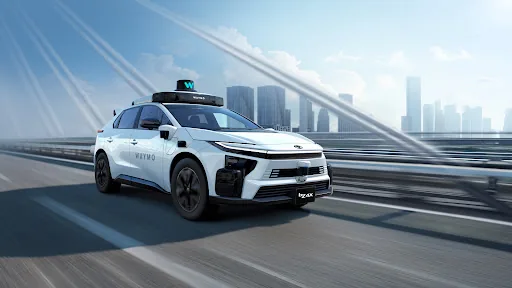
The plan, as written, is to begin initial operations in Japan in 2027 to test and validate an autonomous Toyota bZ4X fleet. Deployment to the United Kingdom and other markets Waymo already serves is planned for the following years. The post calls this a milestone in expanding Japan's first fully autonomous ride-hailing service that uses high-volume, domestically manufactured vehicles. That is the company's characterization, not an approval sentence from a regulator. Toyota will build the vehicles at the Takaoka plant in Toyota City, Aichi Prefecture, and the post says the work from the base vehicle to Waymo's autonomous-driving hardware happens under one roof. The stated aim is to scale safety-validated Level 4 autonomous vehicles.
[1]The vehicle description includes rear legroom, automatic doors, a power liftgate, and ambient lighting, offered as comfort and easier entry and exit. The companies will keep exploring autonomous-driving technology for personally owned Toyota vehicles. With Woven by Toyota, they will also explore how observations from Waymo's on-road operations might improve safety for other road users. A city list, a fleet size, and whether the approvals for a 2027 test are already in hand are not in the blog.
[1]Waymo co-CEO Dmitri Dolgov says Toyota's commitment to zero traffic accidents matches Waymo's direction, and that in areas where Waymo operates the company has reported being up to 20 times safer than human drivers on serious crash injuries. That is the company's statement in this post. The period, the injury definition, and the method are not attached. Toyota executive vice president Hiroki Nakajima says safety technology makes the largest difference when it reaches more people, that the collaboration will carry the technology to Japan and beyond through Waymo's ride-hailing service, and that Toyota will keep studying how vehicles and traffic infrastructure can make roads safer together. He also says no single company can reach zero traffic accidents alone.
[1]The picture is the blog's bZ4X with a roof sensor stack. It is the official image for this partnership, not a news photograph from a road test. 2027 is the year written for the start of testing and validation, not a year in which the service is already carrying passengers at all. The April 2025 agreement is described only as preliminary. The 2027 sentence is to begin initial operations to test and validate, which is a start of testing, not a start of general passenger service. The later years for the United Kingdom and other markets Waymo already serves are a plan, and the post does not name those markets past the United Kingdom. Under one roof is the manufacturing claim: the base vehicle and the autonomous-driving hardware at Takaoka. Level 4 is the company's label for vehicles it says have been safety-validated. The comparison of up to 20 times is limited, in Dolgov's wording, to areas where Waymo already operates and to serious crash injuries. It is not a new measurement published with this partnership. Nakajima's line about zero traffic accidents is a goal, not a date. The blog also does not say riders will own the bZ4X fleet. Personally owned Toyota vehicles are a separate sentence about continued exploration.
[1]