
要点
- His governing frame is "our risk, their reward." He supported New York State setting a one-year pause on data-center construction, and said energy-use data is scarce "by design." Companies, he argued, invest in making the technology seem mythical or divine.
- City actions he cites: what he called one of the most comprehensive AI moratoriums in any American school system, banning generative AI for students from 2K through eighth grade; a Department of Consumer and Worker Protection rule that realtors cannot use AI-generated images of apartments; and another rule limiting chatbot "doom loops."
- He said he worries AI resembles a housing bubble and that the bubble will pop. Asked whether he trusts "the Sam Altmans of the world," he said "No." His claim that training "the version of ChatGPT" used as much energy as powering San Francisco for three days, and his claims about China and Iran, are his assertions. The interview does not document them.
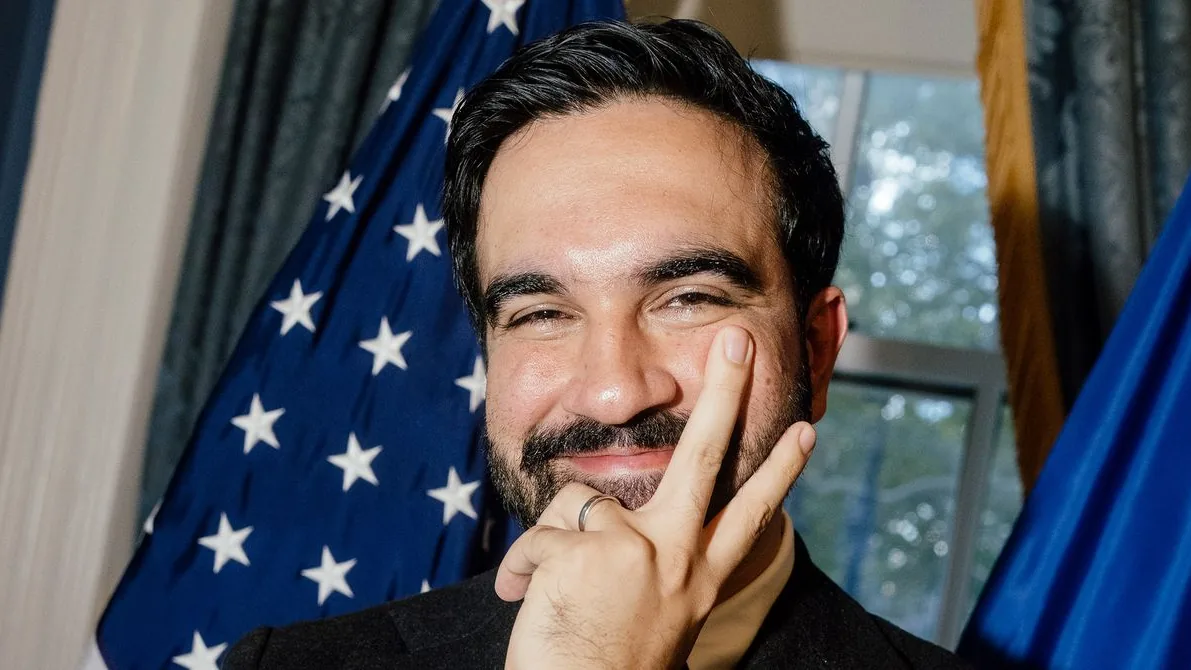
On Nov. 3, 2026, WIRED's Katie Drummond published a long interview with New York City Mayor Zohran Mamdani, recorded at City Hall ahead of the U.S. midterm elections. The piece says he was about 35, about 10 months into the job, and that his approval rating among city voters stood at 69 percent.
On data centers, he said the opposition cuts across usual party lines. "Me and Ron DeSantis don't have much in common," he said, yet both sides have opposed these facilities. The sentence he offered as a governing idea was "our risk, their reward." What a reader can check is the city rules New York has already put forward, and his support for a one-year state pause on data-center construction. Not the sentences in which he treats hallucinations and outdated information as causes of war.
[1]The hard facts below come from the full WIRED interview, which I read on Nov. 8, 2026, Shanghai time.
Opposition to data centers is, in his account, bipartisan. Municipalities in California, he said, have started banning data-center construction. He supported New York State setting a one-year pause on data-center construction. The next step, he said, is to recognize the costs that come with AI. Data about energy use is limited, "by design," because companies have an incentive to make the technology seem mythical or divine, so that the only rational response appears to be trusting the people who built it.
The energy claim is his: training "the version of ChatGPT" took as much energy as powering all of San Francisco for three days. The interview does not name a formal model and does not point to a calculation. This article treats that figure as the mayor's claim.
He said yes, he worries this looks like a housing bubble, and yes, he worries the bubble will pop. Asked, "Do you trust the Sam Altmans of the world?" he answered, "No."
On schools, he described "one of the most comprehensive AI moratoriums in any American school system," banning generative AI for students from 2K through eighth grade. 2K is New York City's childcare program for 2-year-olds. Students, he said, need room to try, fail and learn, and should not be "guinea pigs for the profit motives of technology companies."
He pointed to a The Daily interview with a mathematics professor "in tears," after AI's new ability to solve a long-standing problem left the professor and other mathematicians asking what purpose they still had.
On municipal rules, the Department of Consumer and Worker Protection said realtors cannot use AI-generated images of apartments. Another rule limits chatbot "doom loops," meaning exchanges that trap people in a cycle that is hard to exit.
He also said AI hallucinations "almost led us to war with China," and that AI's use of outdated information "led to our government bombing an Iranian children's school." The WIRED piece does not supply independent documentation for either sentence. They are the mayor's claims, not facts a reader can verify from this interview alone.
Asked whether technology is making democracy stronger or weaker, he again said weaker. Family members have sent him AI videos of himself that they thought were real, including a 45-minute fake debate with a European member of parliament. On surveillance technology at Madison Square Garden associated with James Dolan, he said a private citizen should not wield that power, and he pointed to legislation introduced by City Council member Shahana Hanif.
[1]The cost-allocation claim is usable because it is tied to city actions already announced. A generative-AI ban from 2K through eighth grade, a ban on AI-generated apartment photos, and support for a one-year state pause on data centers are easier to check than a warning that the technology is being sold as myth. Those steps either exist as rules or will leave a mark on the state's policy calendar.
"Our risk, their reward" also gives critics a clear target. If, over the next year, New Yorkers' power bills, environmental costs and classroom rules do not show the imbalance he describes, the frame weakens. If the state pause never takes effect, or if the school ban is hollowed out in practice, the frame weakens in the same way.
His San Francisco three-day power comparison, and the two sentences about China and Iran, come with no attachment, no report title and no date in the interview. Writing them up as proven events goes beyond what this conversation can support.
[1]The strongest steelman is that the power, water, land and grid upgrades for data centers often show up as bills for cities and residents, while the economic upside of training models stays with labs and cloud companies. Generative AI in schools can have the same shape: students supply use and attention, and companies get their products into classrooms. In his account the federal government has stepped back, so New York City has to use the tools it already has. Barring fake listing photos and limiting chatbot loops that people cannot easily leave are examples of that local patch.
The risk in that steelman is that the mayor folded federal policy, the midterms and geopolitical conflict into one interview, and the two heaviest charges arrive without an evidence trail in the piece. Bipartisan opposition to data centers is his observation. One interview cannot prove that national law has already turned. The 69 percent approval rating is WIRED's figure, not the load-bearing point of this argument. Comparing AI to a housing bubble states his worry. It is not an auditable valuation model.
[1]Over the next year, the checks are these: whether New York State's one-year pause on data-center construction takes effect; how the 2K-through-eighth-grade ban is enforced, and what exceptions appear; whether the realtor AI-image rule produces any enforcement cases; and whether City Council legislation on Madison Square Garden surveillance moves forward. The San Francisco three-day power figure becomes a checkable claim only after he or someone else publishes the arithmetic behind it.
Readers should test the city rules and the state pause. They should not test unverified claims about war.
[1]The claim in this interview that can actually be tested is about who pays. Local communities, in Mamdani's account, pick up the power, environmental and classroom-experiment costs, while labs keep the upside. New York City is already acting on that view with a school ban, a realtor-image rule and support for a data-center pause. The energy number he cited, and the sentences about China and Iran, remain claims made in the interview. The first set has rules a reader can check. The second set has no documentation in this piece.
【No.2】
[1]