
Replit's blog says people on a team can use Cloud Agents to hand changes straight to the company's core codebase. The published date on the page is October 27, 2026. The authors are Alexandre Cuoci and Nick McLachlan. The post says Cloud Agents test each change in the running application, carry review comments forward, and share one environment across the team. Engineers still decide what can be merged. The post calls this part of what it names the Self-Driving Company, and says it is now available for all Pro and Enterprise customers.
[1]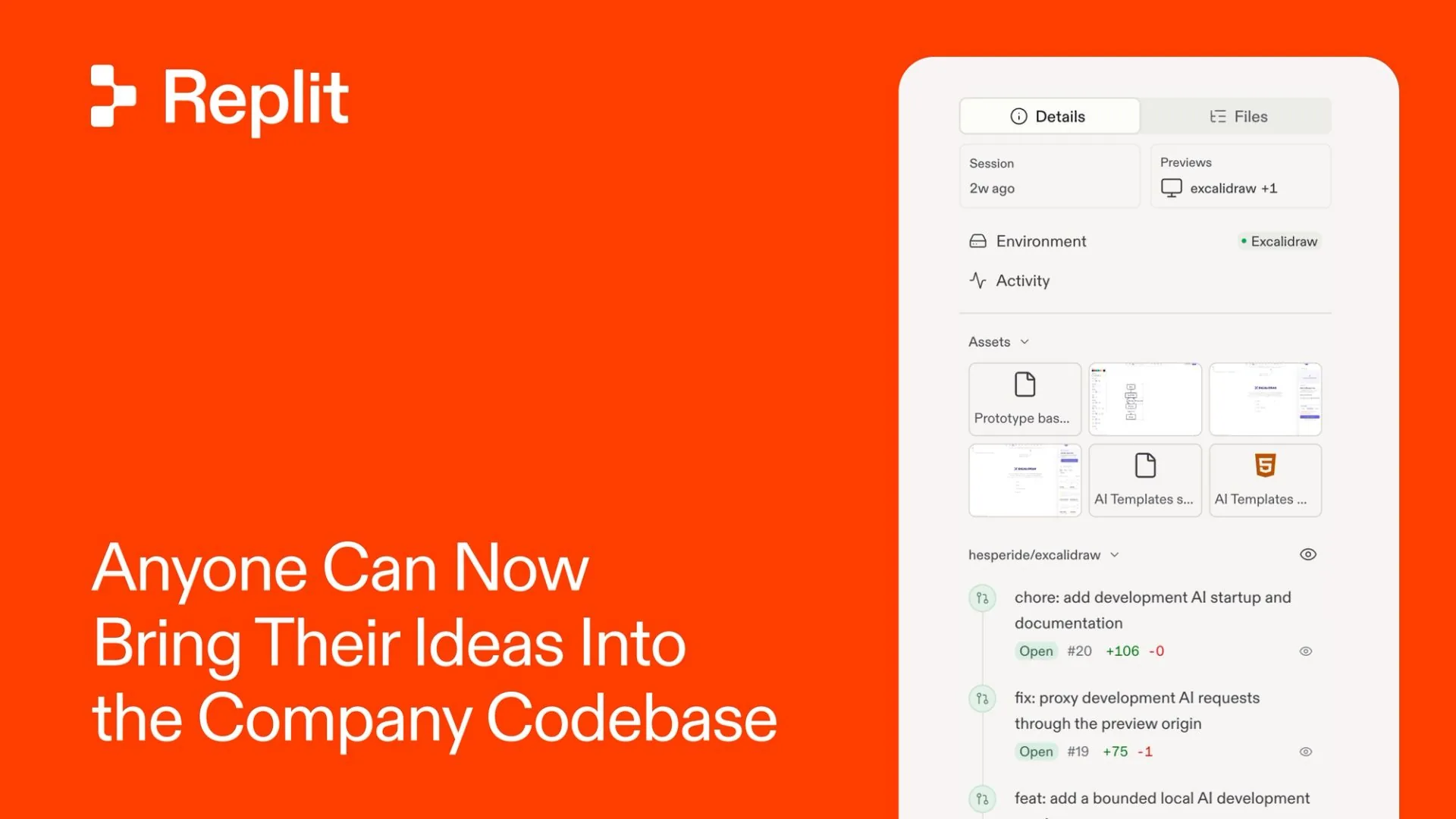
The flow is the company's description of the product, not a customer census. The page says a person describes the change in ordinary language. Cloud Agents find the relevant code, and a live preview beside the chat updates. When it looks right, the agent opens a pull request in GitHub or a merge request in GitLab, written to the team's existing skills and contribution guidelines. If a review asks for changes, the agent makes them and updates the request. Before the request is sent on, the agent opens the running application inside an isolated cloud sandbox and clicks through it the way a customer would. If something fails, it changes the code and tests again. It then attaches screenshots and video of the final version to the request. The page does not say how the sandbox is isolated. It only says the test happens before the request goes out.
[1]Turning review comments into skills is marked as still in early access. The page says Replit has workspace memory that improves itself. When a review comment is worth keeping, the agent proposes an update to the team's skills, meaning the written instructions agents follow in that codebase, or drafts a new one. It takes effect only after an engineer approves it. The next request starts where the last review stopped. The same page gives internal figures. Inside Replit, this cut token use by 51 percent, and cut the time for a common data task from 16 minutes to 1 minute, without a drop in output quality. That is the company's account of its own internal use. The page does not present a customer sample.
[1]The environment is set up once. The page says an administrator can set a shared environment. A Cloud Agent looks through the codebase and configures a virtual machine that can run the application, with the repositories, runtimes, skills, tools, and dependencies, and it updates automatically from the main branch. The person proposing a change does not see that setup, and only describes the change. Credentials come from an external secrets manager, through a credential broker. The page does not describe how that broker is built. Cloud Agents for existing repositories, the page says, are available now to all Pro and Enterprise customers, and a repository is connected at replit.com/repos.
[1]The door is not only the website. The page says mentioning or sending a direct message to @Replit in Slack can look into a thread or turn it into a pull request. Progress and feedback stay in the thread, and the work can continue in Replit when needed. The Slack integration is available to all customers. Support for Microsoft Teams is described as coming soon. Away from a desk, a pull request can also be started from the Replit mobile app. There is an introductory webinar on November 5. The page also says the agent on the company codebase was rolled out at the start of March 2026, and that access to code is one of the main reasons work inside Replit moved onto Replit in 2026. The page does not say how many customer repositories are connected, and it does not say how often engineers accept these requests.
[1]