
The World Labs post carries the time 2026-11-05T19:25:23.000Z, which is 03:25 in Beijing on Nov. 6, before this noon window and after the backfill line, so this is backfill. The blog Frameboy: Atlas in Real-time prints only November 5, 2026, with no clock. This column uses the post's clock and the blog's account. The blog calls it a research preview: explore worlds in real time with Atlas through Frameboy. The address in the blog is frameboy.worldlabs.ai. Frames stream from cloud GPUs to the browser at up to 15 fps while the camera is moved. The 15 fps is the company's ceiling, not an independently measured frame rate.
[1][2]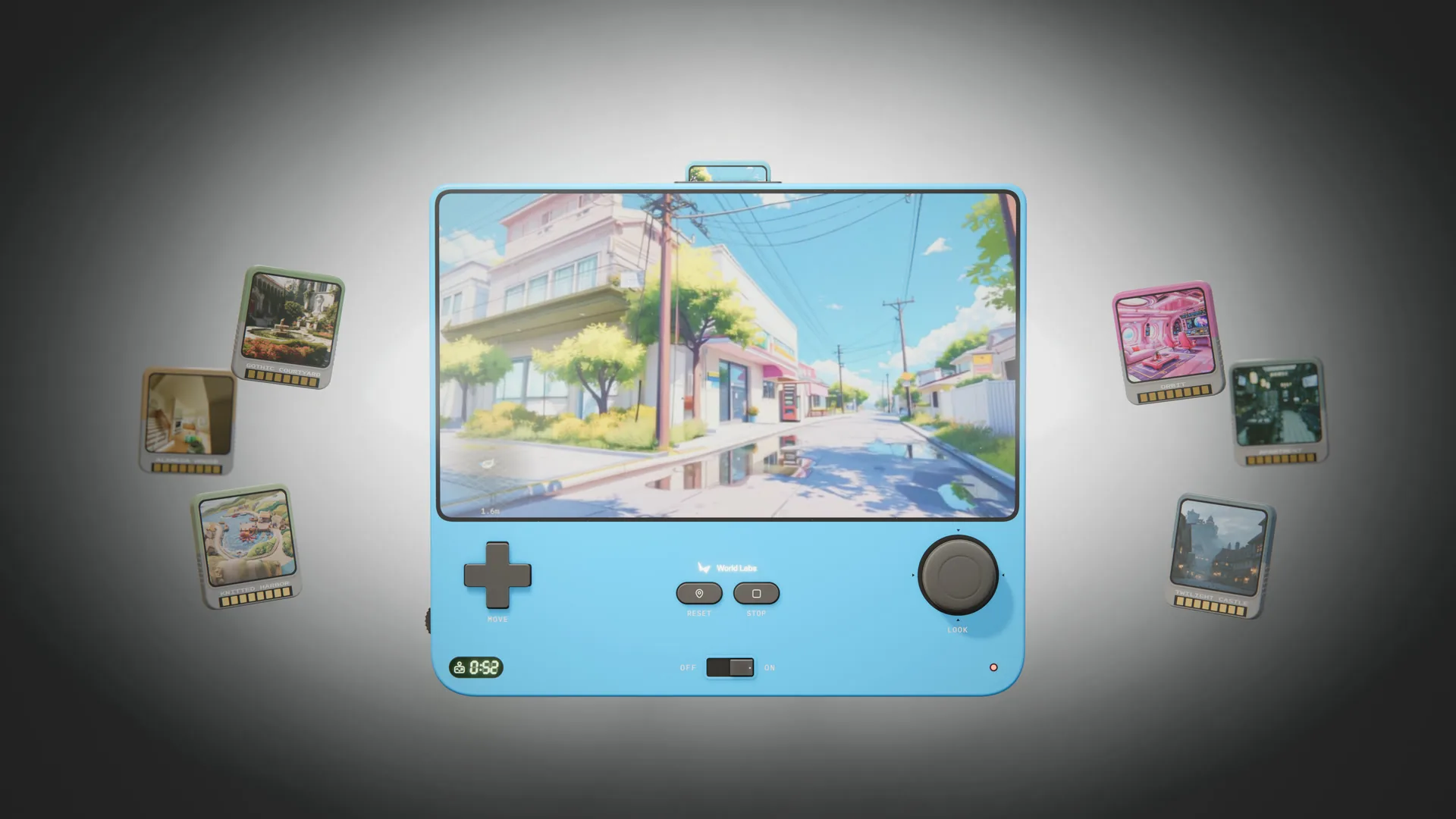
The blog describes Frameboy as a variant of Atlas, aimed at the fastest inference the lab could reach, while keeping generative novel views. Atlas is described as generating one frame at a time. The line that Atlas was introduced two months ago is the company's own wording. The blog does not give that earlier date. The uses are also the company's description: an imaginary 3D world defined by a single image, or a real environment captured from a handful of viewpoints. Landmarks, film viewpoints, construction progress, game levels, and robot environments sit in the same paragraph, with no sample size.
[1][2]Viewfinder is a web app. A person can build a scene frame by frame. Each new frame comes from Atlas and includes color and depth. When the scene is ready, the Frameboy overlay streams frames during exploration. Frameboy itself offers a curated list of scenes. Viewfinder adds the person's own inputs. The post also says Viewfinder sign-up is at worldlabs.ai/waitlist. The blog body does not say whether that list is still open.
[1][2]The speed section compares two ways of working. It is not a latency table. The blog says that waiting tens of seconds or even several minutes for an Atlas video makes scene building and camera planning cautious. A more interactive rate lets the input change quickly. Frameboy's own latency is not given separately. The only figure is the ceiling of 15 fps above.
[1][2]The limit is in the blog's last section. Frameboy must currently run on a powerful GPU server in the cloud and is not cheap compared with local rendering. The following sentence, that what starts slow and expensive later becomes fast and cheap, is the company's guess. There is no price list, and the post does not say at what frame size the 15 fps was observed. The image is the blog's product picture, a demo device, not a frame-rate log.
[1][2]