
要点
- NVIDIA (2026-11-02) presents Cosmos Framework (training/RL/optimization/inference skills and recipes) and Cosmos NIM microservices, spanning Cosmos 3, Alpamayo, GR00T, Qwen, pi0.5, and more.
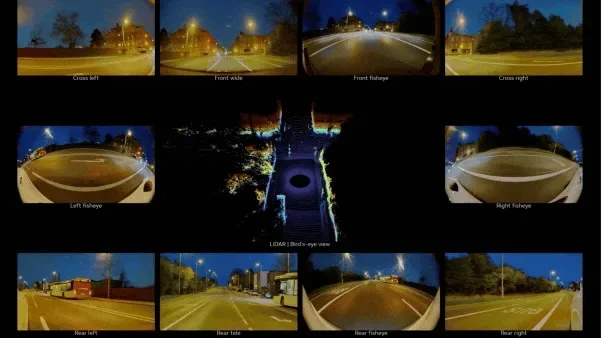
- Simulation recipes: Cosmos 3 Nano can generate synchronized camera video and LiDAR; AV Transfer-Auto supports multi-view weather/lighting rewrites with autoregressive chunking for longer clips.
- RL surface expands to DPO/GRPO/PPO/OPD/DiffusionNFT; inference backends include Diffusers, vLLM, TRT-LLM, NIM, and others.
- NIM: quantization, speculative decoding, KV-cache-aware routing with claimed ~**2–3×** on H200; memory floors: Cosmos3-Nano generation **58 GiB** BF16 and **44 GiB** FP8 with offload.
World-model builders usually hit two walls in order: adapting models to their sensors and tasks, then serving those models reliably. NVIDIA’s Technical Blog (2 Nov 2026) splits the answer into Cosmos Framework and Cosmos NIM.
Thesis: physical AI is no longer bottlenecked only by a larger world-foundation checkpoint—adaptation recipes and servable inference must be equally reproducible.
[1]What happened
Framework is cast as an open modular stack: LoRA/SFT, multiple data formats, multi-GPU training, plus online/offline RL (DPO, GRPO, PPO, OPD, DiffusionNFT). Agent skills under .agents/skills drive bounded post-training and evaluation prompts. On the simulation side, Cosmos 3 Nano recipes and checkpoints target robot, multi-camera driving, and surgical scenarios, emphasizing synchronized RGB–LiDAR generation from released checkpoints.
On the deploy side, Cosmos NIM provides an accelerated container path: pick a GPU profile, launch, readiness-check, first request—plus a quantization/routing speedup narrative.
[1]How hard is the evidence
Checkable quantitative claims cluster on serving and memory: NIM paths claim roughly 2–3× on H200; Cosmos3-Nano generation needs about 58 GiB BF16 and 44 GiB FP8 with offload. Much of the rest is a runnable recipe surface (multi-view WSM controls, weather rewrites, backend list). This is primary vendor technical blogging: high operability, weak independent controls.
[1]Steelman and gaps
Steelmans: splitting “train/adapt” from “serve” matches how physical-AI teams actually divide labor; publishing memory floors is more plannable than model names alone.
Gaps: the 2–3× baseline and workload are thin in the summary layer; many capabilities are recipe catalogs rather than third-party benchmarks; comparisons to closed/internal stacks are missing; livestream/tech-report links carry more method detail.
[1]Who pays, and what checklist changes
For embodied and AV teams: purchase orders should split post-training/sim recipes from NIM/inference quota—avoid buying only a checkpoint. For platforms: memory floors shape nodes before nominal parameter counts do. For evaluation: weather rewrites and multi-sensor sync need fixed held-out scripts or demos stay incomparable.
[1]What to watch in six months
Falsifiable next steps: when third parties reproduce synchronized RGB–LiDAR from public Nano checkpoints, do quality and memory land near the documented floors; does NIM’s 2–3× hold on non-vendor workloads; if only Framework or only NIM is adopted, how large is the end-to-end delivery gap. The claim is not that Cosmos uniquely wins—it is that world-model productization is becoming a dual bill: adaptation recipes plus a serving stack.
[1]