
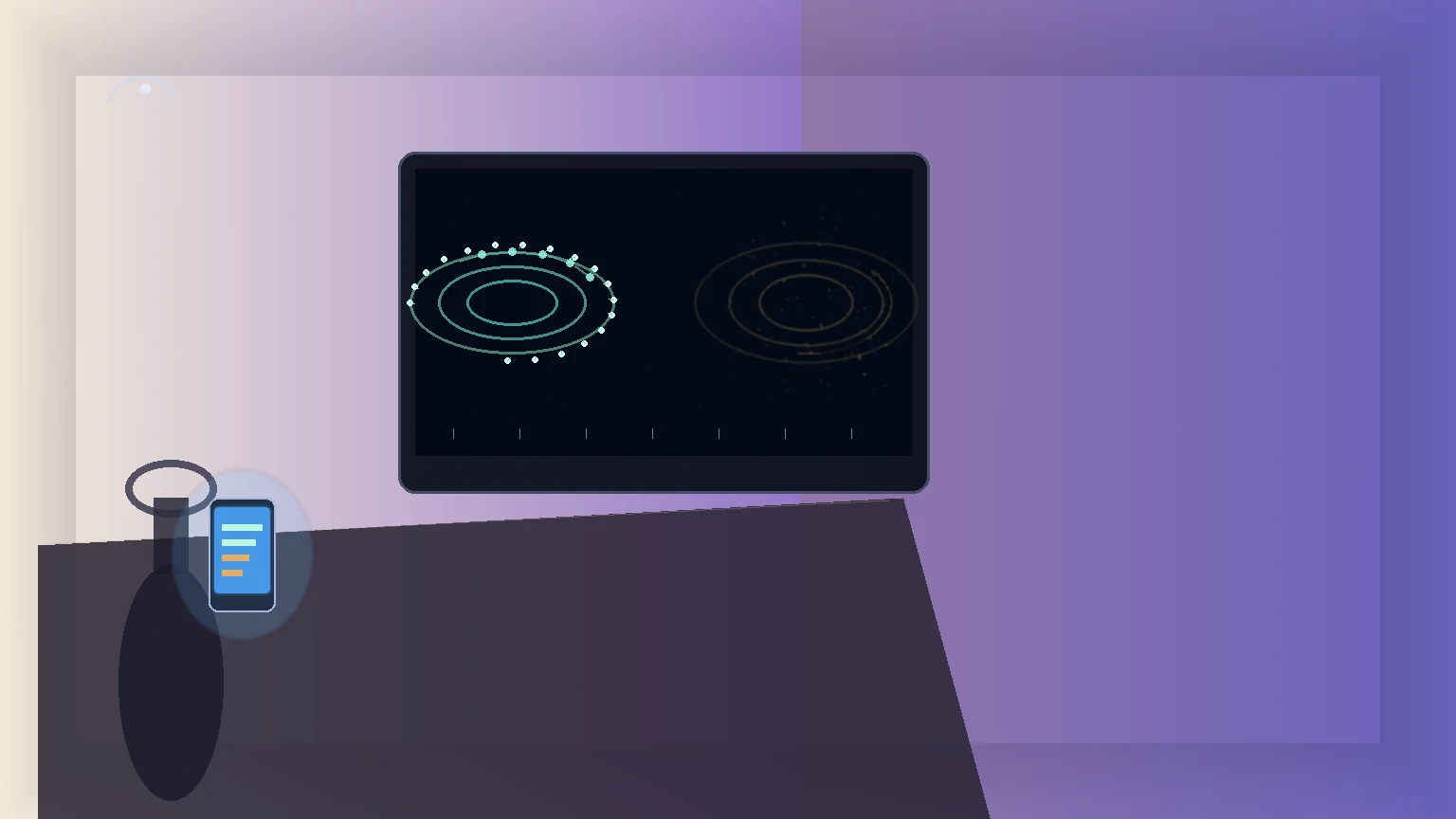
OpenAI published, on 8 September 2026, an Applied AI case study titled “How GPT‑5.6 Sol helps run quantum computing experiments.” Fact: Beatriz Yankelevich, a graduate student in MIT’s Engineering Quantum Systems Group (EQuS), connected GPT‑5.6 Sol—harnessed through Codex—to laboratory software that coordinates measurements on superconducting qubit chips. On an uncalibrated six-qubit chip of a type EQuS routinely uses to benchmark fabrication, the agents chose parameters, ran hardware, analyzed returning signals, and either refined a measurement or saved results for the next interdependent step. Claim (OpenAI / Yankelevich): when signals were clear, Codex often completed a standard calibration sequence with little researcher intervention, freeing her for design, analysis, and planning; the group now regularly uses agents for routine characterization. Also stated: when signals were weak or noisy, the same system took longer and sometimes needed an experienced researcher’s guidance.
The news is not that an AI discovered a new law of quantum matter inside a dilution refrigerator. It is that a well-instrumented, software-mediated measurement pipeline can be delegated overnight—until the physics stops looking like a checklist.
[1]What the case study actually asserts
Strip the Applied AI framing and three layers remain.
Layer 1 — experimental setting. EQuS works with superconducting qubits cooled near absolute zero in dilution refrigerators, controlled and read out with microwave pulses. After fabrication, packaging, and cooldown, interaction with the chip is entirely through software—OpenAI’s stated reason the lab is a natural testbed for agents. Calibration requires interdependent measurements that reveal resonance frequencies, control/readout pulse settings, and how long a qubit retains quantum information. Properties can drift; unexpected physical behavior can yield inconsistent results.
Layer 2 — agent workflow. Yankelevich supplied Codex with measurement-specific skills explaining how to run and evaluate each experiment, plus the chip’s design targets. GPT‑5.6 Sol then selected parameters, operated hardware, analyzed data, and decided whether to refine or proceed. On clear signals it identified transition frequencies, calibrated control and readout pulses, and estimated coherence times. OpenAI shows (captioned) calibration plots and an excerpted chain-of-thought; photos and plots are credited to the EQuS group. This writer verified those credits from captions only and did not independently inspect the underlying image files beyond the page’s textual description.
Layer 3 — labor claim. Agents can run “for many hours overnight or while [she is] working in the cleanroom”; she checks in from a phone and steers when something needs fixing. She has also built infrastructure spanning measurement, theory, and chip design, and reports spending more time on higher-level interpretation while multiple agents work in parallel. For novel experiments, she assigns narrower goals and leans on agents to write, modify, and test control/analysis/simulation code against real measurements.
None of these layers is an independent replication study. All of them are a company case study about a company model inside a collaborating academic lab.
[1]Software control is the enabling condition—not “AI does physics”
The hinge is infrastructural. Once the chip is cold, the experiment is already a software object: pulse sequences out, digitized signals back, analysis scripts deciding the next knob. Connecting Codex to that coordination layer turns overnight progress into a product of tool access plus a relatively well-defined routine characterization workflow—not of unsupervised insight into condensed-matter novelty.
That distinction matters for how the headline travels. “AI runs quantum experiments” suggests discovery. OpenAI’s own prose is narrower: streamline experimental workflow; complete routine measurement workflows; free researchers from constant supervision. EQuS fabricates many standard chips that can take a researcher several days to characterize; agents now handle routine measurements so people can do other work. The falsifiable reading is therefore about delegation of specified sequences under software control, not about agents proposing and validating new physical hypotheses.
Inference (labelled): if the same stack were pointed at a poorly instrumented or discovery-first problem—where “what to measure next” is itself the scientific question—the case study offers little evidence of success. The six-qubit chip was a standard fabrication-benchmark device, not a one-off physics puzzle.
[1]The noisy-signal failure mode is the story’s real boundary
OpenAI is unusually explicit about where the demo frays. Fact (as stated): GPT‑5.6 Sol had more difficulty when experimental signals were weak or noisy; it took longer to find suitable parameters and sometimes needed guidance from an experienced researcher. The page’s own gloss: current agents can handle clearly defined experimental workflows, but interpreting ambiguous physical results remains a challenge. Separately, the study notes that experienced researchers may still identify the best calibration settings faster than current AI models; the win is time not spent babysitting every step.
That pairing is more informative than the overnight success montage. Clear-signal autonomy is what you expect once skills encode how to run and evaluate each experiment. Ambiguous traces are where condensed-matter craft lives—distinguishing drift from fabrication defect from bad pulse choice from a genuinely interesting anomaly. An agent that stalls or asks for help there is not “almost discovering physics”; it is revealing that the checklist ended.
Falsifier: if subsequent EQuS or independent lab writeups show agents routinely recovering usable calibrations from weak/noisy regimes without expert steering—and doing so across chip types, not only on fabrication-benchmark devices—this boundary claim shrinks. Until then, the failure mode is not a footnote. It is the circumference of the claim.
[1]Steelman, selection bias, and what not to invent
Steelman counter: grant everything OpenAI reports. Then this is a sober win for laboratory automation. Superconducting-qubit characterization is repetitive, interdependent, and already software-native; putting a capable coding agent on the loop overnight is exactly the sort of applied use that should ship before anyone promises AI physicists. Yankelevich’s phone-check-in quote is not hype—it is a labor description. OpenAI even steelmans the skeptic in-text: experts may still be faster on best settings; ambiguous physics still needs humans. On that reading, demanding “new quantum discoveries” of a routine-calibration demo is moving the goalposts.
Selection and narrative bias (still): this is a successful Applied AI showcase, not a registry of failed agent-nights. We are not shown the distribution of runs that required heavy steering, the rate of incorrect parameter choices before human correction, wall-clock comparisons against a blinded expert baseline, or cost in tokens and instrument time. Photos credited to EQuS illustrate a packaged chip, an open dilution refrigerator, calibration plots, and a chain-of-thought excerpt; they do not establish generality across groups. A linked “technical case study” is advertised on the page; its separate URL and full contents were not retrieved in this pass and remain an editor check.
Do not confuse the case study with autonomous science. The agents refine measurement parameters inside a human-supplied skill and target envelope. That is real. It is also closer to adaptive instrument control than to hypothesis generation.
[1]Six-month watchpoints
Watch three concrete signals. First: do other superconducting-qubit labs—outside OpenAI’s showcase—publish comparable overnight characterization metrics with disclosed intervention rates on weak-signal cases? Second: does EQuS (or Yankelevich) release methods detail on the measurement skills, failure taxonomies, and how often phone steering changes the trajectory? Third: when agents are aimed at novel experiments rather than standard fabrication-benchmark chips, does the work product stay “narrower goals plus code iteration,” or does anyone claim discovery-class physical insight without human interpretation in the loop?
If routine clear-signal calibration becomes boring infrastructure across several groups, the story will have been workflow automation that stuck—valuable, and bounded. If marketing language drifts toward “AI quantum scientist” while the noisy-signal caveat quietly disappears, the story will have been a boundary that was known on 8 September and later sanded off. OpenAI’s page already drew the line. The next six months decide whether others keep it.
[1]