
要点
- On 9 November 2026, Elith and NVIDIA released Nemotron-Personas-Finance-Japan on Hugging Face, as a finance-domain extension of Nemotron-Personas-Japan.
- The authors say that, to their knowledge, it is the first open persona dataset at million-record scale that pairs Japan's official statistics with household finance and financial literacy data.
- The release contains 9 million personas in natural Japanese, from 1 million records with nine personas each, 50 fields per record, about 1.5 billion tokens, about 950,000 unique names, and more than 1,600 occupation categories. It is licensed CC BY 4.0 for commercial use.
- The generation stack named in the post is NeMo SDG-PGMs, a probabilistic graphical model framework, NeMo Data Designer, and gemma-4-31B-it for Japanese text.
- The authors list design feedback from Sompo Japan, Tokio Marine Holdings, Bank of Fukuoka, Mizuho Financial Group, Meiji Yasuda Life Insurance, and the Financial Data Utilization Association. They do not publish a table that compares the finished personas with the official distributions they say they followed.
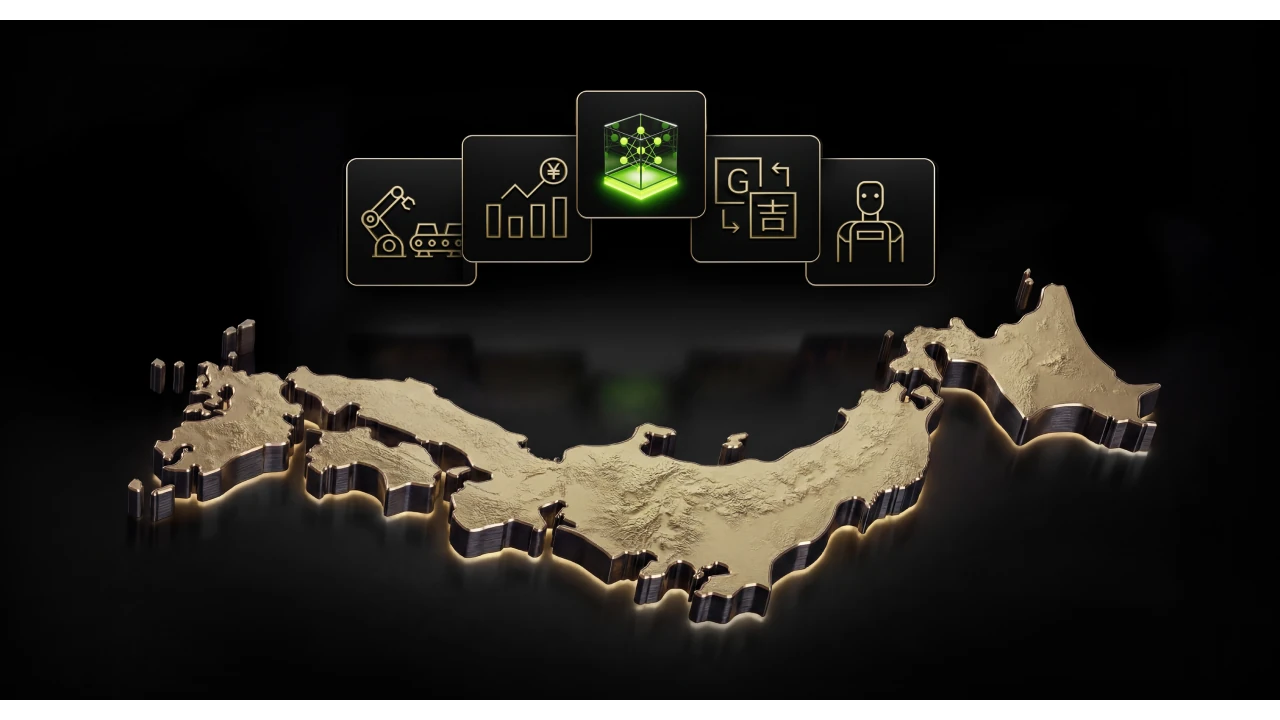
On 9 November 2026, researchers from Elith and NVIDIA published a Hugging Face post introducing Nemotron-Personas-Finance-Japan. The dataset extends the earlier open persona set Nemotron-Personas-Japan into household money: income, spending, assets, and financial literacy, written as natural-language portraits in Japanese. The authors' premise is familiar to anyone who has tried to build a customer-facing model for a bank or an insurer. Real account records are wrapped in privacy law and compliance review. If you cannot use those records, you need stand-ins that still look like the population you serve. This release is an attempt to manufacture those stand-ins from public statistics rather than from customers.
[1][2]What was released
The authors describe 1 million records, each carrying nine personas, for 9 million personas in total. That is 50% more personas than Nemotron-Personas-Japan, and the schema grows from 22 fields to 50: nine persona fields, eleven persona attributes, and thirty contextual fields based on official demographic and labor statistics. They report about 1.5 billion tokens in all, including about 750 million persona tokens, about 950,000 unique names, and more than 1,600 occupation categories. The text is written in natural Japanese. The license is CC BY 4.0, which allows commercial use.
The intended jobs are practical. Teams can seed multi-turn dialogues, build or test customer-service agents, run user simulations in NVIDIA's NeMo User Sim, and check how a system behaves across age, region, education, and income. The same day, the authors point to Nemotron-PII-Japan, a set of 100,000 synthetic Japanese business documents with labeled personal information, built on Nemotron-Personas-Japan. The suggested pairing is simple: use the finance personas to simulate customers, and use the PII set to test whether your pipeline redacts what it should.
The download command in the post loads nvidia/Nemotron-Personas-Finance-Japan through Hugging Face's datasets library. Anyone can inspect the files. That is the main reason this announcement is more than a product brochure.
[1][2]How the personas were built
The pipeline uses NVIDIA's NeMo Data Designer, which the authors describe as a system for templated, validated synthetic data, and NeMo SDG-PGMs, a probabilistic graphical model framework released under Apache-2.0. Japanese text was generated with gemma-4-31B-it, also under Apache-2.0. A probabilistic graphical model here means a statistical map of how variables such as age, prefecture, occupation, and household assets depend on one another, so that sampling from the map produces records that respect those dependencies instead of combining them at random.
The authors say they followed official demographic and labor statistics, then added detail that official tables often flatten. Education is split more finely than national aggregates. Occupations include extra categories such as business owners and specialized professions. Life stages that sit at the edge of labor tables, including students, retirees, and periods of unemployment, are modeled on purpose. Household financial and real assets sit alongside individual income. Internet and smartphone use, plus financial literacy, are included because those traits change how a person talks to a bank or an insurer.
Every persona, they write, is fully synthetic. No real individual is represented. Names follow real Japanese naming patterns, and the numbers follow official statistics and public surveys. The claim is that the dataset is built from distributions, not from rows about real people.
[1][2]What the announcement does not show
Named institutions helped shape the design: Sompo Japan, Tokio Marine Holdings, Bank of Fukuoka, Mizuho Financial Group, Meiji Yasuda Life Insurance, and the Financial Data Utilization Association. Feedback from practitioners is useful. It is not the same thing as an audit. The post does not include a table that shows, field by field, how closely the finished 1 million records match the official census, labor, or household-finance surveys. It does not report a re-identification study. It does not show that a downstream agent trained or tested on these personas behaves the same way it would with real, carefully permissioned customers.
Names that follow real naming patterns also cut two ways. They make the text feel native. They also reuse the statistical shape of real names, which is a known residual risk in synthetic data even when no real row was copied.
"First at million-record scale," as the authors phrase it, is their own survey of the field. It can be checked by looking for earlier open sets, but the post does not provide that comparison list.
[1][2]The fair case, and what is missing
The fair case is that Japanese financial firms have been stuck. They can buy capable models, but they cannot feed those models the customer files that would make a service agent, a sales-roleplay evaluator, or a fairness test look like Japan. An open, commercially licensed set that tries to inherit official population structure is a rational public good, especially for startups and researchers who will never see a bank's data lake.
The missing piece is the proof that the inheritance worked. Without published fidelity tables, a compliance officer still has to do that checking, or take the authors' word. Without a published test against real, held-out survey microdata, it remains possible that the graphical model and the language model smoothed away the awkward tails, the regional quirks, or the household-asset correlations that matter most in finance. The involvement of large insurers and banks raises the quality of the wish list. It does not, by itself, validate the sample.
[1][2]Who should care, and what to watch
Builders of Japanese customer-service agents, training simulators, and bias tests should care, because they can download the set tomorrow and stop leaning only on Western English personas. Compliance and privacy teams should care, because "synthetic" is not automatically "safe to treat as non-personal," and because names were deliberately made to look real.
Over the next six months, the checkable items are documentation and outside use. Watch whether the dataset card grows a fidelity appendix against named official tables. Watch whether a laboratory that did not write the set publishes a comparison of its marginal and joint distributions with government surveys. Watch whether Japanese banks or insurers report that they used it for evaluation, and what they still refused to use it for.
[1][2]Close
This release treats Japan's official statistics as a substitute for customer files. If later audits show that the 1 million records really do track those tables, then open synthetic personas will have become a practical way around a legal bottleneck. If the match is only cosmetic, then the industry will have a large, fluent, commercially licensed set of Japanese characters that still cannot stand in for the population they were meant to copy.
[1][2]