
要点
- Mission Control 2.5 brings the autonomous recovery engine—previously Slurm/HPC-only—to Kubernetes workloads scheduled by NVIDIA Run:ai.
- The portable model is a three-layer loop: Run:ai placement, autonomous job recovery (job-context classification), and autonomous hardware recovery (isolate/diagnose).
- On hardware faults, job restart and node quarantine run in parallel; on transient software faults, jobs retry without shrinking the pool.
NVIDIA’s developer blog for Mission Control 2.5 frames a familiar AI-factory problem in operational language: multi-node training jobs that run for days cannot wait on manual triage every time a GPU throws ECC noise, a worker hangs, or NCCL times out. The product claim is not that “autonomous” is new—it is that the recovery engine which already existed for Slurm is now wired into Kubernetes via Run:ai.
That distinction matters. Marketing can sell self-healing as a slogan; platform teams buy a control loop that separates what the job should do next from what the hardware needs. If those two concerns stay fused, every software blip looks like a bad node, and every bad node stalls a job waiting for root cause.
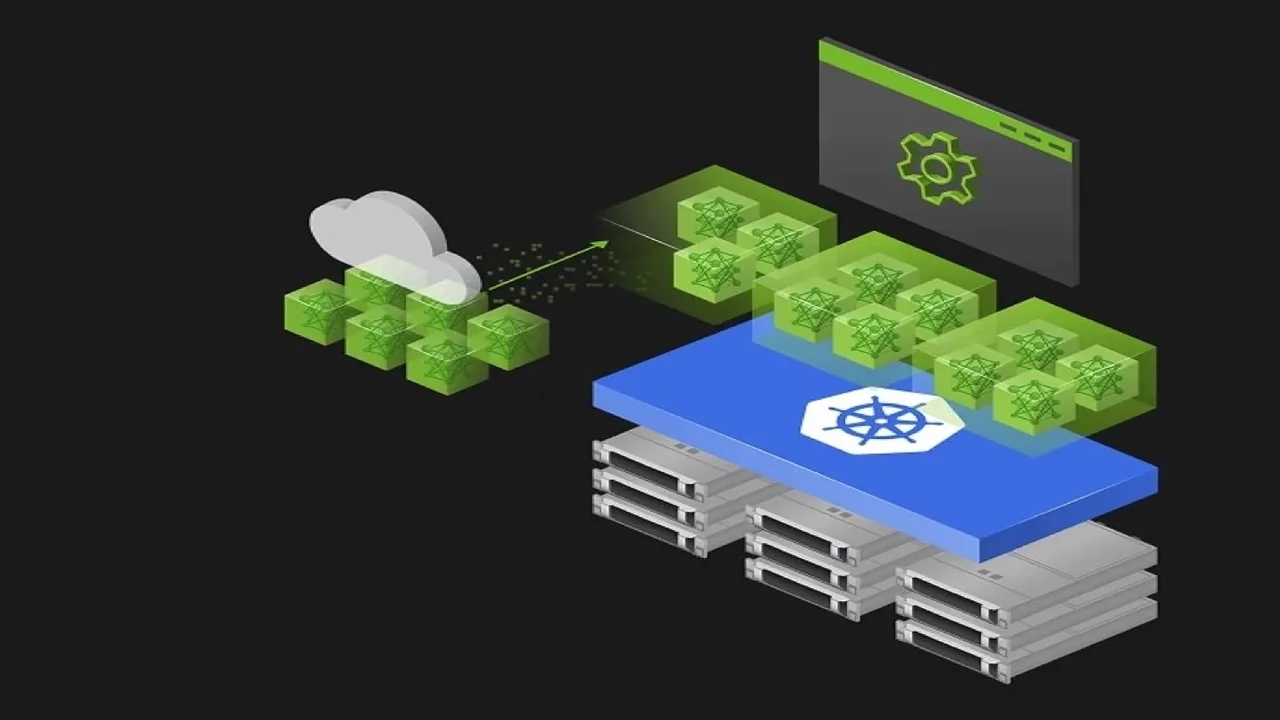
[1]Mission Control’s autonomous recovery engine is described as two services inside a three-role loop. NVIDIA Run:ai places Kubernetes AI workloads onto available capacity. The autonomous job recovery service watches running jobs, tracks topology and failure history, and classifies whether the right move is restart, retry, re-queue, or reschedule. The autonomous hardware recovery service watches nodes and GPUs, removes anomalies from scheduling, and runs diagnostics so faulty capacity does not keep infecting new jobs.
Portability is the architectural bet: job recovery does not repair silicon; hardware recovery does not need to understand every training framework; the scheduler steers work toward ready capacity without waiting for a full postmortem. The same separation is how the story travels from Slurm allocations to Kubernetes pods.
[1]The post argues with scenarios rather than third-party MTTR numbers. In a hardware fault during training, recovery splits: job recovery captures context and moves the workload while hardware recovery cordons the suspect node and starts diagnostics in parallel—so the job does not wait for RCA, and the next job does not inherit the bad GPU. For a transient software fault, job recovery uses failure history to retry under scheduler policy without quarantining healthy nodes. For early degradation—repeated health warnings before a hard failure—hardware recovery can pull the node from eligibility before a training job lands there.
That is a coherent operating model. What is published is still NVIDIA’s own walkthrough: no independent cluster study, no before/after MTTR, no comparison against stock Kubernetes restartPolicy plus NVSentinel-style cordon/drain. Readers should treat the scenarios as a doctrine document, not a benchmark.
The steelman against Mission Control 2.5 is that Kubernetes already restarts failed pods, and GPU operators already drain unhealthy nodes. If classification accuracy is weak, you get the worst of both worlds: flapping retries on real hardware faults, or unnecessary pool shrinkage on app bugs. The column value of 2.5 is therefore not inventing restart—it is insisting that transient software and hardware degradation are different classes of signal that must not share one blunt remediation path.
Also thin in the post: how often the classifier is wrong, how Run:ai’s expression of recovery differs from Slurm in edge cases, and how the beta “AI-enabled network anomaly detection” interacts with job vs hardware paths. Release notes also list Keycloak auth UX, K8s hardening, and early access for Vera Rubin NVL72—useful packaging, not the thesis.
[1]For platform teams running mixed Slurm and Kubernetes estates, a consistent recovery vocabulary—isolate, annotate, diagnose, return only when ready—is the near-term decision, not a brand preference for “autonomous.” For practitioners, jobs should restart or requeue in the scheduler they already use, while context prevents repeating failures on infrastructure that needs service.
For the business case NVIDIA emphasizes utilization: less time stalled in ambiguity means more productive accelerator hours. That claim is directionally right for AI factories; it remains unquantified here.
[1]Watch the next six months for production write-ups that report false-quarantine rates and job-recovery success under Run:ai—not just architecture diagrams. If Mission Control’s classifier cleanly separates software from silicon at scale, self-healing becomes a portable operating model. If not, “autonomous recovery for Kubernetes” collapses back into the tools operators already have, with a thicker control plane on top.
[1]