
要点
- Meta Newsroom published "Give Your Muse a Voice," with datePublished 2026-11-05T18:30:58+00:00 and dateModified 2026-11-06T19:59:37+00:00.
- The Muse app is rolling out voice and expressive avatars in the United States, on mobile, web, and Mac. Users start a call by tapping the phone icon in the top-right corner. Realtime conversation was previewed at Connect 2026.
- Users can choose voice only, an avatar beside the conversation, or full screen face to face. The post says there are hundreds of voices, with examples such as the energy of a New Yorker or the flair of a pirate. The technology names are Muse Realtime Avatar and Muse Realtime Voice, and the post says you can interrupt.
- Voice conversations with Muse are coming soon to AI Glasses and Muse Charm. What you can check is the US rollout and these interaction details, not that personal superintelligence now talks with you like a person.
Meta is turning the realtime conversation previewed at Connect 2026 into a feature you can tap inside the Muse app. The Newsroom post "Give Your Muse a Voice" is dated 5 November 2026, with an update on 6 November. It says voice and expressive avatars are rolling out in the Muse app in the United States, on mobile, web, and Mac.
This is a product feature post. What to check is who can use it, where it runs, and how a call starts. Do not read "Give your Muse a voice" as proof that the assistant now has a human-like ability to keep you company.
[1]Hard facts (https://about.fb.com/news/2026/11/introducing-muse-ai-voice-expressive-avatars/; datePublished 2026-11-05T18:30:58+00:00; dateModified 2026-11-06T19:59:37+00:00; published on Meta Newsroom; accessed 2026-11-08, Asia/Shanghai):
- Feature: voice and expressive avatars are rolling out in the Muse app, described as a more natural way to interact with your Muse.
- Voice uses: the post says voice helps you think out loud, and gives examples such as brainstorming, trip planning, and rehearsing for an interview. It also says voice means Muse goes with you: say what needs to get done while you walk or when your hands are full, and Muse handles it in the background as you talk.
- Avatar: the avatar uses expressions and gestures that match the conversation as it listens and speaks. You choose how present it is: voice only, the avatar beside your conversation, or full screen when you want to talk face to face.
- Entry point: Connect 2026 previewed realtime conversations with your Muse. The feature is now rolling out in the Muse app on mobile, web, and Mac. You tap the phone icon in the top-right corner to start talking.
- Voices: the post says you can give your Muse's voice some personality, and gives examples such as the energy of a New Yorker or the flair of a pirate. It says there are hundreds of voices to choose from, and you can change them whenever you want.
- Technology names: the page uses Muse Realtime Avatar and Muse Realtime Voice. It says conversations are fluid and realtime, you hear responses right away, and you can interrupt if you need to. Wherever the conversation goes, Muse is said to keep up.
- Scope: voice and expressive avatars are rolling out now in the Muse app in the US to start. Voice conversations with your Muse are coming soon to AI Glasses and Muse Charm.
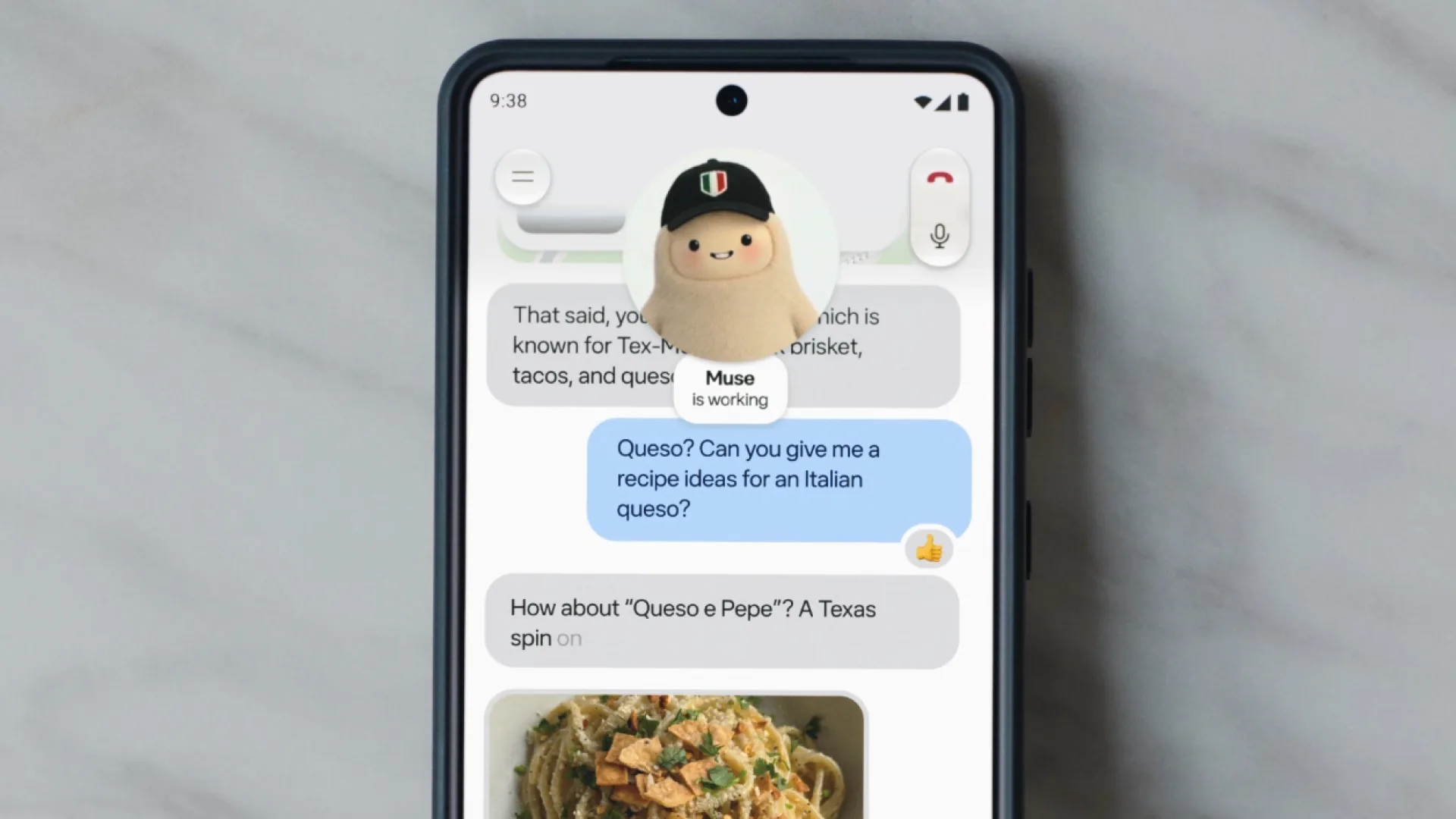
- The page also hosts demo videos, including a header video and a clip labeled Muse Realtime Voice technology. The official social image shows a phone with a capped avatar labeled "Muse is working," in a conversation about a recipe. That checks the interface style Meta is promoting. It is not an independent quality test.
Evidence strength: this is official product news, with feature description, use cases, and demo videos. It gives no figures for latency, language support, whether audio is stored, or independent quality tests. What you can check now is whether the page still says the US comes first, still names mobile, web, and Mac, still describes the top-right phone icon, and still lists AI Glasses and Muse Charm as coming soon.
"Hundreds of voices" is an official statement. The page does not attach a catalog or a sample list. New Yorker and pirate are the post's own examples. They show that style is meant to be optional, not a complete inventory. "You can interrupt" and "hear responses right away" are product promises. The post does not give a latency range.
[1]Strongest steelman: thinking out loud, planning a trip, rehearsing an interview, and handing off a task while you walk or when your hands are full are ordinary reasons to add voice to an assistant. Previewing the feature at Connect and then shipping it on mobile, web, and Mac is a normal product path. Offering voice only, an avatar beside the chat, or full screen treats "do I want to see a face?" as a setting, rather than forcing a face-to-face companion.
Steelman risk: the rollout is written as the United States first. "Coming soon" is used for AI Glasses and Muse Charm, with no date. The post does not say whether audio is uploaded, how long it is kept, or whether processing happens on the device or in the cloud, and it does not list supported languages. Comparisons with existing voice assistants, failure modes, and how corrections work after a mis-hearing are also missing. If a later help article adds privacy detail, a language list, or a measurable latency figure, raise the score for checkable product completeness. Those details are not in this Newsroom body.
[1]For Muse users, the next six months to watch are whether a voice call can be started reliably in the claimed US scope, whether the avatar can still be turned off or set to voice only, and whether voice on AI Glasses and Muse Charm moves from "coming soon" to something people can use. For product watchers, also check whether Meta adds language support and audio-retention rules, and whether the demo videos and official social image remain in this promo cycle. The acceptance test is the rollout scope and the interaction model, not "the assistant now talks like a person and keeps you company."
[1]What to check in this Newsroom post is that the Muse app is starting a US rollout of realtime voice and expressive avatars on mobile, web, and Mac, and that the post names AI Glasses and Muse Charm as the next step. It is not a basis for reading a feature launch as personal superintelligence now talking like a person and keeping you company. The claim is written as product copy. Raising it into a companionship result leaves the source behind.
【No.2】
[1]