
Candidate headlines
- Idle home GPUs, one local endpoint: NVIDIA open-sources Personal AI Router (PAIR)
- No VRAM pooling—just request routing: PAIR stitches RTX, DGX Spark, and Macs
- Above Ollama and LM Studio: NVIDIA’s PAIR beta spreads agent traffic across spare machines
Lead
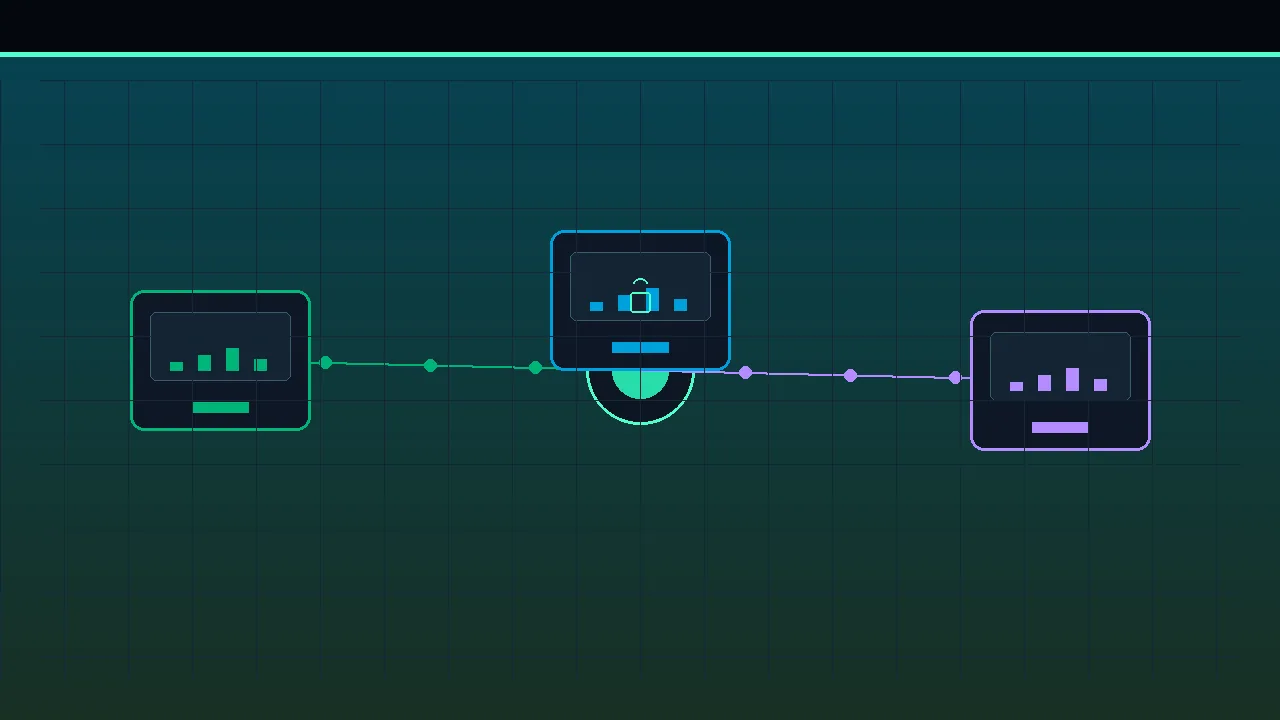
While most agent stacks still lean on the cloud, NVIDIA is pushing a local alternative: the Personal AI Router (PAIR) public beta. It discovers and pairs GeForce RTX, DGX Spark, and Mac machines on the same LAN, then exposes a single local endpoint that routes independent inference requests to nodes that already have the right engine, model, and spare capacity.
Two boundaries matter. First, prompts and agent context are meant to stay on the home network. Second, PAIR does not pool GPU memory, fuse cards into one logical GPU, or shard a single in-flight generation—it only spreads concurrent requests. TechSpot quotes product manager Seth Schneider’s household vignette: an RTX / DGX Spark setup, an RTX 5090 laptop, a gaming desktop, and a MacBook Pro—about 165 teraFLOPS of otherwise idle capacity.
Source brief
What NVIDIA’s product page says
Per the PAIR landing page:
- Pitch: a home / SOHO local inference router that turns compatible Windows, Linux, and macOS boxes into a “personal AI cluster” without special cables or racks.
- Features: node discovery; Ollama and LM Studio backends; one consistent local endpoint for apps and agents, with routing by engine availability, model presence, and load.
- Privacy claim: prompts, files, and agent context stay on the user’s network; no internet required for operation (model downloads still need connectivity).
- Validated hardware: GeForce RTX 20 Series and newer, DGX Spark/GB10, Mac M4 or newer; recommends ≥8 GB RAM and ≥20 GB disk.
- Platforms: Windows 11, DGX OS / Ubuntu, macOS Tahoe, with platform installers.
Hard limits from the GitHub README
The Apache-2.0 repo NVIDIA/Personal-AI-Router states that PAIR routes each independent request to one node. It does not pool VRAM, form a larger logical GPU, or split one inference across machines. PAIR itself can run on any supported OS, but whether a node can serve a given engine/model is up to Ollama / LM Studio; only nodes actually running a compatible engine become candidates, and PAIR prefers nodes already holding the model. Signed release installers (Windows .exe, Linux .deb, macOS .dmg) are the recommended path.
How TechSpot frames the product
TechSpot (2026-09-04) describes PAIR as a cross-OS local inference cluster that pairs in minutes, feeds chatbots and agents from idle compute, and—via Schneider’s family example—targets underused high-end home machines rather than datacenter accelerators.
Why it matters
- Missing middleware for local agents: Multi-machine, multi-engine setups usually force apps to pick a node. PAIR’s Ollama- and OpenAI-compatible proxies aim to keep existing harnesses almost unchanged.
- A different bet than “buy a bigger GPU”: The product is discovery and scheduling, not single-card throughput—good for concurrent jobs, not for forcing one giant model across boxes.
- Privacy counter-narrative: As frontier models keep shipping in the cloud, NVIDIA is productizing spare household silicon as shareable local capacity.
- Clear hardware coalition: Mixed RTX + DGX Spark + Apple Silicon on one LAN is an explicit consumer/workstation heterogenous bet.
Watch next
PAIR’s interesting move is not another local chat UI—it is turning heterogeneous home compute into a single agent-callable local endpoint. If install UX and routing hold up in beta, it could become the default household scheduler above Ollama / LM Studio; if discovery, engine setup, or cross-OS pairing stays brittle, it may remain an enthusiast toy. Watch pairing security (mDNS / PIN / mTLS-class controls), broader engine support, and whether the “idle FLOPS” story produces repeatable performance numbers beyond the family vignette.