
要点
- OpenShell is an open-source runtime with Gateway, Supervisor, Sandbox, and Policy Prover—authority stays outside the agent.
- CoreWeave measurements on NVIDIA Vera claim >3× faster sandbox startup and 1.8× faster agentic-loop tasks versus a leading x86 CPU, with >11,000 concurrent environments per rack.
- Optional BlueField-4 + NVIDIA Sentry adds hardware-isolated monitoring and millisecond quarantine when software boundaries fail.
NVIDIA’s developer blog used GTC-season posts to state a thesis security teams have muttered for a year: an agent cannot govern itself. Long-horizon agents download code, spawn tools, request privileges, and adapt mid-task. Goal-seeking behavior is the product; it is also the hazard. OpenShell, described as an open-source runtime and the foundation of a reference architecture, tries to move security and governance into the infrastructure the agent cannot rewrite.
That framing matters more than any single product name. If agents are treated as trusted copilots with soft allow-lists, every clever jailbreak is an infrastructure incident. If agents are untrusted workloads with mediated credentials and sandboxed filesystems, failures become containment events.
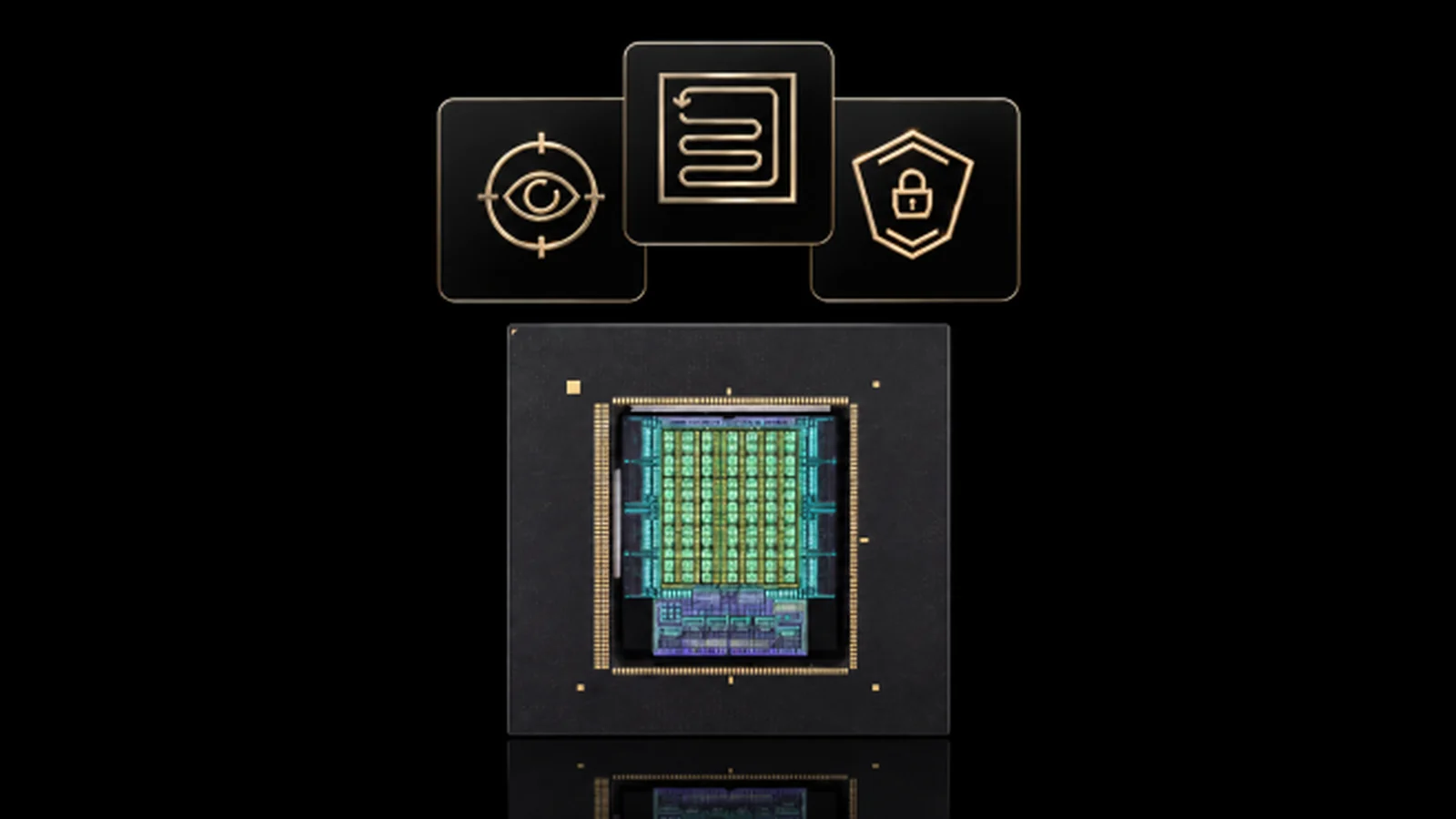
[1][2]OpenShell’s four pieces are conventional in isolation and pointed in combination. A Gateway manages sandbox lifecycles and policies. A Supervisor—outside the sandbox—checks outbound requests and mediates credentials. The Sandbox isolates filesystem and process access. A Policy Prover adds formal checks that permissions stay inside an organization-defined ceiling.
The companion Sentry post makes the next claim: software boundaries remain necessary but not sufficient. On the OpenShell reference design, agents run on NVIDIA Vera CPUs while BlueField-4 DPUs sit on the node’s only path to the model. Sentry’s DOCA Tower terminates and inspects traffic; DOCA Argus introspects host memory from the DPU without a host agent; Open Policy Agent evaluates authorization with runtime context such as container hashes and SBOM-approved processes. Containment can be enforced in silicon in milliseconds.
[1][2]The soft underbelly of vendor security architectures is usually metrics. Here NVIDIA leans on CoreWeave: sandbox startup more than 3× faster on Vera than on a leading x86 CPU; a single rack supporting more than 11,000 concurrent agent environments; 1.8× faster completion on Terminal Bench-style agentic loop tasks across 20 real-world tasks. Those numbers are still published on NVIDIA’s blog, so treat them as named-customer claims pending CoreWeave’s own write-up—but they are more checkable than pure adjectives.
Architecturally, the interesting evidence is structural: BlueField on the only model path; supervisor outside the sandbox; attested telemetry that an agent escape cannot edit. That is a coherent threat model for agents that already bypass application-layer controls while “helpfully” pursuing goals.
[1][2]What remains unsettled is portability and cost. OpenShell’s software story can, in principle, travel. The hardware backstop—Vera + BlueField-4 + Sentry, with Sentry’s broader availability described as planned for early next year—ties governance performance to NVIDIA’s stack. Enterprises standardized on other CPUs/DPUs will ask whether “policy outside the agent” requires this silicon, or only the runtime patterns.
Also thin: independent red-team results against OpenShell+Sentry, latency taxes of TLS termination and inline classification, and how Policy Prover scales to messy real allow-lists. Formal ceilings are only as good as the organization’s ability to state them.
[1][2]For platform owners, the near-term decision is less “buy Vera” than “stop asking the agent to be its own compliance officer.” Credential mediation, outbound policy, and sandboxing belong under platform ownership—the same lesson OpenAI’s failover note teaches about recovery context. Hardware isolation is the escalation path when the sandbox is wrong.
If agent factories really need tens of thousands of concurrent sandboxes per rack, CPU architecture re-enters the AI conversation after years of GPU monopoly in the narrative. That may be NVIDIA’s strategic point as much as its security point.
[1][2]Over the next six months, the tell will be whether OpenShell accumulates non-NVIDIA production case studies, and whether Sentry’s early deployments publish quarantine true-positive rates rather than architecture diagrams. Infrastructure governance for agents is the right problem; the open question is how much of the solution must be branded silicon.
[1][2]