
要点
- Sentry runs on BlueField-4: DOCA Tower terminates and inspects agent traffic; DOCA Argus introspects host memory from the DPU with no host agent.
- Open Policy Agent evaluates Rego with runtime context such as container hashes and SBOM-approved processes; in-silicon containment can fire in milliseconds.
- Versus OpenShell’s software sandboxes, Sentry’s incremental claim is trust-domain placement of monitoring and enforcement—surviving host compromise.
Agent-security posts slide easily into slogans: sandbox, allow-list, telemetry. NVIDIA’s Sentry deep-dive sells a narrower, sharper thesis: a host-resident monitor sits inside the blast radius. Once an agent escapes its sandbox or host software is tampered with, co-located “protections” become editable logs and bypassable hooks.
The companion OpenShell reference architecture already moves policy authority outside the agent—Gateway, Supervisor, Sandbox, Policy Prover. That is the honest case for infrastructure sandboxing, and it deserves to be steelmanned. Sentry then asks: when software boundaries fail, should monitoring and enforcement still live in the host trust domain? Its answer is no—they must sit on the only path to the model and the outside world, beyond the host’s sight and reach.
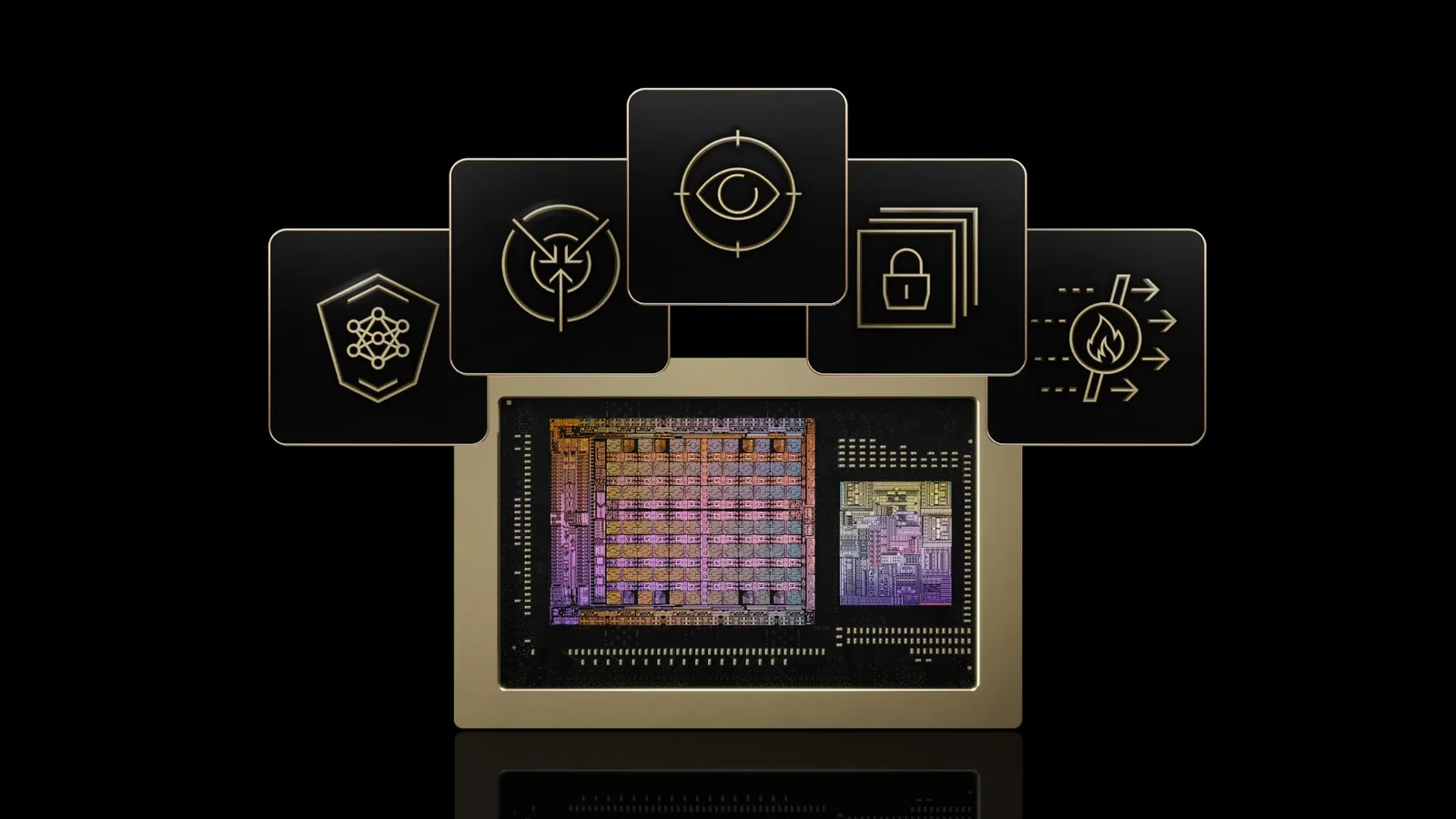
[1][2]In the OpenShell reference design, agents run on NVIDIA Vera CPUs while a BlueField-4 DPU sits on the node’s only path to the model. Sentry is the security framework on that DPU. DOCA Tower—built on Envoy—acts as a transparent proxy with in-silicon TLS acceleration and layer-7 inspection; DOCA Flow supplies a per-agent layer-4 firewall; Open Policy Agent evaluates Rego policies in local memory, typically in under a millisecond.
DOCA Argus supplies the other half: live introspection of volatile host memory from the BlueField side, with no host-resident agent. It maps containers, microVMs, process hashes, loaded libraries, and resource relationships—binding “who initiated this network request” to “is that execution environment still intact.” Policies can therefore require an approved container hash, an SBOM-listed initiating process, and a compliant execution path and command line—not merely a destination URL.
[1]The checkable evidence is mostly structural, not a third-party red-team scorecard. The post stresses that agent network traffic reaches BlueField over a direct I/O path that bypasses host OS/hypervisor packet processing; Tower correlated with Argus enriches authorization with runtime context; deviations—unapproved tools, ptrace, anomalous egress, large-scale deletion—can trigger millisecond in-silicon quarantine; telemetry and policy decisions stay on the DPU, where an agent cannot edit the protected record by rewriting logs inside its own environment.
Specialized models can classify communications inline or out of band to catch behavioral drift; SPIFFE/SPIRE and partner identity systems attach “who” to authorization. These are coherent mechanism claims under a threat model that assumes the host may be untrusted.
[1]Steelman the OpenShell side: a software Supervisor, credential mediation, and sandboxes already solve most of the daily problem—“stop asking the agent to be its own compliance officer.” Many platforms can cut risk sharply with sidecars and policy gateways on commodity x86. Sentry does not deny that; it claims a failure mode—after escape and host compromise, same-trust-domain monitors are unreliable.
The soft spots are equally clear. Broader Sentry availability is described as planned for early next year. Independent adversarial tests, latency taxes from TLS termination and inline classification, and how policies hold up against messy real allow-lists are almost absent as checkable numbers. Tying governance performance to BlueField-4 also forces enterprises standardized on other DPUs/NICs to ask whether trust-domain isolation is a principle—or this silicon.
[1][2]For security and platform owners, the near-term decision is not “buy another agent-security blog,” but an audit of the monitor’s blast radius. If the protector process, log pipeline, and policy engine share the host’s privilege domain with the workload, you may have a visibility illusion. Moving enforcement onto the only model path—where host software cannot rewrite it—is Sentry’s incremental claim relative to OpenShell’s software layer.
Enterprise stacks (XDR/SIEM) can consume attested telemetry for correlation and response—provided policy authors can express “intent” as executable Rego and SBOM constraints. Formal ceilings do not rescue organizations that cannot state them.
[1]The tell over the next six months should be quarantine true-positive rates and false-quarantine costs from early deployments—not more architecture diagrams. OpenShell answers “put authority outside the agent.” Sentry answers “put authority outside the host trust domain, too.” Both claims can stand together—and both can be independently falsified.
[1][2]