
What you can try is a research preview
California company Odyssey has opened a public research preview of its world model, Odyssey-3. A user can generate an interactive environment from a text prompt and move through it in real time. The free online demo runs on Odyssey-3 Flash. It offers a first-person view and a third-person view. The user can move, trigger events, and watch the model continue the scene. Developers can apply for API access.
The base model has 14 billion parameters. According to the official benchmark submission, it generates video at 832×480. Odyssey-3 Pro supports 1280×720. Founders Oliver Cameron and Jeff Hawke first unveiled the model on September 15, with the emphasis on robotics, autonomous driving, and video games. What is new this time is public access, more technical detail, and benchmark results.
[1]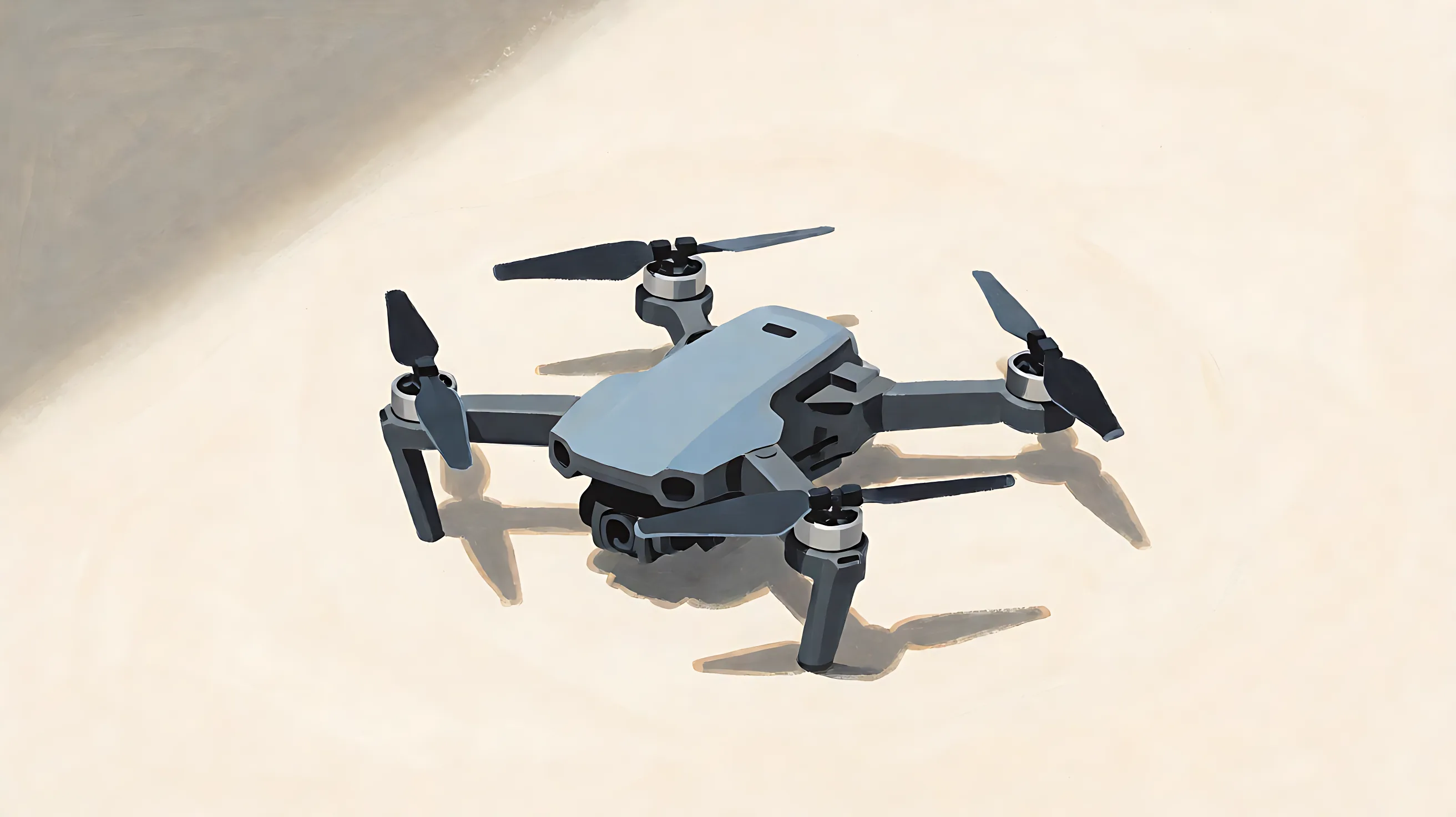
The next frame follows the last frame and the action
Odyssey-3 is built on an autoregressive diffusion transformer. It keeps producing new video frames from the frames already generated and from the user's actions. The company says that, in training, the model learns physical relationships and cause and effect from visual observations.
The training data has three parts: internet videos with event descriptions, video-game footage paired with keyboard and mouse inputs, and simulated physical interactions. Another training technique cuts the number of compute steps required, which is what makes real-time generation possible.
[1]66.1 is not a score under the record rules
The company says the more powerful Odyssey-3 Pro scores 66.1 on the video-to-video benchmark from Physics-IQ Verified. The test covers fluids, optics, solid mechanics, magnetism, and thermodynamics. A model has to continue videos of real experiments, and the output is compared with what actually happened.
That top score has a specific limit. It comes from a single test run. A selection method picked one of eight generated videos for each task. The benchmark rules say that a record claim needs four test runs and a reported standard deviation. The reported record does not meet that bar. Without the selection method, Odyssey-3 Pro averaged 63.37 across four runs. Both numbers are on the official leaderboard. Odyssey submitted them.
WorldMark measures something else: whether the model follows control instructions, how the images look, and whether a simulated world stays consistent over time. On the company's own evaluation, Odyssey-3 ranks first in three of four categories: First-Person Stylized at 77.2, Third-Person Real at 79.0, and Third-Person Stylized at 76.3. In First-Person Real it scores 80.6 and places third.
[1]Arms, drones, and games are not in the preview
The company wants to pair the same world model with a specialized controller, then use that pair on robotic arms, drones, and game characters. The controller turns the model's predictions into concrete commands. These are tests and plans the company describes. They are not functions the free demo already offers.
The company says that, in tests, a system built on Odyssey-3 controlled multiple robotic arms, and that a few dozen hours of demonstration data were enough for training. The robots could also recover from failed grasps on their own, even though those situations were not in the training data. For humanoid robots, Odyssey is working with the Swiss company Flexion. The article says controllers Flexion built on Odyssey-3 are said to perform more reliably than comparison models when conditions change. That is a report of the company's account, not an independent retest.
The drone controller was trained on simulated flight data. The company says that, in a virtual indoor environment, the drone could dodge obstacles and fly to specific targets on command.
The company also showed a system playing GTA V on its own, including steering vehicles and fighting enemies. A controller trained on roughly two hours of GTA footage transferred some of that skill to Red Dead Redemption 2 with no further training, and moved a character on horseback. The company also plans to use the world model to train agents. In a demo, an agent received a task in natural language and tried to finish it through its own actions inside a generated environment. That is a plan.
The public research preview currently offers interactive environment generation. Robotics and autonomous systems still need more work.
[1]The company and the round
Oliver Cameron and Jeff Hawke founded Odyssey in 2023. In June 2026 the company raised $310 million. Investors include Amazon and AMD Ventures.
[1]