
SAN FRANCISCO — On September 8, OpenAI CFO Sarah Friar published a signed essay, "The Work Now Within Reach." In the same week that the chief scientist talked about slowing down and the research team showed off its "automated intern," the CFO stepped up to address the third subject: money.
The essay contains not a line of code nor a single benchmark score, yet it answers the question hanging over the entire AI industry: when training a frontier model costs billions of dollars, can this business actually balance its books? Friar's answer is a self-reinforcing flywheel — better models unlock new work, more efficient compute makes that work affordable, and growing revenue feeds the next generation of research — resting on three pedals: consumer-to-enterprise cross-pollination, full-stack cost control, and an emphatically repeated "capital discipline."
For a company that has just released its "strongest model ever" while sitting in the middle of the largest AI infrastructure build-out in history, every public statement from its CFO is a roadshow. This one is no exception — but the operating data it reveals is far more honest than roadshow rhetoric.
[1]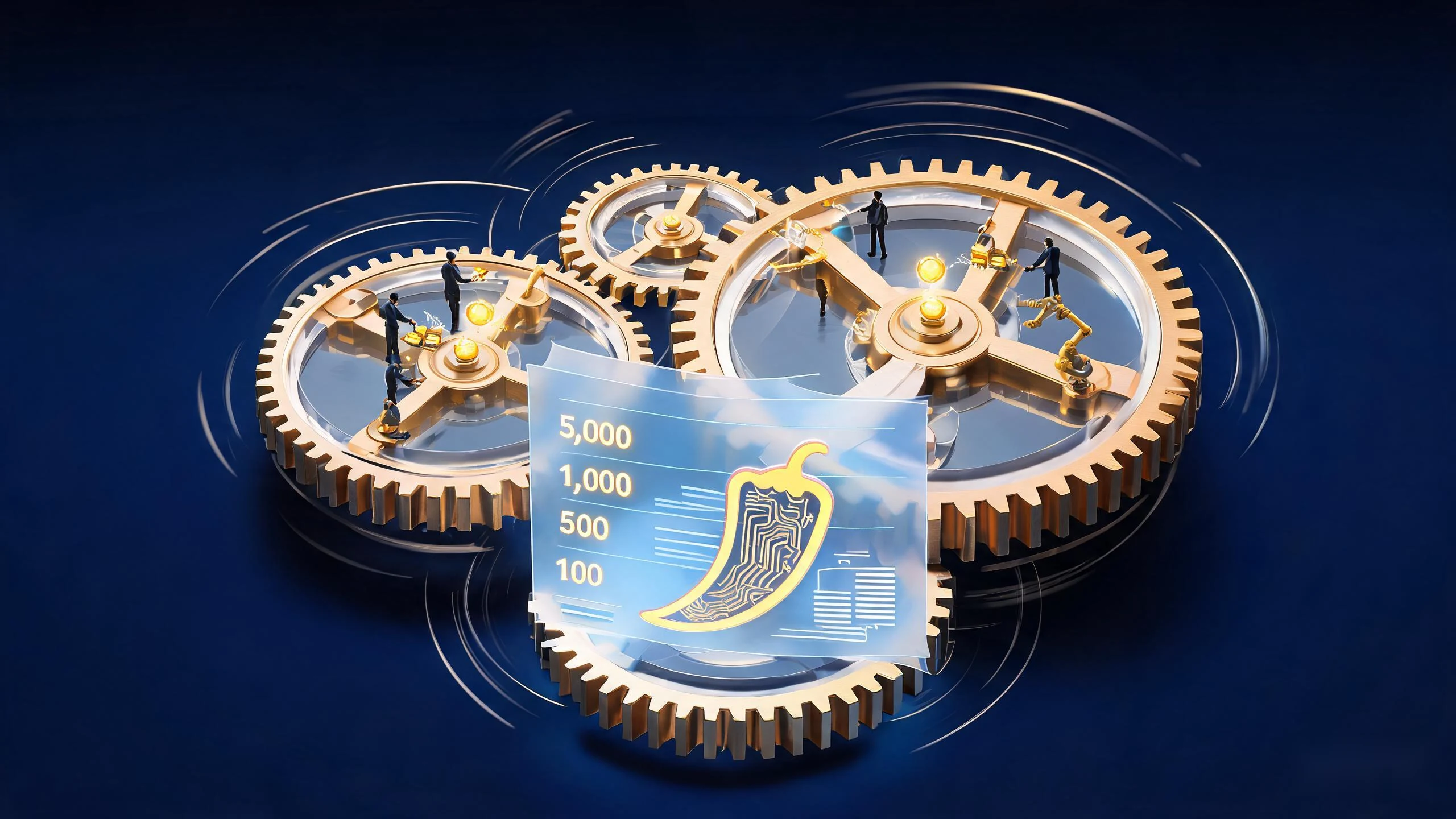
A distribution machine with a billion weekly users
The first set of numbers is scale: OpenAI's products now reach more than 1 billion weekly active users, with 2.5 million enterprise customers. Every research advance flows directly into ChatGPT, ChatGPT Work, Codex and the API ecosystem — "one investment in model research supporting multiple product lines and their diversified revenue streams."
More informative than scale is the retention curve: studying individual ChatGPT plan users, six months after signup their average daily message volume is about 50% higher than in their first month, and the number of task types they attempt has doubled. Friar reads this as the flywheel's starting turn — discover value, increase usage, increase payment — with the free (ad-supported) tier responsible for discovery and subscriptions plus usage-based pricing responsible for monetization.
The "consumer and enterprise reinforce each other" argument is classic CFO language: people who master ChatGPT at home bring it to the office; enterprise deployments reshape personal expectations; the developer ecosystem extends the product into scenarios OpenAI itself never imagined. She even previews a further state: as agentic products know you better, the traditional boundary between personal and work will keep blurring — the same model working your job by day and your life by night.
[1]The case wall: five stories the CFO chose
The essay embeds five customer cases, each a carefully selected piece of narrative ammunition:
- Boston Children's Hospital: AI-assisted research helped experts find answers in previously unsolved rare disease cases — over 40 diagnoses — the "AI saves lives" card;
- Replit: Free Mode lets users explore ideas and plan software without consuming credits — the "AI for everyone" card;
- Cars24: AI agents handle over 1 million minutes per month of car-buying conversations, from comparisons to test-drive booking — the "AI replaces support" card;
- Circles: 65% autonomous resolution across customer-service workflows — the "AI cuts costs" card;
- Balyasny Asset Management: macro scenario analysis compressed from two days to about 30 minutes — the "AI accelerates finance" card.
Healthcare, developers, consumer services, telecom support, hedge funds — five industries, five value propositions, forming a procurement checklist for enterprise decision-makers. Notably, none of the five is a "poems and paintings" consumer scenario: the CFO's case wall displays only value that fits into an ROI calculator.
[1]The "chili pepper" chip and the second half of the cost curve
The most technical section is about compute. Friar lays out three cost-reduction levers in OpenAI's full-stack strategy:
First, software: GPT-5.6 Sol helped improve production inference-serving software, cutting end-to-end serving cost by 20%; subsequent improvements brought a further 15%+ gain in token-generation efficiency.
Second, hardware: OpenAI's first in-house inference chip, Jalapeño, disclosed test data for the first time — in InferenceX tests across three public models, its peak tokens-per-watt throughput was 1.5–1.9x that of the commercial systems tested, with end-to-end latency 1.7–3.6x lower; deployment is planned to begin by end of year, alongside accelerators from partners such as NVIDIA and AMD.
Third, portfolio philosophy: training frontier models and running fast interactive agents make different demands on infrastructure — "build where we can improve performance or cost, partner for the best of what others have."
Connecting these to the cost narrative of the GPT-6 Astra launch (nearly every benchmark comparison came with a "X% cheaper" footnote), OpenAI is telling a complete story: cost optimizations at the model, software and silicon layers will multiply, opening a gap on the metric that matters — cost per task. As the price of intelligence keeps falling, the answer to "which work is worth doing" keeps being rewritten — the true meaning of the title: not that there is more work, but that more work is now affordable.
[1]Capital discipline: a defensive essay for the skeptics
The tonal shift at the end is worth savoring. After painting the flywheel, Friar devotes a full passage to "capital discipline": every investment judged by how much demand it can serve, how fast it becomes capacity, and whether returns cover the outlay.
The audience for this paragraph is obviously not the casual reader. In the AI infrastructure arms race, OpenAI is the player pushing chips hardest — data centers, silicon, decade-long compute contracts. Market skepticism about such spending never stops: if demand growth disappoints, that capacity becomes a black hole on the balance sheet. Friar's answer: we have a demand base of 1 billion weekly actives, 50% half-year usage growth, two-way consumer-to-enterprise funneling, and in-house silicon as a cost hedge — every link of the flywheel has data; this is not faith, it is an assembly line.
As analysts, we add one sober note: all the growth figures in the essay are usage metrics (messages, task types), not direct profitability metrics; how the ad-supported free tier monetizes without hurting the experience goes unmentioned; Jalapeño's baseline is "commercial systems tested," not necessarily the latest flagship accelerators. A CFO's essay is by nature a genre addressed to investors — yet that does not stop it from being among the most informative texts for understanding OpenAI's strategy: how a company spends money is closer to the truth than how it describes its dreams.
[1]Analysis: three judgments
First, the CFO of an AI company is becoming the narrator second only to the CEO. When a single training run is measured in hundreds of millions and data centers in gigawatts, the "story" must come with a "ledger." From Friar's essay series (full-stack compute, AI-native finance, the AI scorecard) to this piece, OpenAI is systematically translating technical advantage into the language of capital — paving the way for some larger capital-markets event; IPO or not, the rhetoric comes first.
Second, "in-house silicon" has turned from cost optimization into an identity statement. Jalapeño's 1.5–1.9x tokens-per-watt is not an earth-shattering number (the baseline may not be the latest flagship), but its strategic meaning is this: OpenAI no longer settles for being "the biggest customer in NVIDIA's ecosystem" — it wants to be "a customer capable of building its own spare engine." Bargaining power over suppliers is worth far more than the efficiency edge.
Third, the dissolving boundary between consumer and enterprise is the most underrated variable in AI business models. One billion individual users are the purchasing agents of 2.5 million enterprises — when employees master an AI at home, enterprise software procurement is no longer the CIO's unilateral decision. This bottom-up infiltration path is precisely the blitzkrieg Slack and Zoom validated years ago, except this time the user base is two orders of magnitude larger.
In the same week, the chief scientist warned the world that we may not be able to watch what we are building; the CFO told the world the books on this business can balance. Put the two sentences together and you have OpenAI's complete shape in the autumn of 2026 — no finish line visible on the technology side, no brake visible on the financial side, and the same hands on the steering wheel.
[1]Appendix: short-form post (Weibo / X ready)
OpenAI CFO Sarah Friar shows the books: 1B+ weekly actives, 2.5M enterprise customers; six-month retention up ~50% in daily messages; 65% autonomous support resolution; hedge-fund macro analysis from two days to 30 minutes; first in-house inference chip Jalapeño posts 1.5–1.9x tokens/watt and 1.7–3.6x lower latency, deploying by year-end. The essay lands on four words: capital discipline — every link of the flywheel has data; this is not faith, it is an assembly line. #OpenAI #Jalapeño #AIBusiness
[1]