
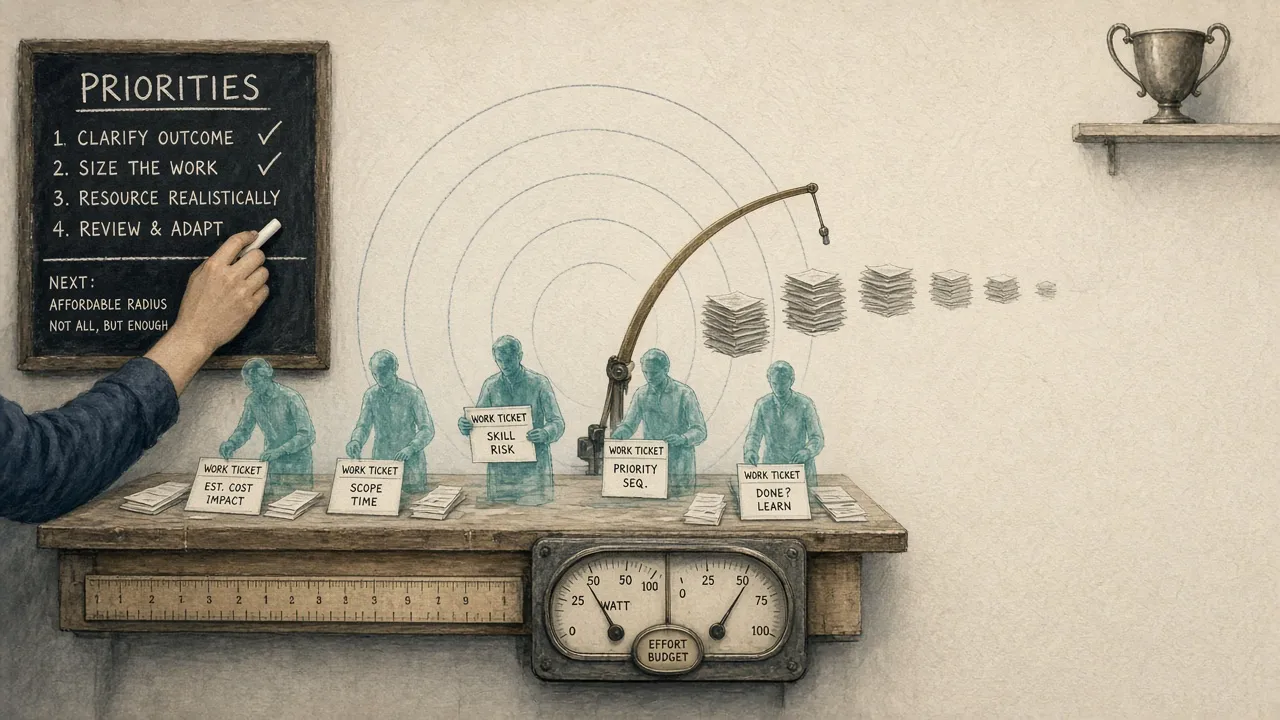
On 8 September 2026, OpenAI CFO Sarah Friar published The Work Now Within Reach. Fact (OpenAI): the post presents GPT-6 Astra as a major capability step and argues that consumer-enterprise reach plus a full-stack compute strategy turn research progress into customer benefit. It cites more than one billion weekly active users and 2.5 million businesses; ChatGPT, ChatGPT Work, Codex, and API applications absorb the same model investment. Claim (OpenAI): Astra is “the world’s most intelligent and aligned model,” state-of-the-art in computer use, browsing, software engineering, cybersecurity, science, and professional work. Inference (labelled): if the letter’s strategy is coherent, the durable news is not a ranking adjective but a cost curve for completed tasks—and that is where the disclosed ratios live.
[1]What the letter actually ships as numbers
Strip the adjectives and three quantitative strands remain.
Adoption depth. In a study of people on individual ChatGPT plans, OpenAI says daily message volume was roughly 50% higher six months after signup than in the first month, and people had tried roughly twice as many distinct tasks. Free access supported by advertising, plus subscriptions and usage-based offerings, is described as the revenue path that grows with that use.
Internal agent leverage. A research-organisation update (mid-August 2026, Stanford 8-hour workday normalisation in the chart caption) states that researchers contribute code faster and run more experiments while delegating complex tasks to agents; the organisation “now uses 3.1 agent-workdays of effort for every workday of human labor.” People still set priorities and judge results, per Friar.
Serving and silicon. GPT-5.6 Sol is said to have improved production serving software, cutting end-to-end serving costs by 20%, with additional improvements raising token-generation efficiency by more than 15%. Jalapeño, OpenAI’s first custom inference chip, is reported in InferenceX tests across three public models to deliver 1.5–1.9× peak token throughput per watt versus the commercial systems tested (rated chip power normalised), and 1.7–3.6× lower end-to-end latency, with deployment planned by year-end beside NVIDIA, AMD and other partners.
Customer vignette. A Boston Children’s Hospital quote on the page credits AI-assisted research with helping specialists in previously unresolved rare-disease cases (“More than 40 diagnoses”). That is a named customer story on OpenAI’s site, not an independent clinical trial report in this draft.
[1]The flywheel is the product claim
Friar’s structural argument is compounding: better models open new work; more efficient compute makes that work affordable at greater scale; revenue from adoption funds the next research and infrastructure cycle; capital discipline judges each investment by demand served, time to productivity, and returns versus capital committed.
That is a business-systems claim, not a benchmark table. It is falsifiable in principle: if agent-workday leverage stalls, serving-cost gains reverse under load, Jalapeño fails to match published watt-throughput in third-party measurement, or enterprise revenue does not follow capability releases, the compounding story weakens even if Astra remains a strong model.
Inference (labelled): “Work now within reach” is an economics metaphor. The letter’s load-bearing object is the unit cost of a finished task—fewer failed attempts from a better model, cheaper tokens from software and silicon—not a single demo. The Millennium Prize mention and “most intelligent” branding do rhetorical work; they are not substitutes for the ratios above.
[1]Why the Navier–Stokes line must stay labelled
Friar writes that an internal OpenAI model “has produced a solution to the Navier–Stokes Millennium Prize Problem,” calling it a significant milestone for AI in mathematical research. Fact: that sentence appears on the OpenAI page dated 8 September 2026. Claim: that a Clay Millennium Problem has been solved. Not established here: formal proof publication, Clay Mathematics Institute recognition, or independent mathematician verification.
Inference (labelled): bundling a prize-problem headline inside a CFO flywheel letter risks readers treating science news and capital narrative as one object. For this desk, the prize line is a high-stakes company assertion that must travel with verification gaps—not as confirmed mathematics.
[1]Steelman, gaps, and what would falsify this reading
Steelmanning OpenAI. Suppose frontier labs only sustain successive generations if distribution, compute control, and internal agent productivity reinforce one another. Then a CFO letter that foregrounds one-billion-scale weekly reach, diversified product surfaces, serving-cost deltas, and a custom inference chip is the honest capital narrative: capability without a path to affordable completed work does not compound. On that steelman, criticising the post for not publishing an external Navier–Stokes peer review on the same day is fair as science journalism, incomplete as corporate-strategy reading—Friar is selling a cost-and-reach machine.
Gaps that remain thin. “World’s most intelligent and aligned” and multi-domain SOTA are competitive assertions without disclosed eval suites, contamination controls, or independent leaderboards in this post. Linked study and chip pages were not fully retrieved here (guessed URLs returned 404). Chart values beyond the stated ratios were not re-measured from pixels. Advertising-supported free access is named without revenue share or engagement metrics.
Labels for editors. Facts (as stated by OpenAI on this URL): author, date, product names (GPT-6 Astra, ChatGPT, ChatGPT Work, Codex, API, GPT-5.6 Sol, Jalapeño), ≥1B WAU, 2.5M businesses, ~50% higher daily messages / ~2× tasks at six months, 3.1 agent-workdays per human workday, −20% serving cost, >15% token-efficiency, Jalapeño 1.5–1.9× throughput/W and 1.7–3.6× lower latency with year-end deploy plan, BCH customer quote on-page. Claims: world’s most intelligent/aligned; multi-domain SOTA; internal model solved Navier–Stokes Millennium Prize Problem; compounding leadership through successive generations. Inferences: cheaper completed work is the strategic spine; prize and ranking language are rhetorical load.
[1]What to watch in six months
Three checks matter more than another ranking adjective. First: do independent evaluators reproduce Astra’s stated domain leadership under disclosed protocols, or does “most intelligent” remain brochure copy? Second: do third parties measure Jalapeño’s throughput-per-watt and latency claims in production-like serving, and does the −20% serving-cost line hold as traffic mixes shift? Third: does the 3.1 agent-workdays ratio become a published, auditable internal metric over time—or a one-off mid-August snapshot—and does any Navier–Stokes announcement gain recognition outside OpenAI’s blog?
If the cost-of-completed-work flywheel holds under those tests, Friar’s title will age better than the prize cup on the shelf: more work becomes worth doing because each finished task got cheaper—not because a headline declared the hardest problem solved.
[1]