
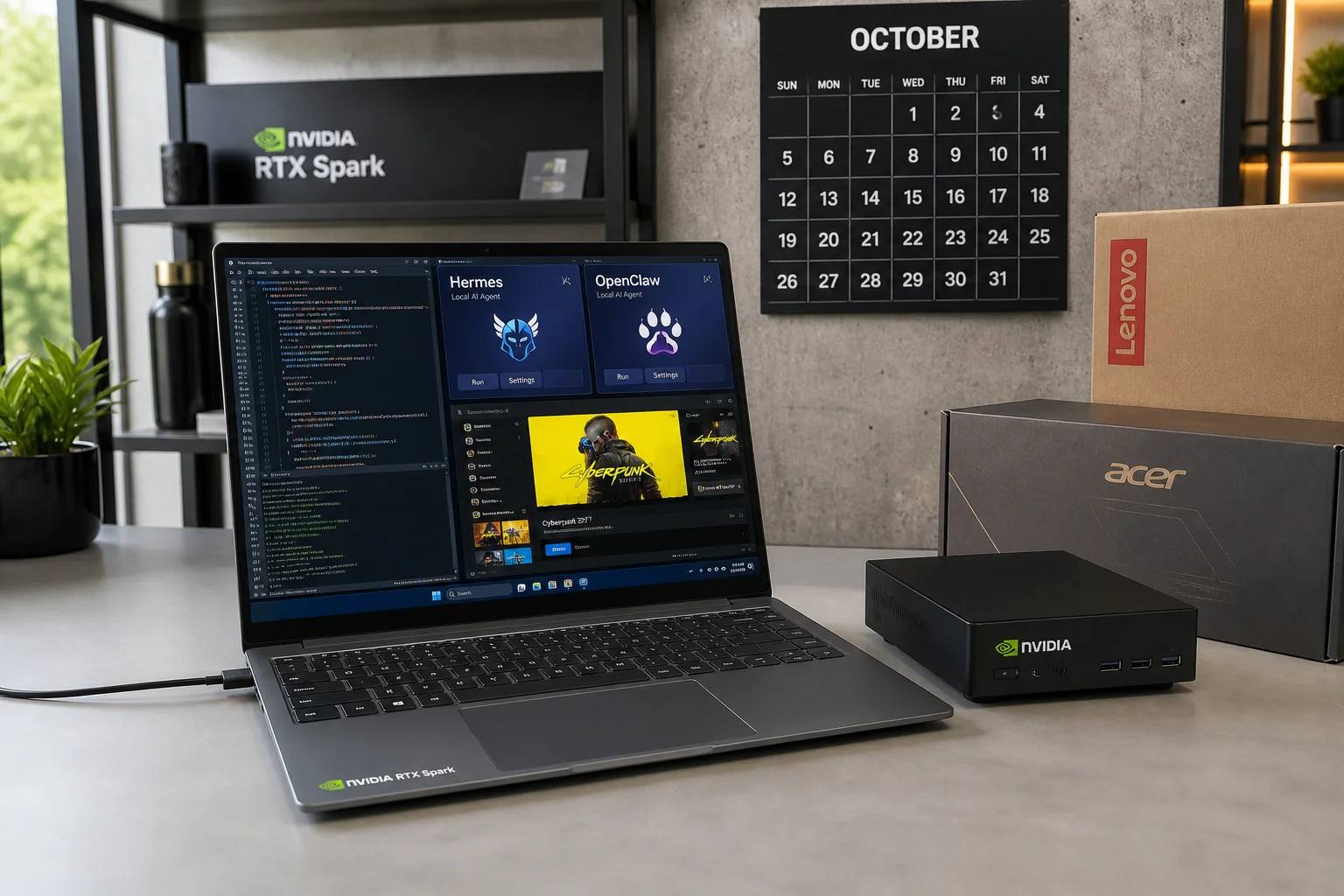
At IFA, NVIDIA moved RTX Spark from concept slides to a ship window: October.
This is not another gaming-laptop poster. The top config welds 6,144 Blackwell CUDA cores, about 1 petaflop of FP4, up to 128GB unified memory, and a 20-core Grace CPU into thin laptops and mini desktops. TechSpot also notes a laptop-only cut-down with 5,120 cores and an 18-core CPU. OEM coverage stretches from ASUS, Dell, HP, Microsoft Surface, and MSI to Lenovo’s Yoga Pro 9n / Yoga 9n and Acer’s SFF box — aimed squarely at the always-on agent Mac mini slot.
Software is the sharper tell. Hermes Agent, OpenClaw, and Perplexity Portable Computer get simplified Windows local setup; llama.cpp throughput gains of up to about 1.9× are claimed on an RTX 5090. EA, Embark, and Ubisoft bringing AAA titles onto Arm Windows admits the machine must game, create, and run agents. Microsoft supplies Windows Agent primitives; NVIDIA OpenShell handles policy and local/cloud routing — a vendor-grade answer to “run an agent on my primary PC” after July’s Hugging Face scare.
Take: PAIR farms idle GPUs. Spark invents a PC category. Cloud APIs will still eat peak inference, but privacy, always-on agents, and token anxiety will drag some work home. The risk is not the datasheet — it is anti-cheat on Arm, driver maturity, and whether buyers pay a laptop premium for local agents. October unboxing will judge Hermes/OpenClaw one-click setup, not another booth FLOPS chant.
[1][2]