
要点
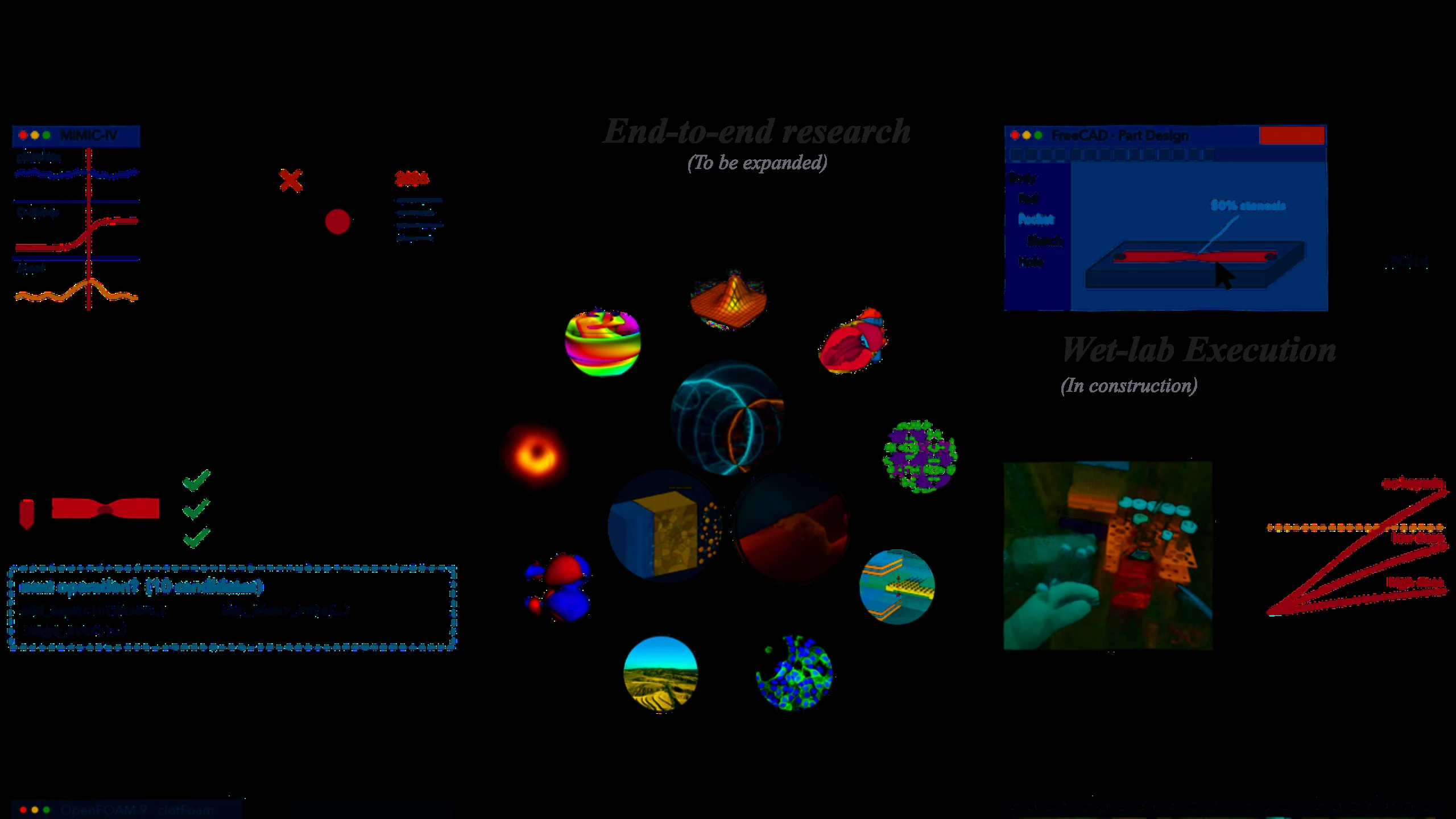
- Scale: 113 public tasks across nine disciplines; six capability assessments plus one end-to-end research slot (end-to-end marked To be expanded; Wet-lab Execution still in construction with no released tasks).
- Board (2026-11-04): 8 models; Claude Opus 5 High leads at 37.50 composite; end-to-end research is 0 for every listed model. Opus 5.5 and GPT-6 Astra show N/A because of biology safeguards.
- What to falsify is the composite scores, the all-zero end-to-end slot, and the task counts—not a claim that AI already does science alone.
Science’s Last Exam (SLE), led by the AItonomy Foundation, asks how far an AI agent can get on a research goal with real tools and materials. The capability board published on 4 November 2026 lists eight models. The top composite is Claude Opus 5 (High) at 37.50. The site says the composite equally weights six assessments, and the end-to-end research slot is 0 for every listed model.
That splits “can do science” into a checkable score structure: capability items can earn points; the full research loop is still zero in the published results. Claude Opus 5.5 and GPT-6 Astra show N/A because provider biology safeguards restrict biology research workflows. Check those public figures—not an extrapolation that “AI already does research alone.”
[1]Hard facts (https://sciences-last-exam.org/, /leaderboard, /blog, /docs; board marked Published 4 November 2026; accessed 2026-11-06, Asia/Shanghai):
- Org: AItonomy Foundation (US nonprofit); tasks designed and reviewed in a personal capacity by PhD students and postdocs from 34 institutions, including Stanford, Oxford, and Princeton affiliations on the homepage.
- Tasks: 113 public tasks; nine disciplines—statistics, physics, astronomy, chemistry, earth science, biology, engineering, materials science, medicine.
- Framework: six capabilities—Hypothesis Discovery, Protocol Planning, Scientific Computing, Scientific Software Operation, Wet-lab Execution, Experiment Observation—plus End-to-end research. Docs say Wet-lab Execution is in construction with no released task or score; End-to-end research is To be expanded but included in the composite.
- v1 counts (docs): Hypothesis Discovery 5; Protocol Planning 40; Scientific Computing 23; Scientific Software Operation 14; Experiment Observation 30; End-to-end research 1.
- Leader: Claude Opus 5 / Claude Code / High at 37.50 composite, about $19.70 per task and mean time about 17m 31s. Next are GPT-6.1 Sol 36.15, Kimi K3.1 Pro 28.92, and others.
- Scoring: composite equally weights six assessments including end-to-end research; published results show end-to-end at 0 for every listed model.
- Missing: Claude Opus 5.5 and GPT-6 Astra are N/A due to biology-safeguard limits on biology research workflows; the site says scores will be added once research access is approved.
Example task (blog): choose the lowest total daily dose and dosing interval for the antithrombotic ticagrelor in a computational model, with the choice holding across vessel geometries, flow conditions, and drug-response profiles.
[1]Evidence strength: a public board, docs, and blog form a primary benchmark description. The 37.50 top score, all-zero end-to-end slot, 113 tasks, and nine disciplines can be checked against the leaderboard and docs. The N/A for Opus 5.5 / Astra is the site’s own safeguard note, not a guess.
Concrete checks: open the leaderboard for the eight scores; read the docs task counts and the note that end-to-end enters the composite and is currently 0; spot-check one public task package for withheld references and separate verifiers. If end-to-end expands and prose still says “AI already does science alone,” shrink the claim.
Steelman: separating capability items from end-to-end blocks the move of treating quiz or single-compute highs as a full research loop. Publishing an all-zero end-to-end slot is unusually plain.
[1]Strongest steelman: real research needs finding gaps between evidence and hypothesis and choosing the next move. SLE’s withheld references and independent verifiers push against “looks like a paper” churn more than another multiple-choice set.
Steelman risk: end-to-end currently has one task and is marked To be expanded; Wet-lab has no score yet. The 37.50 composite is an equal-weight mix that includes a slot that is necessarily zero today—read the denominator. Missing Opus 5.5 and Astra leaves the “frontier” comparison incomplete. The blog’s mention of OpenAI’s internal math manuscripts is motivation, not an SLE score.
“Zero” refers to the end-to-end research slot, not every capability item. A 37.50 leader means some capabilities score; the full loop has not cleared the bar in published results.
[1]For evaluators and funders, the next six months turn on whether end-to-end grows beyond one task, whether Wet-lab starts scoring, whether Opus 5.5 and Astra enter after research access, and whether 37.50 is broken. For labs, this is a stress test with tools in hand, a goal given, and results checked independently.
For readers, acceptance should rest on public scores, task counts, and whether end-to-end remains 0—not a slogan that AI scientists are already on payroll.
[1]What to check on SLE is the public composite (37.50 at the top today), end-to-end research at 0 for every listed model, and whether the 113-task / nine-discipline frame still matches the docs—not a claim that AI already completes scientific research alone. Capability items can score; the full loop is still zero in published results. If that structure holds, this is a checkable research-agent benchmark; if not, it remains an ambitious leaderboard.
【No.2】
[1]