
要点
- Ai2 (2026-11-03) releases StateBench: four-level long-context state tracking (R-trivial / aperiodic / soluble / general finite) with aligned variables/timing; tech report, data, and code linked.
- Same-data pretrained Olmo 3 vs Olmo Hybrid etc.: strong on r-trivial, degrade on aperiodic with length, near chance on general finite; format alone can move the same problem from ceiling to chance.
- Gemini 3.8 Flash, Claude Opus 5.5, GPT-6 Sol/Luna fall sharply on soluble/general finite; longest general-finite accuracy can be ≤13%.
- 275M trained directly (≤256 train assignments, test to 64k): hybrids/Gated DeltaNet near-perfect on first three levels; transformers never learn the hardest; flexible memory-update variant ~10× train length near-perfect there.
On 3 November 2026, Ai2 released StateBench, a long-context state-tracking benchmark graded into four difficulty levels grounded in Krohn–Rhodes theory. The question is not whether a model can retrieve a static fact from a long document, but whether it can follow an entity’s state through a chain of updates without dropping a step.
The column thesis is narrow and falsifiable: on soluble and general-finite problems, frontier transformers still collapse toward chance as inputs lengthen, while hybrids and Gated DeltaNet trained directly on the task generalize far beyond training length—so the binding constraint is architecture class, not only whether pretraining saw similar patterns.
[1][2]What shipped
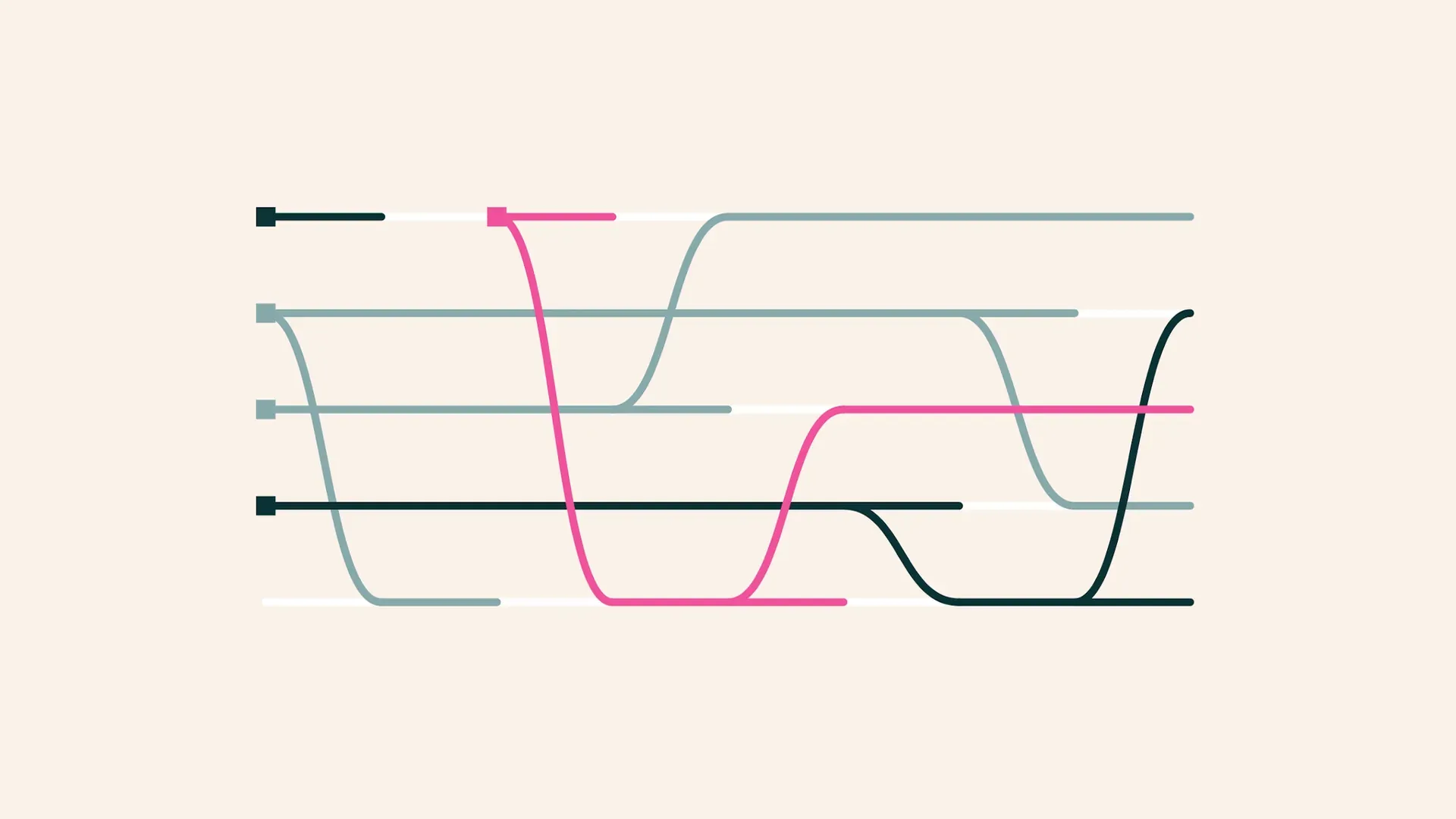
State tracking shows up from code (variables reassigned) to narrative (objects changing hands). StateBench’s four levels match different assignment primitives:
- R-trivial: immutable assignment; recover the first value.
- Aperiodic: reassignment by value; the latest write wins.
- Soluble: self-referential updates (
x = x + 5); the running state must be carried. - General finite: assignment by reference / swaps (including S₅ cup-swaps); one missed step ruins the answer.
The authors start from a general-finite assignment sequence and derive three easier siblings so variable count, value set, and assignment timing stay aligned—only the operation type changes. On open pretrained models they compare Olmo 3 (transformer) and Olmo Hybrid (with Gated DeltaNet layers) trained on the same data, plus 275M / 2.7B variants; none saw contexts longer than 64k tokens in pretraining. Frontier tests covered Gemini 3.8 Flash, Claude Opus 5.5, and GPT-6 Sol and Luna.
[1][2]How hard is the evidence
Open pretrained models: almost all do well on r-trivial, lose accuracy on aperiodic as length grows, and stay near chance on general finite. Format matters: the same r-trivial problem can be near ceiling in a RULER-style frame and near chance as spreadsheet edits—hence StateBench’s multi-format design.
Frontier models stay strong on r-trivial and aperiodic, then fall sharply on soluble and general finite; on the longest general-finite items accuracy can hit 13% or lower.
Direct training at 275M (train ≤256 assignments, test to 64k, ~250×) splits architectures: Gated DeltaNet and hybrids generalize near-perfectly on the first three levels to the longest sequences tested; transformers learn easier levels but degrade with length and never learn general finite. The more flexible Gated DeltaNet memory-update variant stays near perfect on the hardest level out to roughly 10× training length.
Ai2’s post links a tech report, data, and code—an auditable primary trail.
[1][2]Steelman and gaps
Steelman: theory already predicted hard state-tracking limits for transformers; StateBench’s contribution is an aligned four-level ladder plus same-data hybrid contrasts that keep architecture failure from being misread as data failure.
Gaps remain: a fixed variable count does not match conversations that introduce new entities over time; exact placement of some limited-update Gated DeltaNet variants under fixed precision is still open; frontier numbers depend on vendor APIs with incomplete public contamination/tooling detail. Reading “architecture bottleneck” as “every product memory task will fail tomorrow” overclaims—many production queries stop at aperiodic.
[1][2]Who pays, what to watch
The bill falls on teams shipping long-context products (agent memory, coding assistants, multi-doc reasoning): acceptance tests that only score “latest-fact” needles will systematically overrate reliability on soluble / general-finite workloads.
Watch over six months whether StateBench enters open-model cards, what hybrid-layer mix real pretraining recipes adopt, and whether dynamic entity introduction lands in a v2.
[1][2]Close
The defensible sentence is: an aligned four-level state-tracking ladder turns “gets lost in long context” from a vibe into a checkable architecture split—the direct-training divergence between hybrids/Gated DeltaNet and transformers, plus frontier drops to ≤13% on the hardest level, support the “not only data coverage” half. It does not license “transformers are dead” or “swap in recurrence and product memory is solved”; fixed variables and open proof questions stay on the desk.
[1][2]