
要点
- The WSJ article was published at 02:00 UTC on 25 November 2026, by Konrad Putzier. The open lede says the US has become heavily reliant on AI spending over the past two years; that rising tech stocks and a massive data-center build-out have kept growth going; and that not since the late-19th-century railway boom has the build-out of a single new industry made up such a large share of gross domestic product. Barclays estimates that AI investment accounted for 25% of economic growth in the last year. A photograph caption says stocks make up about 35% of household net worth.
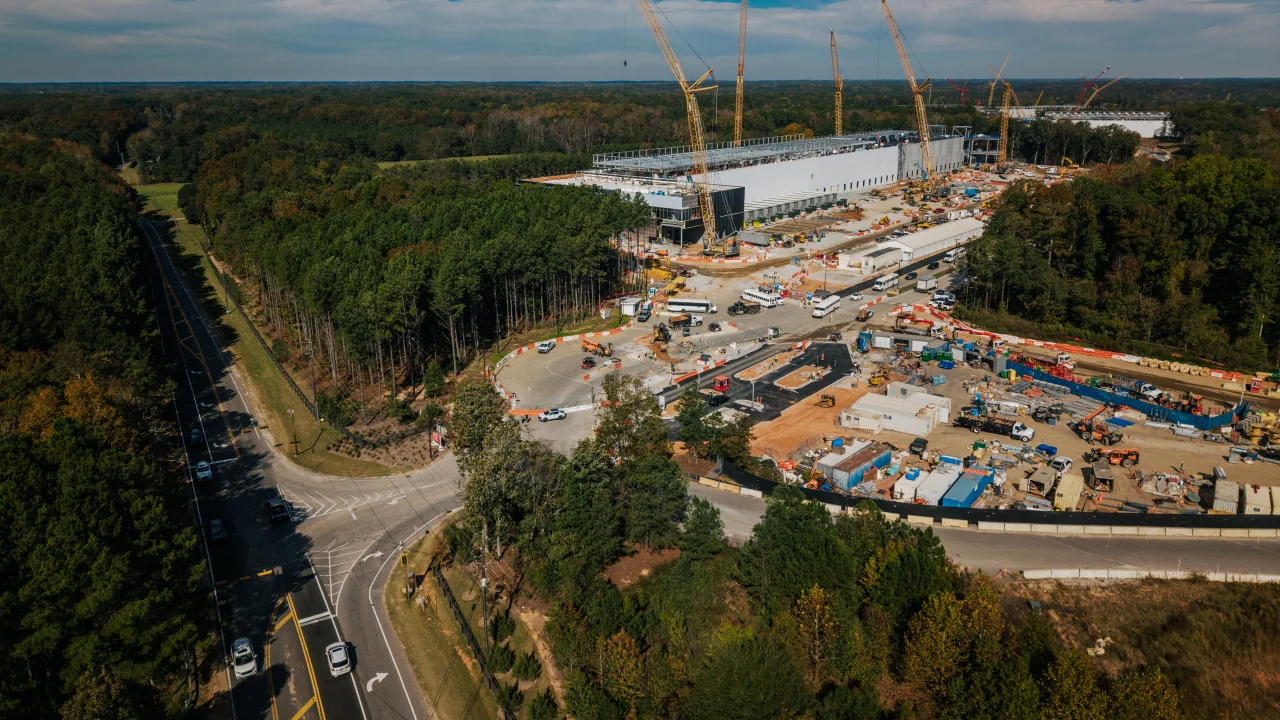
- This commentary read the public lede of the WSJ page, the image captions, and the photograph of a data center under construction in Fayetteville, Ga. The rest of the article was paywalled. Named-economist arguments further down are taken from SBS's English recap of the same WSJ report, and are marked as such in the body. SBS says that in the dot-com crash the S&P 500 fell by about 50% and the Nasdaq by nearly 80%; that data-center sites have created jobs and helped suppliers such as Caterpillar and GE Vernova; and that after midterm wins by Democratic candidates who pledged to curb data-center construction, Amazon and Microsoft could scale back new building plans.
- According to SBS, some economists have begun to compare the rise in AI-related borrowing with the subprime mortgage boom that preceded the 2008 crisis, and say the borrowing structure around data centers is becoming harder to track. Jeremy Stein, a former Federal Reserve governor, said, "We do not fully understand all of these interconnected relationships," and that while the likelihood of a 2008-scale financial crisis is low, a greater blow than after the dot-com bust is entirely plausible. Jason Furman, a Harvard economist, argued that even if equity valuations fell 30% and data-center construction halted completely, that would not be enough on its own to cause a recession, because a substantial share of what goes into data centers is imported. The worst case he sketched is a downturn comparable in scale to the dot-com bust. SBS also notes analyses in which more of the recession risk would fall on Taiwan, home of TSMC, than on the United States.
- The WSJ lede itself frames the conclusion as a painful hit whose magnitude is still debated. The fear that an AI downturn could be worse than the dot-com crash is attributed to some economists, not presented as a settled finding of the article. This commentary does not treat figures from other recaps that could not be checked against the WSJ text as established facts.
On 25 November 2026, the Wall Street Journal asked a direct question: what would happen to the US economy if the AI boom goes bust. The open lede's answer is that the hit would be painful, but that the scale is still in dispute. Even a deflation of investment, short of a crash, could, in many people's view, cripple growth. The checkable starting point is a Barclays estimate that AI investment accounted for 25% of US economic growth over the last year. That figure should not be rewritten as a finding that a bubble has already burst, or that the shock will necessarily exceed the dot-com crash.
[1][2]Konrad Putzier's report sets the question against sharp stock-market swings and Nvidia boardroom turmoil that, the lede says, have people from Silicon Valley to the White House asking the same thing. Over the past two years, the US has leaned on AI spending. Rising tech stocks and the data-center build-out have kept growth going. Trillion-dollar market swings, rising borrowing for data centers, and calls to restrict construction have raised fears that this growth engine might sputter. The paper compares the scale of the build-out with the late-19th-century railway boom, and gives the Barclays 25% estimate. A caption on one photograph says stocks make up about 35% of household net worth, which is the paper's own figure for why a market drop could weigh on spending. Because the rest of the WSJ page was paywalled, the mechanisms and quotations after the lede are taken here from SBS's English recap of the same article. SBS describes three channels: a stock decline that reduces household wealth and consumption; a slowdown in data-center construction that would hit jobs and suppliers such as Caterpillar and GE Vernova; and AI-related borrowing that is becoming harder to follow, which some economists compare with the pre-2008 mortgage structure. SBS also says that in this month's midterms, Democratic candidates who pledged to curb data-center construction won seats, and that Amazon and Microsoft could scale back new projects. Those points are clearly presented in the SBS piece as a recap of the WSJ report. They are more specific than the open lede, but they are not sentences I read on the WSJ page itself.
[1][2]Start with the figures the Journal itself provides. The 25% is one Barclays estimate of AI investment's share of US economic growth over the last year, not a claim that AI output is already a quarter of all GDP. The lede does not set out the method, so it is a contribution share that should be questioned, not an official statistic that has already been settled. The 35% comes from a photograph caption, and refers to stocks as a share of household net worth. It supports the paper's point that equities now sit more heavily in household wealth. SBS adds the historical drawdowns from the dot-com crash: about half for the S&P 500, and nearly 80% for the Nasdaq. That is a comparison with the past, not a description of a decline that has already happened this time. Then comes the split. As SBS recounts it, Jeremy Stein puts a low likelihood on a 2008-scale financial crisis, but says a larger blow than after the dot-com bust is entirely plausible. His point is that the interconnections are not fully understood, not that such a shock has been shown. Jason Furman, in the same recap, puts the worst case on a par with the dot-com downturn rather than worse than it: even a 30% drop in valuations and a full halt in data-center construction would not, in his account, be enough on their own to cause a recession, because a substantial share of the equipment is imported and the domestic value added is smaller than the headline investment figure. SBS also notes analyses that place more recession risk on Taiwan's chip supply chain than on the United States. These judgments point in different directions, and all of them are conditional. They should not be flattened into the headline fear that an AI bust could be worse than the dot-com crash.
[1][2]The strongest version of the worry is that a 25% contribution to growth, plus stocks at about 35% of household net worth, means an AI investment slump would hit both the growth accounts and consumption at the same time. If data-center borrowing is as hard to track as the SBS recap says, losses could spread before outsiders can measure them. Stein's willingness to call a larger shock than the dot-com bust entirely plausible means this is not a fringe conjecture. Furman's version cuts the other way. Imports reduce the domestic GDP content of data-center spending, so the 25% figure may overstate how exposed the US economy is. If a construction halt would still not be enough on its own to cause a recession, the headline comparison is doing too much work. The WSJ lede already stands in the middle: the hit would hurt, the scale is unsettled, and even without a crash a contraction in investment could drag growth down. Rewriting that middle position as a settled finding that the bust would be worse than the dot-com crash does not match the sentence the paper itself leads with.
[1][2]Over the next six months, watch whether other shops re-estimate the Barclays 25% figure with a method that can be checked, and whether US data-center starts, related capital spending, and the import content of that spending move enough to change the growth contribution. Watch, too, whether midterm pledges to restrict data-center construction become enforceable policy, and whether cloud providers such as Amazon and Microsoft formally cut their build plans. If the growth contribution is revised down, while construction still goes ahead roughly as planned, today's worry will look more like a warning about concentration. If construction slows in a clear way, and the domestic value added after imports is not as small as the more cautious accounts suggest, the larger shock Stein described will move into the range of things that can be observed.
【No.2】
[1][2]