
要点
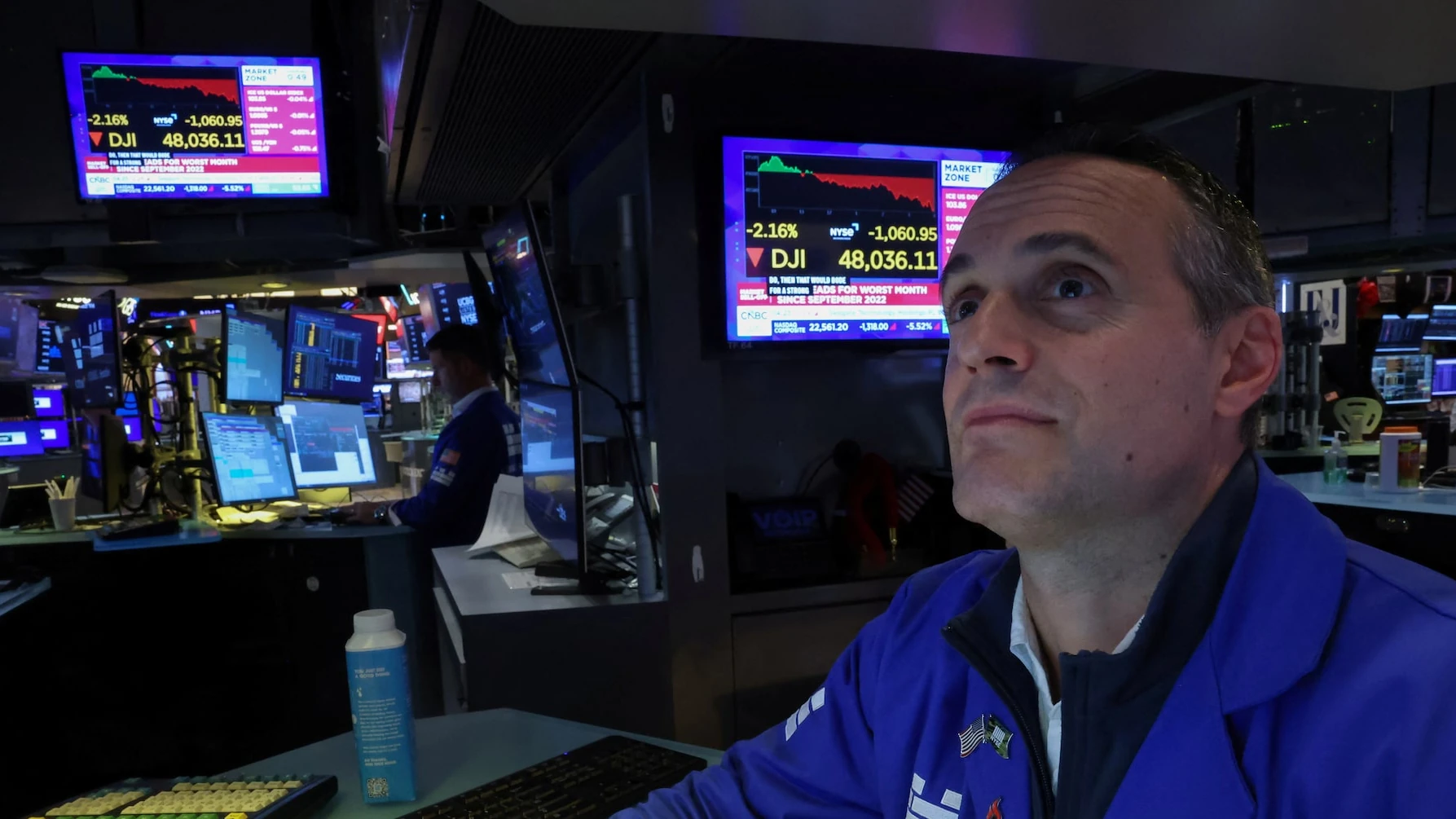
- Reuters reporter Shashwat Chauhan wrote that Anthropic traded as low as $73.85 shortly after the open, 11% below its initial offering price last week, then closed 1% higher at $82.19. The Nasdaq Composite closed down 0.6% after being down as much as 4.6%. The Nasdaq-100 briefly fell 20% below its 6 October record close, then also closed down 0.6%. Alphabet dropped 4.7% and hit a 52-week low before closing down 2.1%. Broadcom dropped 5.8% before ending flat. Nvidia dropped 8.5% to a fresh low before closing 3.9% lower.
- The dispatch presented this as a second straight daily drop in tech and listed same-day background: Democratic wins in the US midterm elections that, in Reuters' wording, promise greater regulation and a slower, costlier AI buildout; a Trump administration proposal for new tariffs on imports from 14 trading partners; and data showing US inflation increased further in October. In Tokyo, OpenAI shareholder SoftBank fell 14%, and Reuters said the stock was down more than 40% for the year. Dell fell 5.7% early even after raising its annual revenue and profit forecasts for the third time this year and approving an additional $25 billion share buyback, then closed up 0.6%. Reuters said Dell has more than doubled for the year. HPE tumbled 16.3% on Tuesday after raising its full-year revenue outlook. Ambarella, valued at $2 billion, tumbled 20.9% after forecasting fourth-quarter revenue below analysts' estimates. The Philadelphia chips index slid 7% to a more than seven-month low before closing 0.6% lower, and has plunged more than 43% from its June record. Oracle closed down 5% and Amazon.com down 3%.
- Reuters also described stress in credit markets. It said so-called neocloud firms that supply AI data-center capacity were under renewed attack. Nvidia-backed CoreWeave and Nebius Group each fell more than 10% at one point, then CoreWeave closed flat and Nebius down 2.7%. Tradeweb data showed the yield on CoreWeave bonds due 2031 rose to almost 18%, with prices down nearly 2 cents on the dollar to near record lows. Five-year CDS spreads at Oracle, Alphabet, SpaceX and CoreWeave hit record levels. Todd Schoenberger, chief investment officer at CrossCheck Management, said these companies appear to be trying to one-up each other on how much they spend, but have to show that it is worth it, and that Wall Street is saying it does not know.
- The Reuters website returned a block page to automated fetching. This article follows the Reuters-bylined wire by Shashwat Chauhan as published on Yahoo Finance, updated at 5:27 p.m. ET on 25 November, under a headline that the damage was limited by an afternoon bounce. A Channel NewsAsia reprint matched that updated text. The Reuters post on X at 17:50 UTC still used the earlier headline that Anthropic hit $74. In the updated wire, the heading about bear territory sits above a statement that the Nasdaq-100 only briefly fell 20% below its 6 October close, and then closed down 0.6%. The closing prices and the bond and CDS figures can be checked. The midday headline does not by itself show that a bear market has been confirmed or that the AI investment boom has ended.
On 25 November 2026, Reuters reported that AI-linked stocks fell sharply early in the day, then recovered in the afternoon. Anthropic traded as low as $73.85 and closed 1% higher at $82.19. The Nasdaq Composite and the Nasdaq-100 both closed down 0.6%. Those closing prices, and the bond-yield and CDS records in the same dispatch, can be checked. They do not by themselves prove that a bear market is in place, or that AI infrastructure investment has failed.
[1][2]Reuters framed the session as a familiar autumn clash between concern about rising costs and heavy debt, and buying interest after prices had already fallen a long way. It said the selling began soon after the Nasdaq Composite's 6 October record close and increased markedly in the second half of November. Beyond share prices, the dispatch described funding conditions. A CoreWeave 2031 bond yield near 18%, and record five-year CDS spreads at several tech firms, are credit-market facts that do not automatically disappear because shares bounced in the afternoon. Because the Reuters website blocked automated fetching, this article follows the Reuters wire on Yahoo Finance and checked it against the Channel NewsAsia reprint. The Reuters headline on X still referred to the intraday $74 print, while the updated wire gave the closing prices.
[1][2]Separate the intraday prints from the close. The $73.85 figure is the low shortly after the open, and the print Reuters said was 11% below last week's initial offering price. The close was $82.19, up 1% on the day, not a 1% bounce from the low. The Nasdaq-100 briefly reached 20% below its 6 October high, which is the technical level Reuters invoked in a heading about bear territory, but it closed down only 0.6%, so the session did not confirm a bear market on a closing basis. Alphabet, Broadcom and Nvidia also saw larger early losses than their closing losses. Then there are the credit figures. A CoreWeave 2031 yield near 18% on Tradeweb data, prices near record lows, and record five-year CDS spreads at Oracle, Alphabet, SpaceX and CoreWeave, the cost of insurance against those firms defaulting on their debts, are market facts that can be checked on their own. They support the dispatch's point that an infrastructure expansion increasingly financed by large debt sales can make markets more fragile. They do not mean a default has already occurred. Schoenberger's comment is a named opinion: the spending race has not yet convinced Wall Street that the returns are there. Dell and HPE were sold after raising forecasts, which shows the selling was not limited to companies that missed estimates. Reuters itself attributed part of that to large share-price gains earlier in the year.
[1][2]The more cautious bear case is that the afternoon bounce in shares does not cancel the warning from credit markets. A bond yield near 18% and record CDS spreads mean lenders are demanding more compensation to keep funding this part of the AI buildout. SoftBank's 14% drop on the day, and a decline of more than 40% for the year, is also presented by Reuters as a sign that further fundraising for OpenAI may face more resistance. If tighter regulation, new tariffs and higher inflation arrive together, construction becomes more expensive and payback takes longer. The core of that argument is not the 0.6% decline at the close. It is that financing terms are getting worse. The other side is also in the same dispatch. Anthropic closed up 1%, the main indexes fell only modestly, and Dell closed higher, which shows there was still buying at lower prices. Reuters itself described a clash between worry and buying, not a crash that had already run its course. Lifting the intraday $74 print, or the word rout, out of a midday headline and omitting the close would treat an updated market story as a final verdict.
[1][2]Over the next six months, the figures to watch are whether Anthropic can stay near or above last week's offering price, and whether the CoreWeave 2031 yield and the five-year CDS spreads named in this dispatch remain elevated. Earnings reports should also show capital spending, revenue and free cash flow clearly enough to test Schoenberger's question: whether the money being spent is starting to produce visible returns. If share prices stabilize while bond yields and CDS stay near this week's records, the credit stress will say more than the closing indexes. If spending guidance is cut and revenue slows with it, that would sit closer to the path in which infrastructure returns cannot support the debt.\n\n【No.2】
[1][2]