
要点
- Anthropic listed on 19 November and opened at $111.50. Reuters said its fully diluted valuation briefly topped $2 trillion, and that the stock closed 17% above the IPO price on its first day. In a 24 November update, Reuters said the shares were last down 12.6% at $76.6, were then valued at $1.5 trillion, about 40 times sales over the last 12 months, and were on course to erase close to $200 billion in market value. CNBC, in a story updated at 4:04 p.m. EST that day, said the stock closed down 6.5% and finished below the $83 IPO price. Neither outlet treated $76.6 as the closing print.
- Reuters placed the drop inside a wider technology selloff, after the S&P 500 and the Dow had confirmed correction territory the previous week. Anthropic also missed a Monday rally in AI-related stocks after Nvidia reinstated Jensen Huang as chief executive. Fiona Cincotta, a senior market analyst at StoneX, said that if the data-center buildout slowed, that could affect how fast Anthropic can develop, and therefore its future revenue and valuation. Peter Andersen, founder of Andersen Capital Management, said the IPO probably came in overpriced and that this was now the real price discovery.
- Reuters also listed several near-term factors. A filing late on Monday showed that CEO Dario Amodei and President Daniela Amodei each sold more than 3.37 million shares worth over $280 million to the IPO underwriters a day after the debut. The underwriters exercised their option to buy additional shares, lifting gross proceeds to a record $93.5 billion, Reuters said. Lock-up terms allow some employees and insiders to sell part of their holdings from the first trading day. Reuters also pointed to competition from cheaper open-weight models, and to possible support from index buying: Intropic estimated that passive funds could buy up to 30% of the shares offered by year-end, and MSCI is due to add Anthropic to its global standard indexes as of the 30 November close.
- Reuters itself supplied the historical comparisons. SpaceX, whose $85.7 billion June listing had been the world's biggest before Anthropic, took about a month to fall below its offer price. In 2012, Facebook slipped below its offer price on its second trading day. The article's own conclusion is that a swift loss of an IPO premium has happened before, and that an early break below the offer price is not necessarily a guide to longer-term performance. CNBC the same day reported that several analysts remained constructive, with buy or outperform ratings and price targets above the market. Those are sell-side views. They do not cancel the price decline that has already occurred.
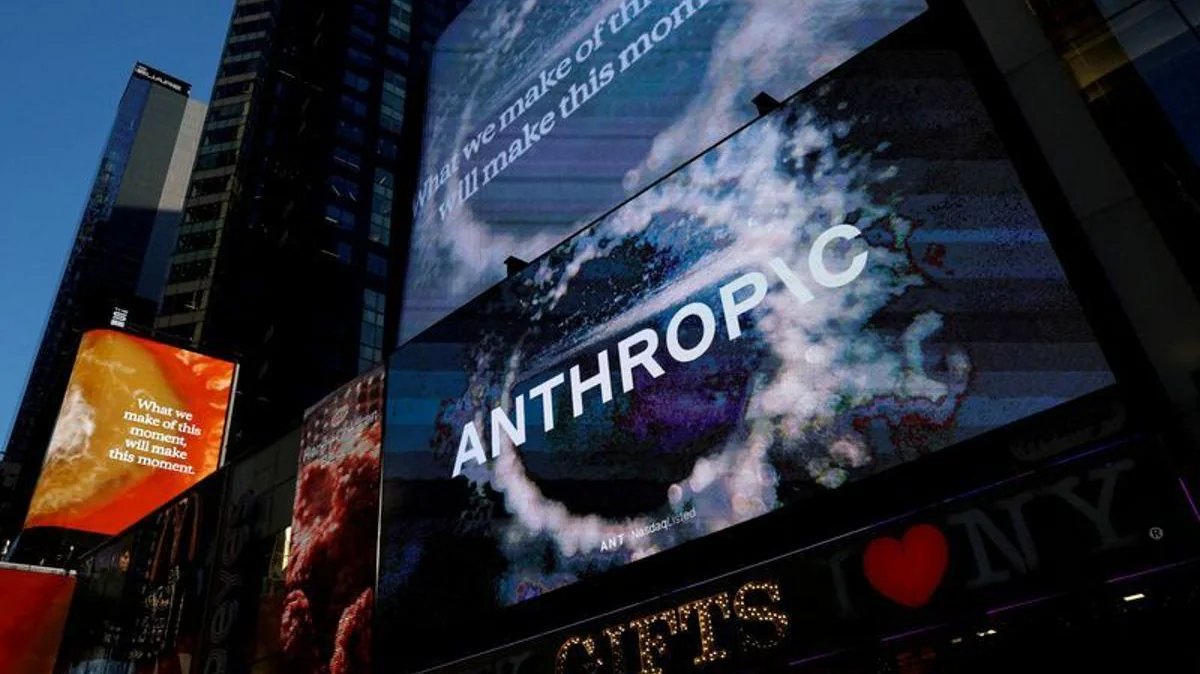
On 24 November 2026, Reuters reported that Anthropic shares had dropped below their $83 IPO price, only days after the company's record Nasdaq debut on 19 November. The $76.6 last price, the 12.6% decline, and the line that the stock was on course to erase close to $200 billion were figures from a live dispatch. Later that day, CNBC reported a close of down 6.5%, below the IPO price. That set of prices can be checked. It does not, on its own, prove that the AI boom has ended.
[1][2]Reuters wrote that the stock opened at $111.50 on 19 November, that its fully diluted valuation briefly topped $2 trillion, and that it closed 17% above the IPO price on the first day. Within days it was caught in a broader technology selloff. The S&P 500 and the Dow, Reuters said, had confirmed correction territory the previous week. The company also missed Monday's rebound. Both Reuters and CNBC noted that Nvidia had reinstated Jensen Huang as chief executive after his earlier ouster, and that AI-related stocks rose, but Anthropic did not follow. Fiona Cincotta told Reuters that a slower data-center buildout could affect Anthropic's pace of development, and therefore future revenue and valuation. As the first frontier AI company to go public, Anthropic was described as a proxy for the sector. Because reuters.com returned a bot-check page, this commentary relies on a full Reuters-credited reprint on Investing.com, by Medha Singh, updated at 3:48 p.m. on 24 November. The closing figures come from CNBC's story, updated at 4:04 p.m. EST the same day: the stock closed down 6.5% and finished below the IPO price. CNBC did not state an exact closing print in the body of that article, and this commentary does not supply one that is not in either source.
[1][2]The first task is to separate the live Reuters update from the close. The Reuters update said the stock was last down 12.6% at $76.6, was on course to erase close to $200 billion in market value, and was then trading at a $1.5 trillion valuation, about 40 times sales over the last 12 months. A move from a debut-day peak around $2 trillion to a mid-session $1.5 trillion is about $500 billion, which is not the same measure as "close to $200 billion." The latter looks like a change against a nearer reference point, not against the first-day peak. CNBC's close story put the day's decline at 6.5% and said the shares finished below the offer price. If later coverage repeats only the Reuters headline about nearly $200 billion, and omits that this was a live formulation and that the close was down 6.5%, it is treating an unfinished session as a final result. Next come the firm-level facts Reuters lists. Dario Amodei and Daniela Amodei each sold more than 3.37 million shares worth over $280 million to the IPO underwriters a day after the debut, according to a filing late on Monday. The buyers were the underwriters, not the open market. After the underwriters exercised their option to buy additional shares, Reuters put gross proceeds at a record $93.5 billion. CNBC described the offering as $81.3 billion. The two figures may reflect whether the overallotment is included, but neither story spells out the arithmetic, so this commentary records both and does not treat either as a fully reconciled total. Lock-up terms that let some insiders sell from day one help explain supply. They do not, by themselves, explain Tuesday's close. Competition from open-weight models, Huang's public support for that approach, the MSCI addition, and Intropic's estimate of passive buying are later variables in the Reuters piece, not results that have already arrived.
[1][2]The strongest cautious reading is that falling below the offer price within days means the market price near $111.50 on debut did not hold. Insider sales to underwriters, and the exercise of the overallotment, which removed a potential source of support, add to the supply side of that story. Cincotta's link between valuation and the data-center buildout also shows how sensitive this investment is to whether infrastructure spending continues. The historical comparison cuts the other way, and Reuters itself supplies it. Facebook broke below its offer price on the second trading day. SpaceX took about a month. An early break is not, on those examples, a reliable guide to the longer term. Andersen's remark that this is price discovery after an overpriced deal treats the episode as an IPO pricing problem, not as the end of the industry cycle. The constructive analyst notes in the CNBC story show that some sell-side firms still use a bullish frame. They do not cancel the decline that has already happened.
[1][2]Over the next six months, watch whether Anthropic can get back above the $83 IPO price, and whether the MSCI addition as of the 30 November close brings the kind of passive buying Intropic estimated. Watch, too, for later earnings that put a checkable figure on revenue and capital spending, so that claims such as 40 times sales can be tied to a filing. If the shares stay below the offer price for a long stretch, but no new, checkable evidence arrives of weaker demand or a slower buildout, this break will look more like post-IPO price discovery. If data-center investment cools in a measurable way, and the company's revenue outlook is cut at the same time, the episode will look closer to the transmission chain Cincotta described.
【No.2】
[1][2]