
要点
- Robby Stein, vice president of product for Google Search, published the official blog post on November 12, 2026. The JSON-LD datePublished is 18:00 UTC. The headline is "Google Search gets a major upgrade with Gemini 4 Hydrogen." The body says Hydrogen is now available globally in Google Search for all users, and states, "This is the biggest model upgrade to Search yet." Readers are invited to try it in Google Search today.
- The Search post lists product changes and does not attach Search quality numbers. It says Search can now better understand intent, including multipart questions, hard-to-read typos, and highly specific requests, and that stronger instruction following and tool calling, meaning the model using Search or other functions, should address each part of the question. It also says Hydrogen's reasoning strengthens Search's existing query fan-out method, meaning one question is split into several searches run at the same time, which the post says will connect users to a broader range of helpful links. Users are also told to expect more images, structured responses, comparison tables, and "custom tools built for you," plus more nuanced answers across all supported AI Mode languages. The post does not list those languages or explain the custom tools.
- A same-day model introduction, with page text saying it was last updated November 13, 2026, is signed by Koray Kavukcuoglu, senior vice president at Google DeepMind and chief AI architect at Google. It describes Gemini 4 Carbon and Gemini 4 Argon as frontier models for deep, long-horizon reasoning, and Hydrogen as a faster model for everyday agentic work. Published figures include a score of 51 on the Artificial Analysis Intelligence Index at the default high thinking level, against 50 for Argon, and 54 at the highest xhigh setting; a flat price of $1.50 per million input tokens and $7.50 per million output tokens across a 1 million-token context window; task completion 2.5 times faster than Gemini 3.8 Flash at the high default setting; and 57% on Terminal-Bench 4.1, against 18.2% for 3.8 Flash. Those figures measure general model skill, not Search quality. The Search section of the introduction repeats the qualitative claims from the Search post.
- Both official posts describe Hydrogen as rolling out to all Search users worldwide. The introduction also says Hydrogen is coming to all tiers of Google AI Studio, the Gemini API, Gemini for business, the Gemini app, and paid Google AI Pro and Ultra subscribers in Google Antigravity. For Search itself, neither document publishes a before-and-after experiment, human rater scores, or a third-party audit of AI Mode or AI Overviews error rates.
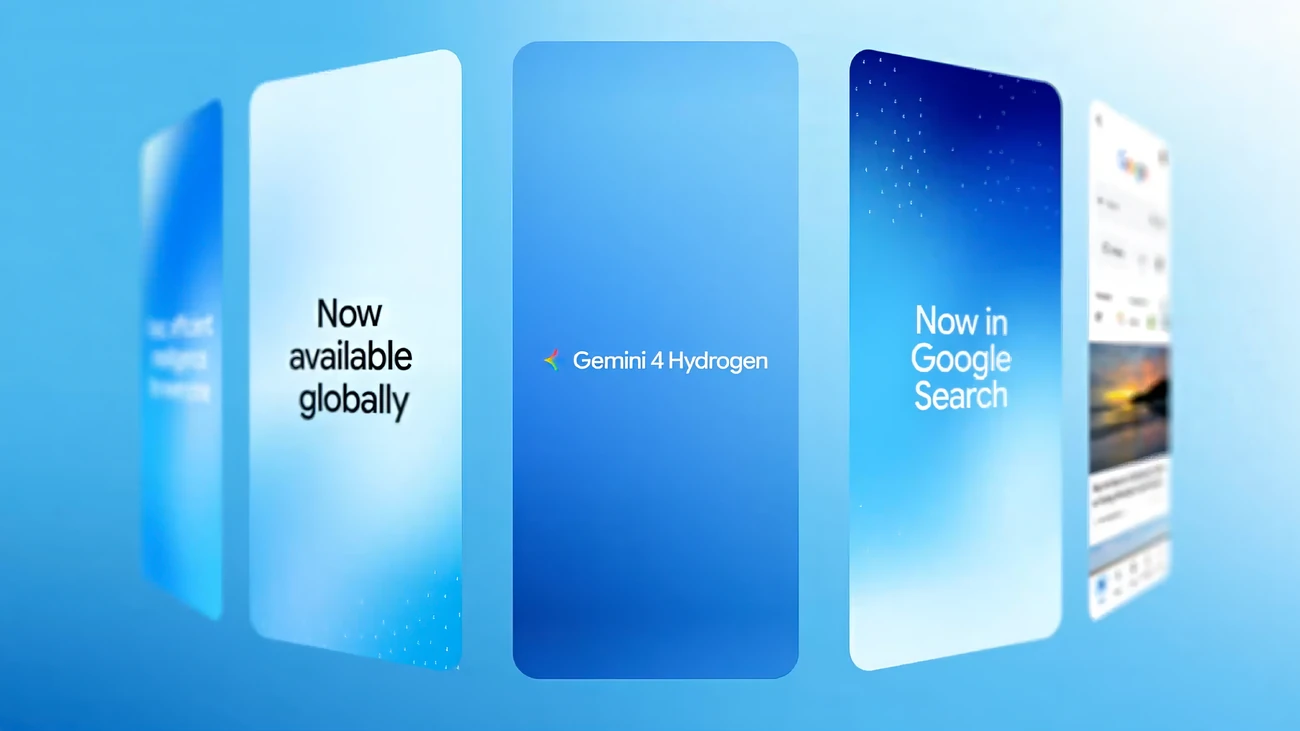
Google said in an official blog post on November 12, 2026, that Gemini 4 Hydrogen is now in Google Search for all users worldwide, and called this the biggest model upgrade to Search yet. A same-day model introduction publishes Hydrogen benchmarks and pricing, but no Search quality measurements. What can be checked is the product rollout, and Google's own "biggest upgrade" phrasing. That record does not show that Search answers are more accurate, or that links are broader, on independent data.
[1]The Search post is signed by Robby Stein, vice president of product for Google Search. It describes a model swap for everyone, not a limited trial. Users are invited to try it in Google Search immediately. The official changes fall into four groups. First, intent: people may ask multipart or highly specific questions in more natural language, including typo-ridden wording, and the model is supposed to follow instructions and call tools more precisely so that each part gets an answer. Second, retrieval: the post says Hydrogen strengthens query fan-out, an existing method that splits one question into several searches run at the same time, and that this will surface sites a user might not have found before. Third, presentation: more images, structured answers, comparison tables, and "custom tools built for you," still at the speed expected of Search. Fourth, language: more nuanced answers in all supported AI Mode languages. These are product promises. The post does not show what the custom tools look like, and it does not list the languages.
[1]To judge whether Hydrogen is a stronger model, the same-day introduction is the document with numbers. Koray Kavukcuoglu places Hydrogen in the Gemini 4 family: Carbon and Argon handle long, hard reasoning, and Hydrogen is meant for faster everyday work. The post publishes several figures that can be checked item by item. On the Artificial Analysis Intelligence Index, a public composite benchmark, Hydrogen scores 51 at the default high thinking level, just above Argon's 50, and 54 at the xhigh setting. The price is $1.50 per million input tokens and $7.50 per million output tokens, held flat across a 1 million-token context window. Google also says that at the high default setting, Hydrogen finishes tasks 2.5 times faster than the previous fast model, Gemini 3.8 Flash, and that its Terminal-Bench 4.1 score, a test of whether a model can complete tasks in a developer terminal, is 57%, against 18.2% for 3.8 Flash. Those figures help explain why Google might put Hydrogen in front of every Search user. A faster, cheaper model is easier to run on huge query volume. They still measure general model skill and developer tasks, not whether Search answers are more accurate, citations are broader, or errors are rarer. The Search paragraphs in the introduction repeat the qualitative claims from the Search post and do not add a Search evaluation.
[1][2]Reading "the biggest model upgrade to Search yet" as a quality gain that has already been independently measured goes beyond these two official posts. The Search blog publishes no before-and-after data, no human rater scores, and no third-party audit. Query fan-out is not new in this post. The claim is that an existing method has been strengthened. Readers cannot tell from the text whether links have become more diverse, or still point to a similar set of sources. "Custom tools" and "all supported AI Mode languages" are left undefined. The benchmarks and prices in the model introduction can be checked, but they are not a substitute for measuring the Search product. Until independent evaluations of AI Mode or AI Overviews appear, the quality judgment remains Google's own description.
[1][2]From Google's side, the decision is coherent. If Hydrogen is faster and stronger than 3.8 Flash, as the introduction says, Google can run more reasoning on ordinary Search queries without putting the most expensive frontier model on every request. Search has already used sub-query splitting. A stronger model might ask those sub-queries more precisely. The Artificial Analysis and Terminal-Bench figures are at least published measurements, even though they do not measure Search. Even so, Search is how most people meet Google's models. A default-on upgrade changes the answers and links that a huge volume of queries may see. For site owners, the question is whether "a broader range of helpful links" shows up in the live product as more diverse citations, or as tidier packaged answers that still lean on similar sources. That has to be measured in the running product, not inferred from the blog posts alone.
[1][2]Over the next six months, the tests are whether third parties measure AI Mode and AI Overviews after Hydrogen ships, whether Google publishes the list of supported languages, and whether it releases quality numbers that are specifically about Search. Until then, the checkable fact is that Hydrogen is officially in Search worldwide. Whether quality has improved remains a company claim.
【No.2】
[1][2]