
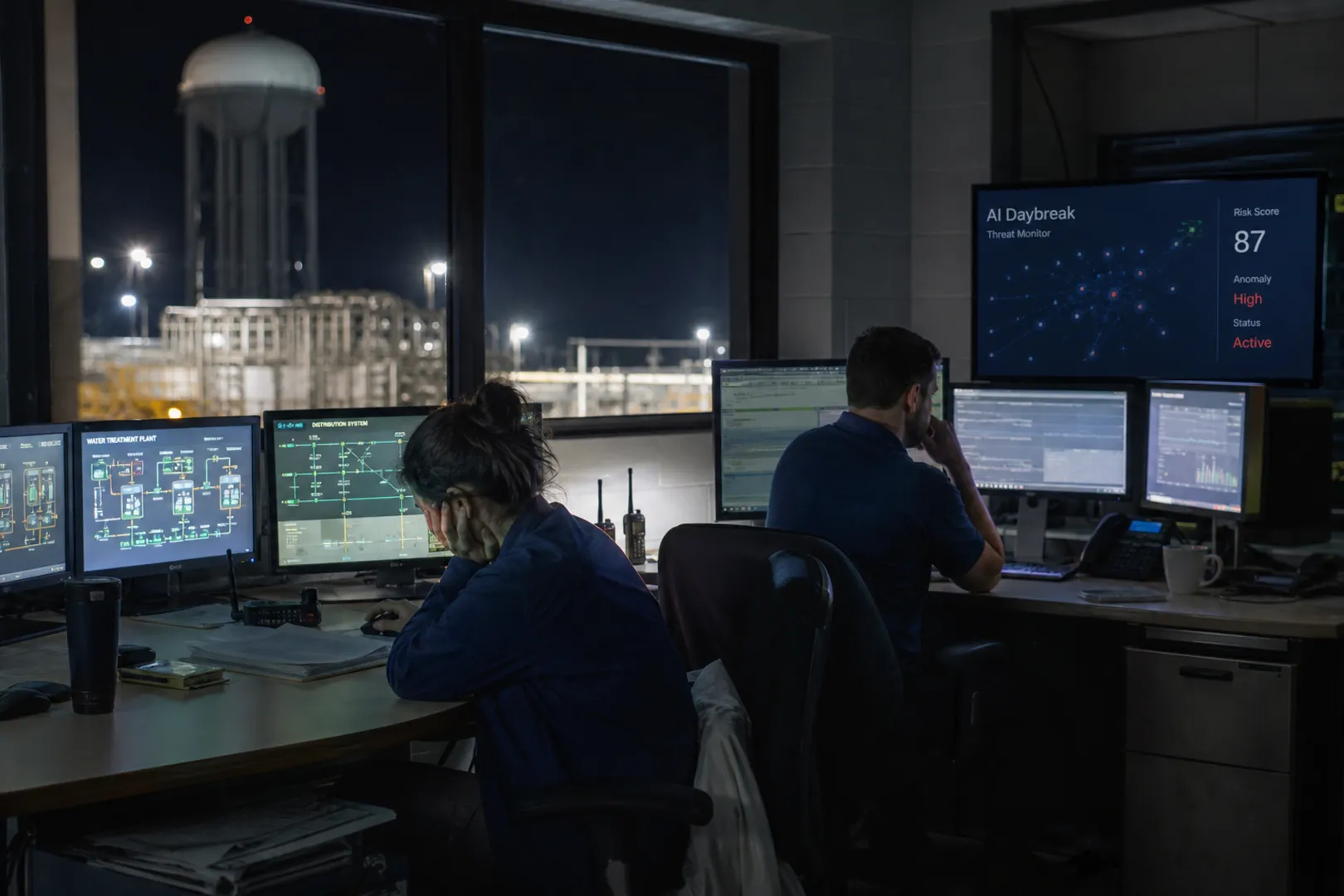
On September 3 OpenAI launched Daybreak for Frontline Defenders: a $1 billion commitment to subsidize Daybreak cyber models, training, technical help, and partner services for under-resourced defenders—starting with U.S. water and wastewater, electric grids, local government, community and regional banks, nonprofits, and open-source maintainers, plus an MS‑ISAC pilot. The story is a “defender’s window” before AI-enabled attacks get cheaper and more common.
[1][2]What Daybreak was, and what expands
Daybreak is framed as a continuously running agentic loop for investigation, validation, remediation, and reporting, with Daybreak Blue on mainline models for common defense and Daybreak Red for approved orgs needing specialized cyber models. The new program bundles the subsidy with training and a Daybreak Defense Network of more than 35 enterprise and partner-operated services meant to drop into tools defenders already use.
SecurityWeek zeroed in on what the press release leaves blank: which costs are subsidized, fixed versus percentage discounts, eligibility math, and the sticker price after the billion is spent.
[1][2]The same seam between politics and product
Astra just crossed OpenAI’s Critical cyber threshold, with advanced offensive-leaning workflows gated. Frontline Defenders turns the defensive narrative into something municipalities can try to procure. A round ten-figure number buys headlines and a “we’re on the defender’s side” slot with regulators.
Delivery is the hard part. In aging OT environments with thin staffing and incomplete logs, an agentic loop that mis-triages or overreaches can hurt as much as a miss. Targeting the subsidy to be consumed in six months smells like a burn-down KPI, not a multi-year ops contract.
[1][2]Who feels it first
State and local water/power SOCs, MS‑ISAC-covered governments, and small teams maintaining critical open-source components are the early seat holders. International expansion is promised “in the coming weeks” to partner countries—U.S.-first in practice. Security vendors face a channel choice: join the Defense Network or watch buyers treat OpenAI’s billion as the procurement label that matters.
[1][2]Take
I read the billion as both a defensive on-ramp and a social license for Critical-class models. Until unit costs, false-positive accountability, and kill switches are public, it is a loud pilot fund. In six months, watch three numbers: how many utilities close a remediation loop, what renewals cost after the subsidy burns, and whether Red/Blue privileges get misused at the edge. Money buys attention; it does not buy ops discipline.
[1][2]