
要点
- On November 18, 2026, Google said a new Project Genie experience is rolling out to eligible Google AI Ultra subscribers, with first-time access to Genie 4, upgrades to Genie 3, an agent, and a community gallery. Google AI Pro members can join a waitlist.
- Google called Genie 4 its most realistic and interactive world model yet, and said users can type a new prompt mid-session to change a world, now with real-time native audio. Genie 3 remains in the picker for longer runs, now up to three minutes per generation, up from 60 seconds.
- Google said all video and audio generated in Project Genie includes SynthID watermarking, and that inputs and outputs go through safety screenings. The same post still places Genie 3 and Genie 4 in frontier research, and lists camera latency, complex physical interactions, real-time audio precision, and long-term scene permanence as unsolved problems.
- Google DeepMind's October 27 research blog presented Genie 4 as a research preview for trusted testers before this Ultra rollout, and said object permanence can still drift, with legible text and long-term consistency still under study. Neither post publishes a third-party test against other world models.
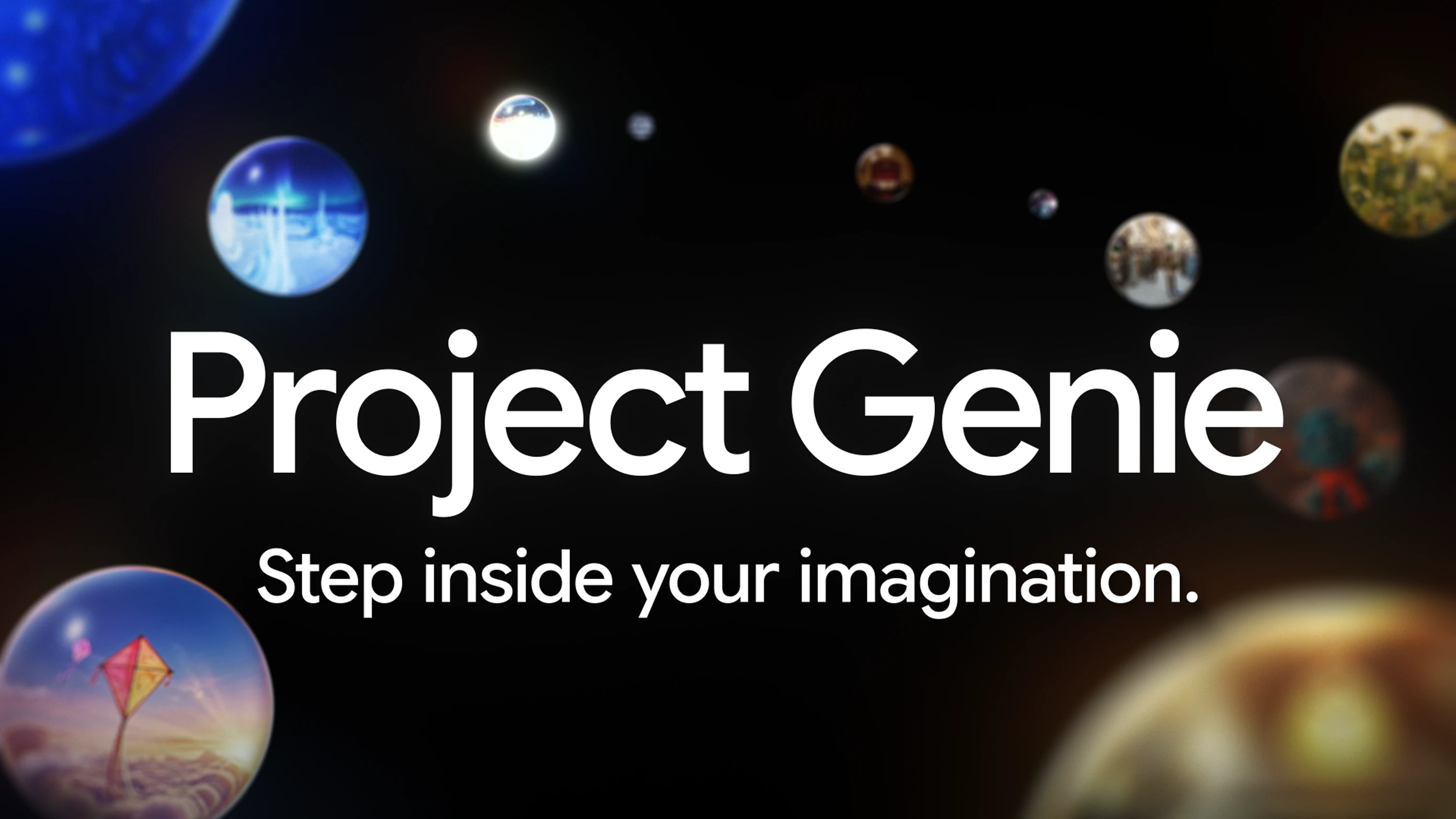
On November 18, 2026, Google said it was rolling out a new Project Genie experience to eligible Google AI Ultra subscribers. The post, written by Diego Rivas of Google DeepMind and Pavan Kumar of Google Labs, said the update gives those users first-time access to Genie 4, upgrades to Genie 3, a Project Genie agent that helps build worlds, and a community gallery for finding and remixing them.
The product claim is large, and the access gate is narrow. Google called Genie 4 its most realistic and interactive world model yet. The same blog still places both Genie 3 and Genie 4 in what it calls the frontier research space, and it lists camera latency, complex physical interactions, real-time audio precision, and long-term scene permanence as problems the company is still working on. Google AI Pro members are not in the first wave. They can join a waitlist on the same page.
[1][2]What shipped in the product post
Google said Project Genie lets people generate, step inside, and shape worlds from a browser, using its world models together with Gemini models. With Genie 4, a user can type a new prompt while navigating a world and edit that environment in real time, including changing the weather, adding a character, or redirecting the action. The company said this is the first time Genie 4 pairs those visuals with real-time native audio that adapts as the scene unfolds, from ambient sound to character dialogue.
Genie 3 is not being withdrawn. Google said it remains available in the Project Genie model picker when a user wants longer runs or spaces seeded from a 360-degree panorama. The Genie 3 updates named in the post are longer sessions, now up to three minutes per generation, up from 60 seconds; the ability to link multiple worlds together; 360-degree panorama image grounding; and real-time in-world events triggered with natural-language prompts.
The Project Genie agent, Google said, takes a natural-language description and uses a suite of multimodal models to create initial visuals and a custom background score. Gemini models can then watch the session, offer suggestion chips for where to go next, or trigger in-world events. Users can publish worlds to a gallery. The post names curated experiences such as Living Memory, Dino Field Guide, and Rock Paper Scissors, and two collaborations: Villa Giallo, made with the creative technologist Will, also known as BLVCKL!GHT, and The Life of Ants, made with the filmmaker Anand Gandhi.
All video and audio generated in Project Genie, Google said, includes SynthID watermarking, and all model inputs and outputs go through safety screenings.
[1][2]What the two official posts actually support
The November 18 product blog supports a limited launch, not a general release. The people who can try the new experience "starting today" are eligible Google AI Ultra subscribers. Pro members are pointed to a waitlist. That is a checkable access rule, provided those users actually see the product in the browser.
The same post is also clear about a split inside the product. Genie 4 is the model Google describes as having its highest-fidelity visuals, physics, and native audio. Genie 3 is the model Google keeps on hand for longer sessions. If a reader takes "most realistic" to mean "best for long exploration," the company's own picker design points the other way.
The limits appear in both posts. They are not independently measured there. The product blog lists camera latency, complex physical interactions, real-time audio precision, and long-term scene permanence as open challenges, and it points readers to a Genie 4 research overview. Google DeepMind's October 27 blog, which announced Genie 4 as a research preview for trusted testers before a later Ultra and API rollout, uses similar language. It says visual details and object permanence can still shift or drift over time, especially as a simulation runs longer, after multiple complex prompt edits, or when the user moves through the scene. It also lists complex physical interactions, real-time audio accuracy, rendering legible text, spatial accuracy, and long-term consistency as active research problems. Neither post publishes a third-party test of photorealism, physics, or audio sync against other world models.
[1][2]The strongest fair reading of Google's position
A fair reading is that Google is moving a world model from a closed preview into a paid experiment, and that it is doing so with some brakes still on. The company kept Genie 3 in the picker for longer runs, published a list of unsolved problems, said it will watermark video and audio with SynthID, and limited first access to Ultra subscribers. DeepMind's October 27 post had already said the Ultra rollout would come after a trusted-tester preview. If the question is whether paying customers can now try Genie 4 in Project Genie, the November 18 blog answers yes, at least for the eligible Ultra group.
That is a product-access fact. It is not the same thing as proof that Genie 4 is the most realistic interactive world model on offer. The comparison Google is making is with its own earlier models, and the evidence offered in these two posts is descriptive, with demonstration videos, rather than a scored comparison against other systems.
[1][2]What to watch in the next six months
The first test is whether eligible Ultra subscribers actually get Genie 4, mid-session prompting, native audio, the agent, and the gallery in the browser product, and whether Pro users leave the waitlist on a published timetable. If the blog's "starting today" access does not show up for the named tier, the launch will have been a post without a product.
The second test is whether Google publishes anything more than its own demonstrations on the problems it has already listed. Watch for measured results on object permanence, camera latency, physical interactions, audio accuracy, and how long a Genie 4 session can stay coherent, compared with Genie 3's new three-minute runs. If those figures appear and improve, the research-preview label will have been a genuine staging step. If the "most realistic" phrase travels farther than the limitations list, customers will have been sold a finished world simulator that the company's own posts still describe as early research.
【No.2】
[1][2]