
要点
- On 13 November 2026 the Allen Institute for AI released XYBench, a benchmark of 8,115 questions built with researchers at Carnegie Mellon, NVIDIA, and Johns Hopkins. It received the Best Resource Paper Award at EMNLP 2026.
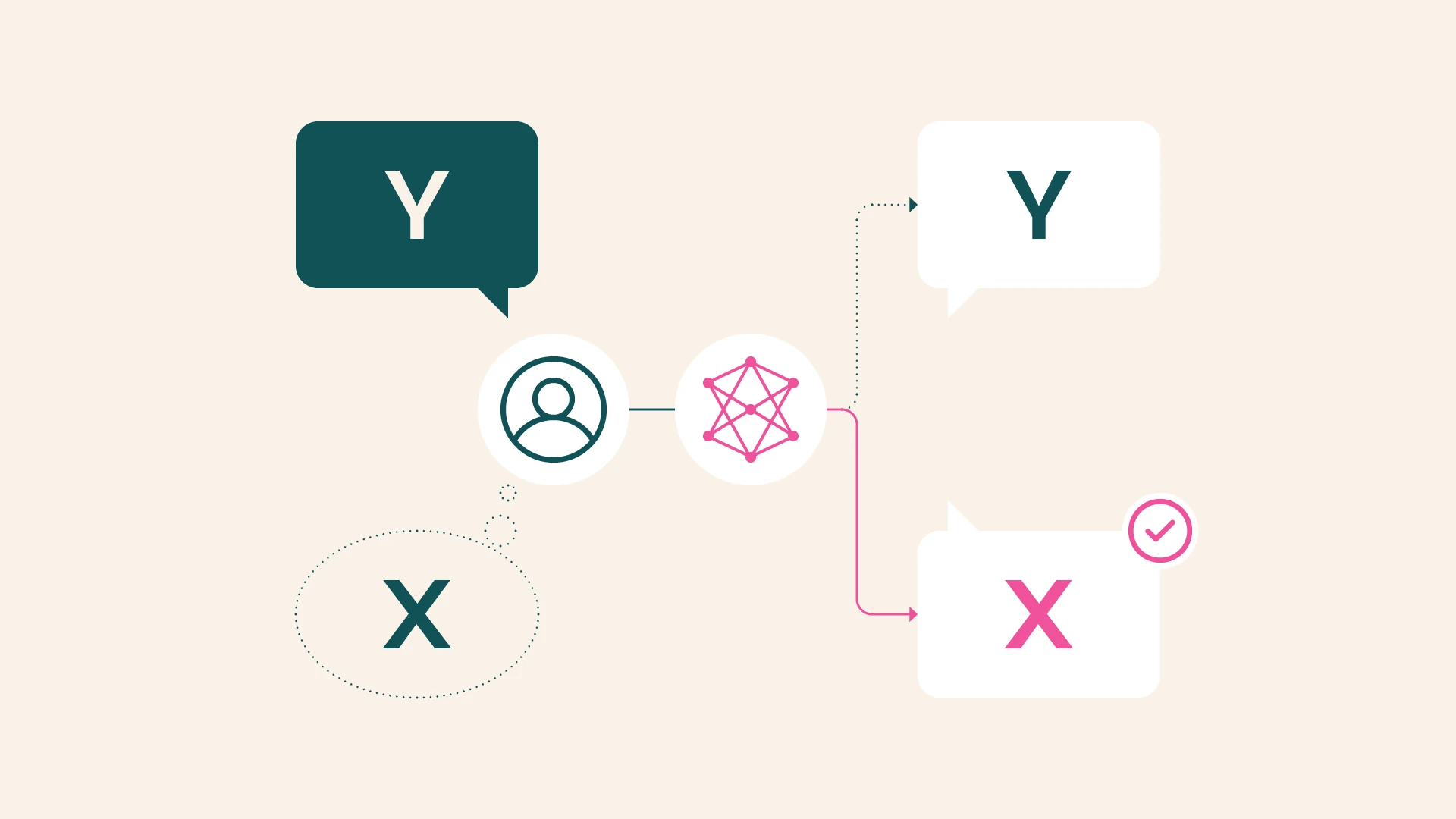
- The benchmark tests the XY problem. A person wants to achieve X, assumes method Y will work, and asks for help with Y. The post's example is a user asking how to thicken frosting that keeps sliding off cupcakes, when the cupcakes are still too warm.
- The set comes from 1,557 Stack Overflow questions, 184 Stack Exchange questions, 102 hand-curated examples, and 6,272 questions generated from WikiHow guides with Claude Sonnet 4.5. Items where answering the literal request would have been enough were removed.
- Claude Sonnet 4.5 is the automated judge. On 500 model responses, two human reviewers agreed with the judge 97.5 to 100 percent of the time on whether a solution appeared, 84.6 to 93.3 percent on misconception identification, and 74.2 to 79.8 percent on which request the answer emphasized.
- On Stack Overflow, GPT-5 mentioned a fix for the underlying goal in 71 percent of answers, slightly above the top human answer at 67 percent. Humans focused their answers on that goal in 55 percent of cases, and steered users toward it in 79 percent. The five models focused on the goal in 35 to 41 percent of answers, and steered toward it in 47 to 60 percent.
On 13 November 2026, the Allen Institute for AI released XYBench, a benchmark of 8,115 questions built with researchers at Carnegie Mellon, NVIDIA, and Johns Hopkins. It tests a familiar failure in asking for help, known as the XY problem. A person wants to achieve X, assumes method Y will work, and asks for help with Y. The cupcake example in the post is plain. The user asks how to thicken frosting that keeps sliding off, when the useful move is to wait until the cupcakes cool.
The finding is sharper than a claim that models give bad advice. On Stack Overflow questions, the five models Ai2 tested often included a fix for the underlying goal. They still focused their answers on that goal in only 35 to 41 percent of cases, compared with 55 percent for the top human answer. Humans steered users toward the real goal, and away from the mistaken method, in 79 percent of those answers. The best model score on that steering metric was 60 percent.
[1][2]Ai2 built the set from 1,557 Stack Overflow questions, 184 Stack Exchange questions, 102 hand-curated examples, and 6,272 questions generated from WikiHow guides. For each item, the stated request Y and the intended request X were recorded, with X defined as a goal an expert can infer from context without being told. Forum items used the accepted answer and the three highest-scored human answers to establish the intended goal and possible solutions. Cases where answering the literal request would have been enough were removed. The WikiHow portion used Claude Sonnet 4.5 to invent questions around plausible misconceptions in procedural guides, then refined them so an expert could infer the goal. That generation step matters, because a large share of the benchmark did not come from unedited human posts.
The scoring is not a single accuracy number. XYBench records three behaviors. Pragmatic solution checks, separately, whether the reply includes a fix for Y and a fix for X. Pragmatic emphasis asks whether the answer mainly focuses on Y, mainly on X, or balances the two. Misconception identification asks whether the reply steers the user toward X and discourages or avoids Y. Claude Sonnet 4.5 is the automated judge. Two human reviewers independently scored 500 model responses. Agreement with the judge, averaged across reviewers, was 97.5 to 100 percent on whether a solution appeared, 84.6 to 93.3 percent on misconception identification, and 74.2 to 79.8 percent on emphasis. Emphasis is the softest of the three judgments, and it is also the metric that most hurts the models.
[1][2]The models evaluated in a single-turn setting were Claude Sonnet 4.6, GPT-5, Gemini 3.1 Pro, Qwen3.5-9B, and DeepSeek-V4 Pro. Across all four sources, every model was more likely to include a solution to the stated request than to the underlying goal. On Stack Overflow, stated-request solutions appeared in 75 to 86 percent of replies, and underlying-goal solutions in 59 to 71 percent.
Ai2's tables are more useful than those ranges. On mentioning a fix for the underlying goal, GPT-5 scored 71 percent, above the top human answer at 67 percent, with DeepSeek-V4 Pro at 66 percent, Qwen3.5-9B at 64 percent, Gemini 3.1 Pro at 62 percent, and Claude Sonnet 4.6 at 59 percent. On making that fix the focus of the answer, the top human answer leads at 55 percent. The models cluster between 35 and 41 percent. On steering the user to the goal rather than the mistaken approach, the top human answer is at 79 percent. GPT-5 and Qwen3.5-9B reach 60 percent, DeepSeek-V4 Pro 55 percent, Gemini 3.1 Pro 54 percent, and Claude Sonnet 4.6 47 percent. Mentioning the right idea is not the same as organizing the answer around it.
[1][2]Ai2 also ran an oracle test, putting both X and Y beside the question. On Stack Overflow, Sonnet 4.6's rate of including a solution to the underlying goal rose from 59 percent to 67 percent, but its misconception-identification rate fell from 47 percent to 34 percent. Supplying intent helped the model name a fix. It did not make the model more willing to talk the user off the wrong path.
In a separate test, the same five models plus GPT-4.1 were shown two answers, one literal and one that explained the misconception and addressed the goal. On Stack Overflow they picked the goal-focused answer in 71 to 84 percent of cases, led by DeepSeek-V4 Pro at 84 percent and Qwen3.5-9B at 83 percent. GPT-5 scored 72 percent and Claude Sonnet 4.6 scored 71 percent. In the main writing evaluation, only 35 to 41 percent of the answers those models wrote were mainly about the underlying goal. The result is a gap between recognizing good advice and writing it, which a multiple-choice test would miss.
[1][2]A fair reading is that XYBench is hard in a way that ordinary assistant tests are not, and that scoring only "mentions a useful fix" would have made several models look close to human quality. GPT-5 even mentions the underlying-goal fix slightly more often than the top human answer on the Stack Overflow slice. The work received the Best Resource Paper Award at EMNLP 2026, and the human check on the judge is published.
The limits are real. Emphasis is the hardest judgment, and human agreement with the judge there is only in the mid-to-high 70s. Most of the questions come from WikiHow items generated by Sonnet 4.5, and Sonnet 4.5 is also the judge, an overlap Ai2 mitigated with human review but did not eliminate. The evaluation is single-turn and English, and it is mainly about procedural problems in programming, cooking, and home repair. The post itself flags other languages, cultures, and multi-turn chats as open work.
[1][2]Over the next six months, the useful test is whether labs that claim better assistants report XYBench emphasis and misconception identification, not only whether a fix appears somewhere in the reply. If training or prompting closes the gap between picking a good answer and writing one, the benchmark will have measured a skill that product teams can use. If models keep scoring well when they only have to choose the better of two answers, and still write replies that polish the user's first, wrong plan, those teams will be tracking the wrong number.
[1][2]