
On 13 October 2026, Felix Rieseberg published this tutorial. The visible date on the page is 13 October 2026, and the article timestamp is 2026-10-13T14:48:44.000Z. The short biography on the same page says he is an engineering manager at Anthropic and has led engineering for Claude.ai, Cowork, and Claude Code Desktop. The opening sentence says he works on Claude. The picture is a print by Francisco Goya. The page names it Modo de volar, and gives the English title A Way of Flying.
[1]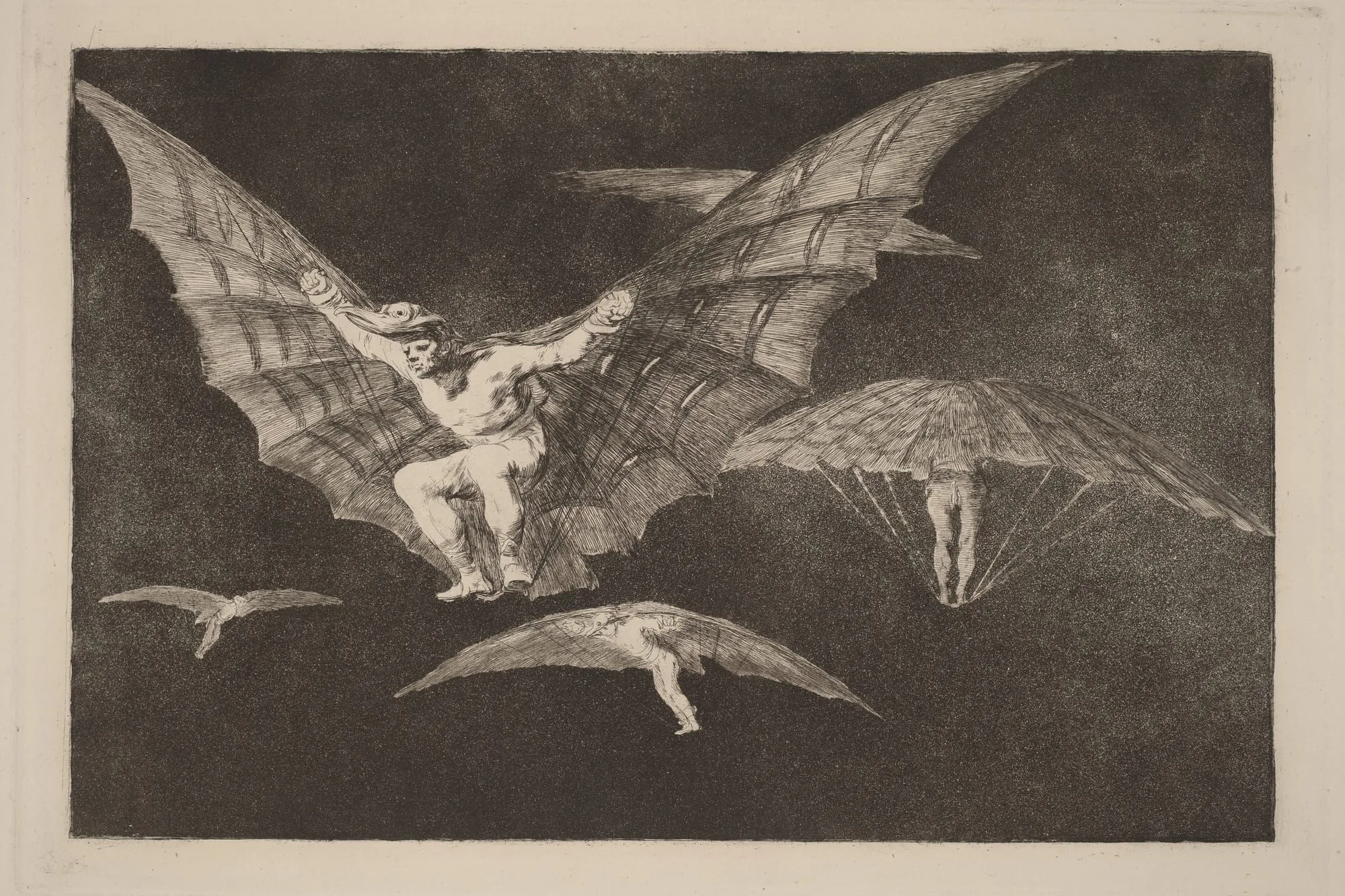
He wrote the post as a tutorial because the call to be more ambitious has become a slogan. When he and other people working on AI see an impressive result, they repost it and write that the field is not ambitious enough. He then says the advice is hard to follow. Ambition is split into four types: speed, altitude, depth, and range. Speed means the same work in less time. He calls that mature, says it takes little creativity in the approach, and sets that type aside. He primarily uses Claude, and he writes that the advice is not tied to one model.
[1]Altitude, as he defines it, leaves the single task and looks at the outcome. At the beginning of last year he still asked Claude to fix crashes one by one. Later he asked Claude to keep the apps from crashing. The page gives no crash count. He writes that reaching that point required the model to fetch crash reports, to map an app version to a git commit, and to have access to Windows, macOS, and Linux computers so it could reproduce a failure and check a fix on its own. That is his description of a workflow change. It is not a before-and-after measurement.
[1]He puts a present limit on altitude. The sentence on the page says that telling Claude to go make money does not stand on its own for most businesses in 2026. Altitude fits a search for a final outcome, and he says it fits creative work less well. Depth means looking at a task the way a leading expert in the field would, down at the underlying data, tools, and problems. He writes that when a model is asked to sound professional, it often changes only the wording, not the method. In October 2026 he writes that the model should not grade itself, and that the check should come from outside. He expects later gains in model ability to handle this. The date he prints for that judgment is October 2026.
[1]The range example is his colleague Alex Albert, who used Blender to render interior designs. Rieseberg writes that until he saw that work, he had not considered Claude for three-dimensional scenes on his homepage. The page reports no measurement of those renders. The quarterly business review in the post uses an imagined company called Acme Inc, and it contains no result from a real review. He also includes a prompt that asks for a deeper version of a task rather than a bigger one. The page does not report an outcome from that prompt. He writes that every form of ambition he describes requires the model to have a computer that can install software, plus access to the relevant data. The connection can be an MCP connector or some other means. The page does not name a single tool.
[1]The opening also places three items in this month, and none of them comes with a citation. He writes that Claude may have helped discover a new planet this month, that he has seen the first AI music video he really likes, and that a new phase of math is under discussion. Terence Tao is quoted earlier: models are astounding in some directions and inadequate in others. The planet, the video, and the math discussion have no source on the page that can be opened. The later part of the post traces the need for the tutorial to self-efficacy, and says Locke and Latham reviewed 35 years of goal-setting research, with specific hard goals outperforming a bare instruction to try hard. The page does not link that research. The four-part split is the frame of the tutorial. The limits that can be checked are these: the money line does not stand alone in 2026, the outside check is dated October 2026, and no crash count appears.
[1]